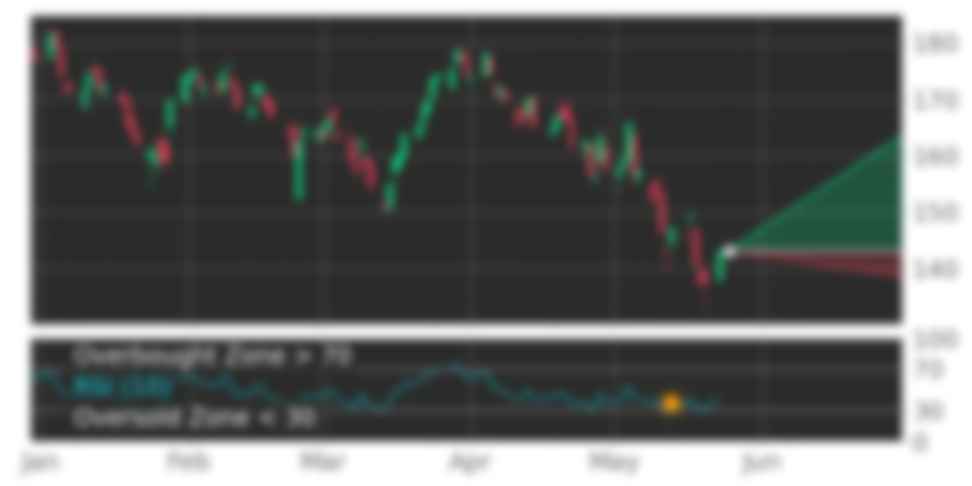
In a surprising development that has caught the attention of both retail traders and institutional quantitative desks, Rubicon Technology Inc. (NASDAQ: RBC) has surfaced as one of early 2026’s more compelling AI-driven momentum candidates. After a relatively quiet close to 2025, the Illinois-based materials company—long associated with synthetic sapphire technology—has begun to display unexpected price strength, triggering alerts across algorithmic trading platforms.
Though far from a household name, RBC’s recent surge in trading activity and heightened volatility have placed it squarely on the radar of AI-powered systems such as those operated by Tickeron. As markets oscillate between optimism around U.S. rate cuts and lingering concerns over global growth, traders are increasingly scanning overlooked microcaps for asymmetric opportunities—an environment in which RBC appears to be gaining traction.
Key Takeaways
Elevated volatility: RBC has exhibited sharp, short-term price movements, signaling growing participation from momentum-driven and algorithmic traders.
AI-generated trade signals: Tickeron’s AI trading robots have identified emerging technical and sentiment patterns, suggesting a regime shift in the stock.
Small-cap rotation: Renewed interest in small-cap equities is building as investors anticipate looser monetary conditions in 2026.
Advanced trading tools: Tickeron’s AI-enhanced platforms now deliver real-time analytics and automated strategies for RBC.
Forward outlook: AI projections point to a potential expansion in RBC’s trading range, driven by sector rotation and algorithmic capital flows.
Global Market Backdrop
Global equity markets have entered 2026 with mixed signals. The S&P 500 is consolidating after a strong 2025 run, while European markets continue to grapple with manufacturing slowdowns. In contrast, cautious optimism surrounds Asia’s reopening narrative and early signs of stabilization in commodity markets.
Three macro forces are shaping the current landscape:
Monetary policy easing: Central banks, including the Federal Reserve and ECB, are pivoting toward normalization after years of aggressive tightening.
AI adoption: Algorithmic and AI-based trading frameworks are rapidly reshaping liquidity dynamics and short-term volatility.
Retail participation: Individual investors are re-entering markets, drawn by subdued volatility indexes and speculative opportunities in microcaps like RBC.
Within this context, RBC has benefited from increased speculative attention as algorithms detect potential trend formation in previously thinly traded names.
Tickeron AI Performance and Innovation
Tickeron’s AI ecosystem continues to redefine how traders approach data-intensive markets. Through its AI Trading Virtual Agents and Brokerage Agents, users can deploy automated strategies capable of real-time analysis, backtesting, and dynamic position management.
For RBC specifically, Tickeron’s Trading Robots integrate advanced pattern recognition, volatility modeling, and sentiment analysis to identify both breakout and mean-reversion opportunities. These systems evaluate thousands of potential scenarios, adapting to changes in liquidity and volatility—an essential capability when trading nimble, low-float stocks like RBC.
This level of AI-driven precision allows microcap equities to be traded with a degree of sophistication traditionally reserved for large-cap names.
AI-Based Trading Outlook
Tickeron’s machine-learning models currently emphasize three core factors when evaluating RBC:
Trend strength: Monitoring moving-average crossovers and breakout confirmations before initiating trades.
Volatility conditions: Capitalizing on recent price spikes through short-term swing strategies that prioritize risk-adjusted returns.
Liquidity awareness: Continuously analyzing order-book imbalances and scaling positions dynamically to capture micro-movements.
Overall, AI assessments classify RBC within a moderate-to-high volatility regime, where adaptive, intraday-focused strategies may outperform more static approaches.
Conclusion and AI Forecast
As 2026 unfolds, Tickeron’s AI-driven outlook for RBC suggests a split-path scenario. Sustained positive sentiment toward materials and AI-adjacent industrials could support a phase of speculative accumulation and potential upside expansion. Conversely, renewed macro pressure or tightening liquidity could trigger abrupt pullbacks—an inherent risk in low-float microcaps.
AI forecasts currently indicate a bullish bias through mid-2026, with the potential for consolidation phases that establish support ahead of a possible breakout later in the year. As AI-controlled strategies continue to dominate small-cap trading, RBC’s mix of speculative appeal, growing algorithmic coverage, and real-time data optimization positions it as one of the more intriguing microcap names to watch in 2026.
For traders interested in exploring the technology behind these insights, Tickeron’s full suite of AI-powered trading robots—including those dedicated to RBC—offers a window into how modern algorithms are reshaping microcap investing.Trading Robot for ticker RBCN — all robots
Disclaimers and Limitations
Moving higher for three straight days is viewed as a bullish sign. Keep an eye on this stock for future growth. Considering data from situations where RBC advanced for three days, in of 324 cases, the price rose further within the following month. The odds of a continued upward trend are .
The Stochastic Oscillator is in the oversold zone. Keep an eye out for a move up in the foreseeable future.
RBC may jump back above the lower band and head toward the middle band. Traders may consider buying the stock or exploring call options.
The Aroon Indicator entered an Uptrend today. In of 252 cases where RBC Aroon's Indicator entered an Uptrend, the price rose further within the following month. The odds of a continued Uptrend are .
The 10-day RSI Indicator for RBC moved out of overbought territory on March 03, 2026. This could be a bearish sign for the stock. Traders may want to consider selling the stock or buying put options. Tickeron's A.I.dvisor looked at 35 similar instances where the indicator moved out of overbought territory. In of the 35 cases, the stock moved lower in the following days. This puts the odds of a move lower at .
The Momentum Indicator moved below the 0 level on March 10, 2026. You may want to consider selling the stock, shorting the stock, or exploring put options on RBC as a result. In of 90 cases where the Momentum Indicator fell below 0, the stock fell further within the subsequent month. The odds of a continued downward trend are .
The Moving Average Convergence Divergence Histogram (MACD) for RBC turned negative on March 03, 2026. This could be a sign that the stock is set to turn lower in the coming weeks. Traders may want to sell the stock or buy put options. Tickeron's A.I.dvisor looked at 46 similar instances when the indicator turned negative. In of the 46 cases the stock turned lower in the days that followed. This puts the odds of success at .
Following a 3-day decline, the stock is projected to fall further. Considering past instances where RBC declined for three days, the price rose further in of 62 cases within the following month. The odds of a continued downward trend are .
The Tickeron Profit vs. Risk Rating rating for this company is (best 1 - 100 worst), indicating low risk on high returns. The average Profit vs. Risk Rating rating for the industry is 83, placing this stock better than average.
The Tickeron PE Growth Rating for this company is (best 1 - 100 worst), pointing to outstanding earnings growth. The PE Growth rating is based on a comparative analysis of stock PE ratio increase over the last 12 months compared against S&P 500 index constituents.
The Tickeron Price Growth Rating for this company is (best 1 - 100 worst), indicating steady price growth. RBC’s price grows at a higher rate over the last 12 months as compared to S&P 500 index constituents.
The Tickeron SMR rating for this company is (best 1 - 100 worst), indicating weak sales and an unprofitable business model. SMR (Sales, Margin, Return on Equity) rating is based on comparative analysis of weighted Sales, Income Margin and Return on Equity values compared against S&P 500 index constituents. The weighted SMR value is a proprietary formula developed by Tickeron and represents an overall profitability measure for a stock.
The Tickeron Valuation Rating of (best 1 - 100 worst) indicates that the company is slightly overvalued in the industry. This rating compares market capitalization estimated by our proprietary formula with the current market capitalization. This rating is based on the following metrics, as compared to industry averages: RBC's P/B Ratio (5.200) is slightly higher than the industry average of (2.435). RBC's P/E Ratio (62.954) is considerably higher than the industry average of (26.492). RBC's Projected Growth (PEG Ratio) (0.000) is slightly lower than the industry average of (3.281). RBC has a moderately low Dividend Yield (0.000) as compared to the industry average of (0.025). RBC's P/S Ratio (9.461) is very high in comparison to the industry average of (1.747).
The average fundamental analysis ratings, where 1 is best and 100 is worst, are as follows
Industry ToolsHardware