MENU
Go to the list of all blogs
Jimmy Landsman's Avatar
published in Blogs
Apr 08, 2026

Vanguard Total World Stock ETF (VT): Capturing Global Equity Trends in 2026

Key Takeaways

  • Global economic growth projected at 2.25%–2.8% in 2026, supporting broad equity exposure through diversified U.S., developed, and emerging markets.
  • AI investment and productivity gains could drive U.S. earnings, but non-U.S. developed markets and value sectors offer attractive risk-return profiles amid broadening AI diffusion.
  • Persistent inflation above 2% may limit aggressive rate cuts, favoring equities with global diversification over U.S. growth concentration risks.
  • Strong fund inflows into international equities signal investor appetite for VT's 40% non-U.S. exposure, enhancing portfolio resilience.
  • Emerging markets (10.4% allocation) poised for outperformance via lower rates, tech exports, and a weaker U.S. dollar.
  • Low expense ratio (0.06%) and broad 10,000+ holdings provide structural efficiency for long-term global equity trends.

Understanding VT's Portfolio and Strategy

The Vanguard Total World Stock ETF (VT) tracks the FTSE Global All Cap Index, a free-float-adjusted, market-capitalization-weighted benchmark that captures large-, mid-, and small-cap stocks across developed and emerging markets worldwide, representing nearly 98% of global investable market capitalization. In my analysis, this passive indexing approach, which uses sampling to replicate the index with over 10,000 holdings and a low turnover rate of 3.4%, stands out for minimizing costs and tax inefficiencies over the long term.

Among its top holdings, you'll find prominent U.S. tech leaders like NVDA (3.75%), AAPL (3.48%), and MSFT (2.63%), which together make up about 20% of assets, alongside global names such as Taiwan Semiconductor (1.37%). Sector weights lean toward technology (around 25%), financials (16%), and industrials (12%), mirroring broader global market compositions.

On the geographic front, VT allocates 63% to North America (mostly U.S.), 15% to Europe, 11% to the Pacific, and 10% to emerging markets, with minimal Middle East exposure. This setup, from what I see, positions VT well to benefit from U.S. AI leadership, European reindustrialization, and emerging market recovery, all while its low 0.06% expense ratio supports long-term compounding in a shifting global landscape.

Key Catalysts Driving VT Forward

Looking ahead, AI capital expenditures are a major driver for VT, accelerating U.S. productivity and earnings growth that could lift GDP toward 3% and deliver double-digit equity returns—though high valuations in hyperscalers warrant some caution. One thing that stands out is how broadening AI adoption among non-U.S. consumers could lift developed markets outside the U.S. (over 25% of VT's exposure), providing a hedge against U.S. tech volatility.

Fed policy, with cuts likely limited below neutral (3.5%) due to sticky inflation over 2%, should favor resilient global growth stocks. Emerging markets stand to gain from easing local rates, improved fiscal positions, and tech exports like semiconductors, boosting VT's 10% EM slice. Tariff resolutions and fiscal stimulus, such as U.S. infrastructure and defense spending, could counterbalance headwinds, while record ETF inflows—$156B in January 2026 alone, spearheaded by international equities—underscore demand for VT's diversification. Index rebalancings in March and September may further sharpen its focus on high-growth areas.

Sector, Index, and Macro Outlook

Global growth forecasts for 2026 sit at 2.8%, driven by the U.S. (2.25%–3%) through AI investments and fiscal support, Europe's infrastructure-led stabilization, and emerging markets exceeding 4% on policy easing. With inflation holding above 2%, rate cuts face constraints, tilting the balance toward equities over bonds.

VT's FTSE Global All Cap Index, dominated by tech-heavy U.S. holdings (63%), aligns closely with AI themes but diversifies through value sectors like financials and industrials, plus ex-U.S. growth opportunities. Non-U.S. equities, with expected 10-year returns of 4.9%–6.9%, could outperform U.S. returns (4%–5%) as AI spreads globally. A weaker dollar would enhance returns from EM and Pacific regions for U.S. investors, while currency stability supports Europe.

In my view, these macro tailwinds—from productivity boosts to supportive policies—set the index up for strong performance, offset by manageable U.S. concentration risks. I also checked this using Tickeron’s AI Screener to gauge how VT stacks up against peers.

Insights from Tickeron’s Trend Prediction Engine

As part of my research process, I rely on Tickeron’s Trend Prediction Engine, an AI-powered tool that forecasts whether assets like ETFs, including VT, might trend bullish, bearish, or sideways over the next week or month. It draws on machine learning to sift through historical patterns, technical indicators, and market data, helping spot trends, breakouts, or reversals across a broad universe of instruments. With searchable predictions by timeframe, backtesting for accuracy, and alerts for high-probability signals, it's become essential for my short-term trading and portfolio checks. If you're integrating AI into your strategy, this engine offers practical, data-backed foresight without the hype.

Long-Term Outlook and Enduring Trends

Over a 5–10 year horizon, VT is well-placed to capitalize on structural shifts, such as AI diffusing beyond U.S. hyperscalers into value sectors and non-U.S. markets, potentially yielding superior risk-adjusted returns. Demographic pressures from aging populations in developed markets bolster healthcare (9%) and staples, while reindustrialization lifts industrials (13%).

Shifting global flows into EM tech, like semiconductors, and infrastructure match VT's weightings, complemented by interest rate normalization that favors equities. The cap-weighted structure captures mega-cap leaders, with All Cap inclusion adding mid- and small-cap potential from economic cycles. Ultimately, sustained productivity from tech adoption and fiscal measures points to compounded growth in global equities for VT.

Disclaimer

The information on this webpage is provided for general informational and educational purposes only and is not intended as investment advice, a recommendation to purchase or sell any security, or an offer or solicitation related to investments. It does not consider your personal financial situation, goals, or risk profile, and all investing carries inherent risks, including the possibility of losing your entire investment. For more details, please review our full disclaimer. Disclaimers and Limitations

Related Ticker: VT

VT in +1.08% Uptrend, rising for three consecutive days on May 14, 2026

Moving higher for three straight days is viewed as a bullish sign. Keep an eye on this stock for future growth. Considering data from situations where VT advanced for three days, in of 351 cases, the price rose further within the following month. The odds of a continued upward trend are .

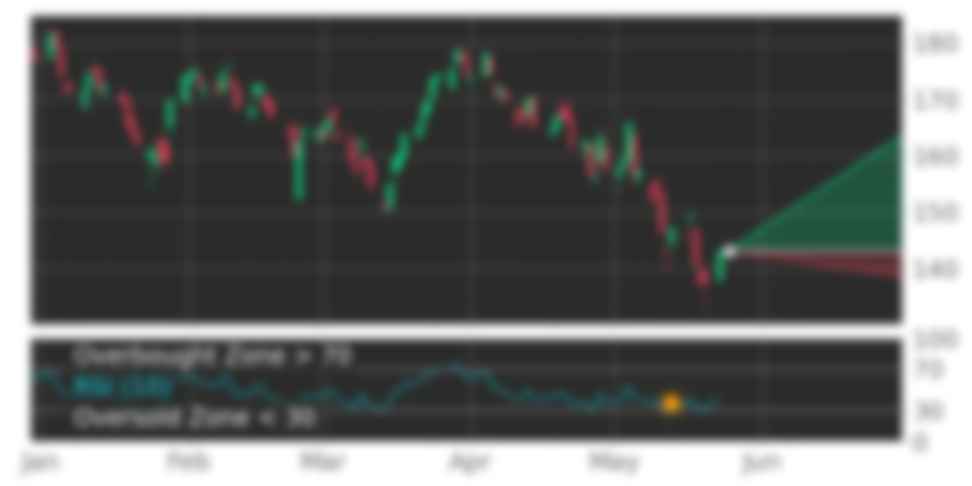
Price Prediction Chart

Technical Analysis (Indicators)

Bullish Trend Analysis

The 10-day moving average for VT crossed bullishly above the 50-day moving average on April 15, 2026. This indicates that the trend has shifted higher and could be considered a buy signal. In of 13 past instances when the 10-day crossed above the 50-day, the stock continued to move higher over the following month. The odds of a continued upward trend are .

The Aroon Indicator entered an Uptrend today. In of 350 cases where VT Aroon's Indicator entered an Uptrend, the price rose further within the following month. The odds of a continued Uptrend are .

Bearish Trend Analysis

The 10-day RSI Indicator for VT moved out of overbought territory on May 15, 2026. This could be a bearish sign for the stock. Traders may want to consider selling the stock or buying put options. Tickeron's A.I.dvisor looked at 37 similar instances where the indicator moved out of overbought territory. In of the 37 cases, the stock moved lower in the following days. This puts the odds of a move lower at .

The Stochastic Oscillator may be shifting from an upward trend to a downward trend. In of 66 cases where VT's Stochastic Oscillator exited the overbought zone, the price fell further within the following month. The odds of a continued downward trend are .

The Moving Average Convergence Divergence Histogram (MACD) for VT turned negative on May 15, 2026. This could be a sign that the stock is set to turn lower in the coming weeks. Traders may want to sell the stock or buy put options. Tickeron's A.I.dvisor looked at 49 similar instances when the indicator turned negative. In of the 49 cases the stock turned lower in the days that followed. This puts the odds of success at .

Following a 3-day decline, the stock is projected to fall further. Considering past instances where VT declined for three days, the price rose further in of 62 cases within the following month. The odds of a continued downward trend are .

VT broke above its upper Bollinger Band on May 06, 2026. This could be a sign that the stock is set to drop as the stock moves back below the upper band and toward the middle band. You may want to consider selling the stock or exploring put options.

Notable companies

The most notable companies in this group are NVIDIA Corp (NASDAQ:NVDA), Alphabet (NASDAQ:GOOGL), Alphabet (NASDAQ:GOOG), Apple (NASDAQ:AAPL), Microsoft Corp (NASDAQ:MSFT), Amazon.com (NASDAQ:AMZN), Broadcom Inc. (NASDAQ:AVGO), Meta Platforms (NASDAQ:META), Eli Lilly & Co (NYSE:LLY).

Industry description

The investment seeks to track the performance of a FTSE Global All Cap Index that measures the investment return of stocks of companies located in developed and emerging markets around the world. The fund employs an indexing investment approach designed to track the performance of the FTSE Global All Cap Index. It invests by sampling the target index, meaning that it holds a range of securities that, in the aggregate, approximates the full target index in terms of key risk factors and other characteristics.

Market Cap

The average market capitalization across the Vanguard Total World Stock ETF ETF is 3.31T. The market cap for tickers in the group ranges from 632.33B to 5.38T. NVDA holds the highest valuation in this group at 5.38T. The lowest valued company is BRK.B at 632.33B.

High and low price notable news

The average weekly price growth across all stocks in the Vanguard Total World Stock ETF ETF was 3%. For the same ETF, the average monthly price growth was 13%, and the average quarterly price growth was 34%. MSFT experienced the highest price growth at 3%, while AVGO experienced the biggest fall at -2%.

Volume

The average weekly volume growth across all stocks in the Vanguard Total World Stock ETF ETF was -11%. For the same stocks of the ETF, the average monthly volume growth was -21% and the average quarterly volume growth was -33%

Fundamental Analysis Ratings

The average fundamental analysis ratings, where 1 is best and 100 is worst, are as follows

Valuation Rating: 59
P/E Growth Rating: 52
Price Growth Rating: 29
SMR Rating: 23
Profit Risk Rating: 24
Seasonality Score: 60 (-100 ... +100)
View a ticker or compare two or three
VT
Daily Signal:
Gain/Loss:
Interact to see
Advertisement
A.I.Advisor
published price charts
A.I. Advisor
published General Information

General Information

Category ForeignLargeBlend

Profile
Details
Category
Global Large-Stock Blend
Address
Vanguard International Equity Index FundPO Box 2600Valley Forge
Phone
N/A
Web
www.vanguard.com