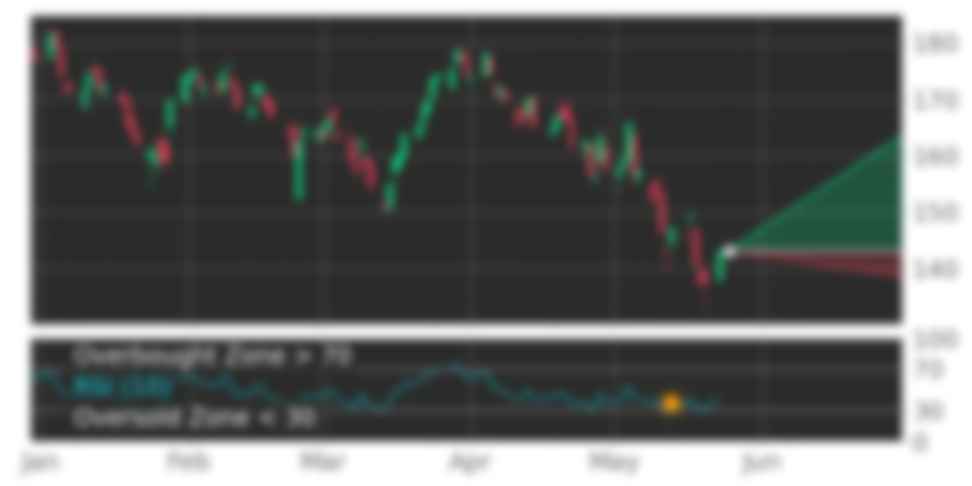
BeyondSpring Inc. is a clinical-stage biopharmaceutical company focused on developing immuno-oncology cancer therapies. Its lead asset, Plinabulin, is a selective immune-modulating, microtubule-binding agent that has been studied for the prevention of chemotherapy-induced neutropenia (CIN) and for the treatment of non-small cell lung cancer. The company is also advancing Plinabulin in a confirmatory late-stage program in combination with checkpoint inhibitors, alongside a targeted protein degradation (TPD) platform through its subsidiary SEED Therapeutics.
As a pre-commercial company, BeyondSpring generates essentially no product revenue. Its valuation is driven almost entirely by expectations around clinical trial results, regulatory decisions, and potential partnerships or licensing deals, which makes its share price inherently volatile. I checked a few comparable names using Tickeron’s AI Screener to see how the stock compares to others in the industry.
The $2.00 mark carries both psychological and technical significance. BeyondSpring shares recently traded near $1.12 following a sharp single-session gain of more than 40%, and the stock's 52-week range spans roughly $0.566 to $2.44. That means $2.00 sits comfortably below the prior 52-week high, representing a level the stock has already reached before but must meaningfully reclaim after a prolonged decline.
For a stock that has lost substantial value from its historical highs, returning toward $2.00 would signal a recovery in sentiment and a potential shift in the long-term downtrend. It is a natural focal point for investors searching for a price target that is ambitious but not detached from the stock's recent trading history.
BeyondSpring trades with a market capitalization of roughly $46 million, placing it firmly in the small-cap category. The company reports negative earnings per share (EPS) and negative shareholders' equity, a reflection of accumulated deficits and a shrinking asset base. While operating losses and cash burn have narrowed compared with earlier years, the company still posts negative operating and free cash flow, and it may require additional financing that could dilute existing shareholders.
These financial realities weigh heavily on the stock. Institutional and analyst coverage is thin, with only a small number of research firms publishing formal price targets, and ratings have at times leaned toward the cautious side.
The clearest path toward $2.00 runs through the clinical pipeline. Positive data from Plinabulin trials, progress in the confirmatory late-stage program, or a favorable regulatory interaction could materially re-rate the shares. Because the company has minimal revenue, any credible de-risking event, such as successful trial readouts or a licensing or partnership agreement, has the potential to move the stock substantially and quickly.
A leadership transition, with Min Qiu appointed as Chief Executive Officer and founder Dr. Lan Huang moving to the role of Chairman, could also signal renewed strategic focus as the company pursues late-stage development across multiple cancer indications.
The obstacles to $2.00 are substantial. Negative shareholder equity can constrain access to traditional financing and raise the cost of capital, limiting strategic flexibility. Continued cash burn without a commercial product means the company may need to raise funds, which typically pressures the share price through dilution.
Clinical-stage biotech outcomes are binary by nature. A failed or inconclusive trial could erase a large portion of the company's value, while regulatory delays could push out timelines and extend the period of cash consumption. Additionally, the widely cited analyst consensus price target near $1.25 sits well below $2.00, indicating that the sell side currently sees limited justification for that level of appreciation.
From a technical analysis standpoint, $2.44, the 52-week high, represents a major overhead resistance level and a supply zone where prior sellers may re-emerge. The $2.00 round number serves as an intermediate psychological barrier that the stock would need to clear and hold before challenging that high. On the downside, the 52-week low near $0.566 marks a critical support level that, if broken, would signal renewed downside momentum.
For the $2.00 price target to become realistic, the stock would first need to establish a durable uptrend, reclaim key moving-average levels, and demonstrate that recent gains are supported by fundamentals rather than short-term volatility.
Reaching $2.00 is not out of reach for BeyondSpring given its volatility and its prior trading history near that level, but it is far from a foregone conclusion. The strongest argument in favor of the move is the optionality embedded in the Plinabulin pipeline, where a single positive catalyst could trigger a sharp re-rating. The strongest counterargument is the company's weak financial position, thin coverage, and the conservative nature of current analyst price targets, which cluster well below $2.00.
Investors should monitor clinical trial readouts, regulatory developments, financing activity, and whether the stock can build a sustained uptrend rather than relying on isolated single-day spikes. The path to $2.00 likely requires a meaningful fundamental catalyst, not simply a continuation of short-term trading momentum.
When tracking volatile small-cap names like BeyondSpring, I find it useful to incorporate AI-driven signals alongside traditional analysis. Tickeron's AI Daily Buy/Sell Signals applies artificial intelligence to monitor thousands of stocks and ETFs, producing Buy, Sell, or Hold signals based on market conditions, technical factors, and evolving trends. This helps me stay organized when reviewing positions or spotting potential shifts without relying solely on manual review.
The information on this webpage is provided for general informational and educational purposes only and is not intended as investment advice, a recommendation to purchase or sell any security, or an offer or solicitation related to investments. It does not consider your personal financial situation, goals, or risk profile, and all investing carries inherent risks, including the possibility of losing your entire investment. For more details, please review our full disclaimer.
Harry Richardson — Algorithmic Trader & Strategy Developer Harry is an algorithmic trader specializing in impulse and breakout trading strategies across cryptocurrency and equity markets. With more than 10 years of experience in developing automated trading systems, he focuses on building structured algorithms designed to capture momentum while maintaining strict risk control. His approach combines quantitative analysis, real-market execution, and continuous performance monitoring. Vitalii prioritizes risk management, drawdown control, and strategy stability over short-term optimization, ensuring algorithms are adaptable to changing market conditions. He has developed and tested hundreds of automated strategies, working extensively with live trading environments, forward testing, and portfolio-level algorithm management. His work centers on transforming trading ideas into fully operational, scalable automated systems.
BYSI saw its Momentum Indicator move above the 0 level on September 25, 2026. This is an indication that the stock could be shifting in to a new upward move. Traders may want to consider buying the stock or buying call options. Tickeron's A.I.dvisor looked at 88 similar instances where the indicator turned positive. In 71 of the 88 cases, the stock moved higher in the following days. The odds of a move higher are at 81%.
Following a +54.48% 3-day Advance, the price is estimated to grow further. Considering data from situations where BYSI advanced for three days, in 178 of 222 cases, the price rose further within the following month. The odds of a continued upward trend are 80%.
The Aroon Indicator entered an Uptrend today. In 81 of 104 cases where BYSI Aroon's Indicator entered an Uptrend, the price rose further within the following month. The odds of a continued Uptrend are 78%.
The 10-day RSI Indicator for BYSI moved out of overbought territory on September 29, 2026. This could be a bearish sign for the stock. Traders may want to consider selling the stock or buying put options. Tickeron's A.I.dvisor looked at 22 similar instances where the indicator moved out of overbought territory. In 20 of the 22 cases, the stock moved lower in the following days. This puts the odds of a move lower at 90%.
The Stochastic Oscillator may be shifting from an upward trend to a downward trend. In 37 of 43 cases where BYSI's Stochastic Oscillator exited the overbought zone, the price fell further within the following month. The odds of a continued downward trend are 86%.
BYSI moved below its 50-day moving average on September 29, 2026 date and that indicates a change from an upward trend to a downward trend.
Following a 3-day decline, the stock is projected to fall further. Considering past instances where BYSI declined for three days, the price rose further in 50 of 62 cases within the following month. The odds of a continued downward trend are 88%.
BYSI broke above its upper Bollinger Band on September 28, 2026. This could be a sign that the stock is set to drop as the stock moves back below the upper band and toward the middle band. You may want to consider selling the stock or exploring put options.
The Tickeron Valuation Rating of 46 (best 1 - 100 worst) indicates that the company is fair valued in the industry. This rating compares market capitalization estimated by our proprietary formula with the current market capitalization. This rating is based on the following metrics, as compared to industry averages: P/B Ratio (6.536) is normal, around the industry mean (26.780). P/E Ratio (0.000) is within average values for comparable stocks, (43.395). Projected Growth (PEG Ratio) (0.000) is also within normal values, averaging (9.059). Dividend Yield (0.000) settles around the average of (0.000) among similar stocks. P/S Ratio (31.056) is also within normal values, averaging (438.009).
The Tickeron Price Growth Rating for this company is 65 (best 1 - 100 worst), indicating fairly steady price growth. BYSI’s price grows at a lower rate over the last 12 months as compared to S&P 500 index constituents.
The Tickeron SMR rating for this company is 99 (best 1 - 100 worst), indicating weak sales and an unprofitable business model. SMR (Sales, Margin, Return on Equity) rating is based on comparative analysis of weighted Sales, Income Margin and Return on Equity values compared against S&P 500 index constituents. The weighted SMR value is a proprietary formula developed by Tickeron and represents an overall profitability measure for a stock.
The Tickeron PE Growth Rating for this company is 100 (best 1 - 100 worst), pointing to worse than average earnings growth. The PE Growth rating is based on a comparative analysis of stock PE ratio increase over the last 12 months compared against S&P 500 index constituents.
The Tickeron Profit vs. Risk Rating rating for this company is 100 (best 1 - 100 worst), indicating that the returns do not compensate for the risks. BYSI’s unstable profits reported over time resulted in significant Drawdowns within these last five years. A stable profit reduces stock drawdown and volatility. The average Profit vs. Risk Rating rating for the industry is 94, placing this stock worse than average.
The average fundamental analysis ratings, where 1 is best and 100 is worst, are as follows
a manufacturer of cancer therapies
Industry Biotechnology