Key Takeaways
- EWA tracks the MSCI Australia Index, a market-cap-weighted benchmark of large- and mid-cap Australian equities, with roughly 50 holdings.
- The portfolio is heavily concentrated in Financials (about 41%) and Materials (about 25%), giving banks and miners outsized influence over fund performance.
- Commonwealth Bank of Australia and BHP Group each represent roughly 14% of assets, the fund's two largest positions.
- EWA carries a 0.50% expense ratio and functions as a passively managed, single-country vehicle for Australia equity exposure.
- The fund has traded in a relatively narrow band in recent weeks, with performance shaped by Australian banking margins and commodity prices rather than broad technology leadership.
- Explore Price Targets and Forecast pages for additional analysis of this ETF's positioning and outlook.
- Discover Trending AI Robots to screen for evolving trading opportunities across markets.
iShares MSCI Australia ETF (EWA) Overview
EWA is a passively managed exchange-traded fund (ETF) that seeks to replicate the price and yield performance of the MSCI Australia Index. First launched in 1996, it is one of the longest-standing vehicles for U.S.-listed investors seeking targeted exposure to Australian equities. The fund carries a net expense ratio of 0.50% and manages roughly $1.2 billion to $1.4 billion in assets, depending on the reporting date.
The portfolio is dominated by two sectors that define Australia's economy. Financials account for approximately 41% of assets, while Materials—primarily mining companies—represent about 25%. Consumer Discretionary, Healthcare, Industrials, Energy, Real Estate, and Consumer Staples each contribute between roughly 4% and 7%. Information Technology is a minimal presence at under 1%, which meaningfully differentiates EWA from U.S. benchmark ETFs.
The largest holdings are Commonwealth Bank of Australia and BHP Group, each near 14% of the fund, followed by National Australia Bank, Westpac, ANZ Group Holdings, Wesfarmers, Macquarie Group, CSL, Rio Tinto, and Goodman Group. This structure means EWA's returns are largely a function of Australian bank profitability and global commodity cycles.
Industry and Thematic Landscape
Australia's equity market is unusually concentrated in a handful of large-cap banks and diversified miners, which sets the tone for EWA's behavior. The country's financial sector benefits from a highly consolidated banking system and has historically delivered comparatively high dividend yields, making it attractive to income-oriented investors. Materials companies, meanwhile, are leveraged to global demand for iron ore, coal, copper, and other industrial commodities, with China a critical end market.
The broader macro environment has been characterized by elevated interest rates relative to the past decade and persistent inflation, both of which flow directly into the fund's dominant sectors. Higher rates can support bank net interest margins while simultaneously pressuring property valuations and consumer balance sheets. Commodity prices have remained volatile, driven by global industrial activity, supply constraints, and the pace of energy transition investment.
Capital flows into single-country funds like EWA tend to follow relative valuation and currency trends, and Australia's market has historically offered a yield-oriented tilt that distinguishes it from growth-heavy developed markets.
Performance and Positioning Snapshot
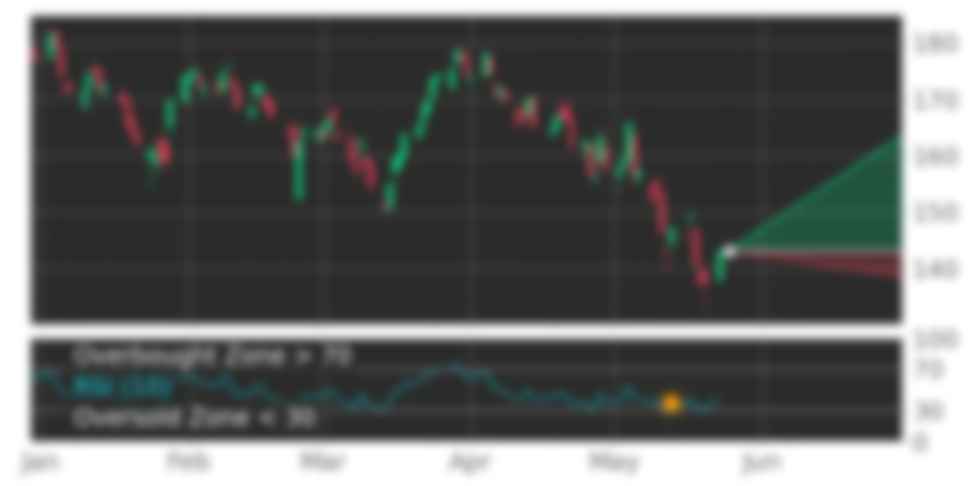
EWA has moved modestly in recent weeks. Over the trailing 30-day window, the fund advanced roughly 1.9%, reflecting a relatively stable period rather than a sharp directional move. Over the trailing three months, the ETF is slightly lower, having started that period near the $30 level and more recently trading near $29—a decline of approximately 3%. The overall picture is one of range-bound, choppy performance rather than a strong trend in either direction.
This behavior is consistent with the portfolio's composition. Bank-heavy benchmarks tend to grind alongside earnings expectations and credit conditions rather than deliver the rapid multiple expansion seen in technology-driven indices. Mining shares, meanwhile, have oscillated with commodity price swings, adding volatility without producing a sustained breakout. The absence of a large technology allocation has kept EWA detached from the AI-led momentum that has lifted several U.S. and global benchmarks.
Currency dynamics have also played a role, as returns for U.S.-based investors are partly a function of the Australian dollar's movement against the U.S. dollar.
AI Screener
Tickeron's AI Screener is an AI-powered stock and ETF discovery platform that helps investors search thousands of securities using technical indicators, fundamentals, volatility measures, AI-generated signals, market trends, price patterns, and customizable filters. It is designed to surface trending securities, breakout candidates, and new trading opportunities more efficiently than manual screening. For investors evaluating single-country funds like EWA, the screener can help identify comparable vehicles, momentum shifts, and sector-level signals across the broader universe. Explore the platform to see how these tools can refine your research workflow.
2026 Outlook and Key Factors to Monitor
Several structural factors are likely to shape EWA through 2026. Interest-rate policy at the Reserve Bank of Australia and major global central banks will directly influence bank net interest margins, credit growth, and the valuation of the fund's dominant financial holdings. Persistent or resurgent inflation could keep rates higher for longer, while a shift toward easing would alter the earnings trajectory for lenders.
Commodity prices remain a pivotal swing factor. Iron ore demand tied to Chinese industrial activity and infrastructure spending will continue to drive the Materials sleeve, as will copper's role in electrification and the broader energy transition. Any acceleration or slowdown in Chinese growth is therefore a key macro variable for EWA.
Investors should also monitor earnings cycles at the largest banks and miners, capital flows into international equity ETFs, and movements in the Australian dollar. Regulatory developments affecting the banking sector and any changes to Australia's commodity trade relationships represent additional catalysts. These themes, rather than short-term price swings, are the primary drivers likely to define the fund's path over the coming months.
The information on this webpage is provided for general informational and educational purposes only and is not intended as investment advice, a recommendation to purchase or sell any security, or an offer or solicitation related to investments. It does not consider your personal financial situation, goals, or risk profile, and all investing carries inherent risks, including the possibility of losing your entire investment. For more details, please review our full disclaimer.
Disclaimers and Limitations
 GET DAILY SIGNALS