Key Takeaways
- FITE is a passively managed thematic ETF (exchange-traded fund) that tracks the S&P Kensho Future Security Index, spanning cybersecurity, aerospace, defense, and related security-focused technology.
- The fund holds roughly 78 to 80 securities, with technology (about 60%) and industrials (about 30%) dominating sector exposure, alongside smaller healthcare, communication services, and energy allocations, and carries a 0.45% expense ratio.
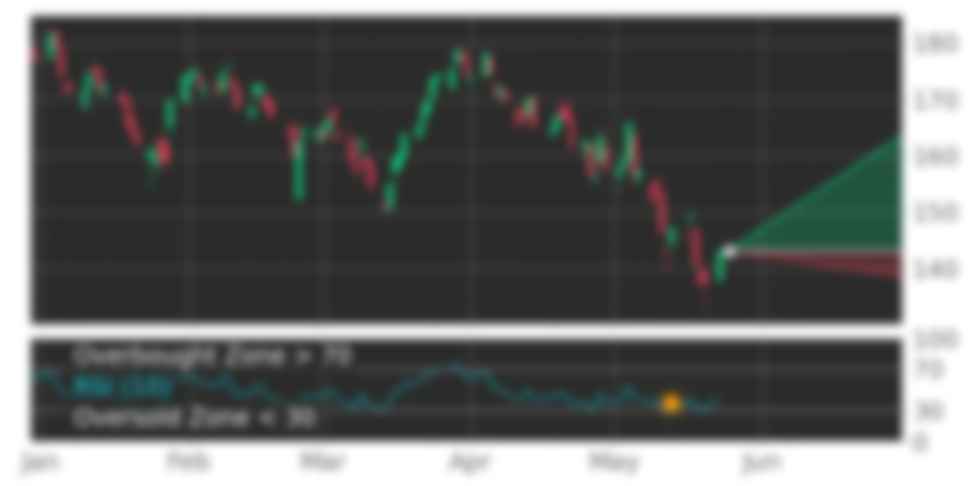
- Over the trailing 30 days, FITE has moved only modestly, roughly 1–2% lower, while the trailing quarter reflects a more meaningful decline of about 8% from mid-summer highs.
- Top positions blend software-security names such as Rapid7 (RPD), Qualys (QLYS), Zscaler (ZS), and CrowdStrike (CRWD) with aerospace and space holdings including Planet Labs (PL), Iridium Communications (IRDM), and Lockheed Martin (LMT).
- Key investment themes include elevated global defense spending, expanding cyber threats, and durable enterprise security budgets, offset by high valuations and interest-rate sensitivity.
- For deeper analysis, review FITE Price Targets and Forecast on dedicated pages.
- Explore Trending AI Robots for additional trading insights.
State Street SPDR S&P Kensho Future Security ETF (FITE) Overview
FITE seeks investment results that correspond, before fees and expenses, to the total return performance of the S&P Kensho Future Security Index. The index is composed of U.S.-listed equity securities, including depositary receipts, of companies classified within the "future security" sector under a framework developed by the index provider. In practice, this translates into a thematic basket spanning cybersecurity software, space and satellite systems, aerospace and defense hardware, communications equipment, and adjacent security technologies.
The fund is passively managed and uses a representative-sampling approach rather than full index replication. With roughly 78 to 80 holdings and individual positions typically ranging around 2–3% of assets, the portfolio is broadly diversified and exhibits a near-equal-weight character, limiting single-stock concentration risk. Technology accounts for approximately 60% of assets and industrials for about 30%, with smaller weightings in healthcare, communication services, and energy. The expense ratio is 0.45%, and the fund has approximately $150 million in assets under management (AUM). Launched in December 2017, FITE provides targeted exposure to a structural investment theme—security in both the physical and digital domains—rather than to a traditional broad-market benchmark.
Industry and Thematic Landscape
FITE sits at the intersection of two durable secular trends: rising global defense and security budgets, and escalating demand for cybersecurity software and services. Governments across developed and emerging markets have increased spending on defense modernization, space-based capabilities, and digital infrastructure protection, supporting order backlogs for aerospace and defense suppliers. Simultaneously, the frequency and cost of cyber incidents have continued to climb, sustaining enterprise demand for endpoint protection, identity management, and cloud-security platforms.
The broader macro environment, however, remains a counterweight. A period of elevated interest rates and persistent inflation pressures has weighed on long-duration, growth-oriented equities, which form a substantial portion of FITE's technology allocation. Valuation multiples across software and defense names remain above long-run averages in many cases, leaving the sector exposed to shifts in rate expectations and risk appetite. Within this backdrop, defense-linked industrials have generally benefited from more visible, contract-driven revenue, while higher-growth security software names have exhibited greater sensitivity to monetary policy.
Performance and Positioning Snapshot
FITE's recent behavior reflects this tension between structural tailwinds and macro-driven valuation pressure. Over the trailing 30 days, the fund has moved only modestly, roughly 1–2% lower—a range-bound-to-slightly-soft pattern rather than a sharp directional move. The trailing three-month picture is more revealing: after reaching elevated levels in mid-August, the fund has declined approximately 8% as growth and software holdings came under pressure.
The drawdown has been led by the technology-heavy portion of the portfolio, where security-software positions have been sensitive to shifts in interest-rate expectations and investor positioning. Aerospace and defense holdings, by contrast, have provided some relative stability, supported by steady government spending and multi-year procurement programs. The result is a fund whose performance diverges meaningfully by sleeve: defense and space names tend to track policy and budget cycles, while cybersecurity names follow earnings momentum, software demand, and the broader valuation regime for growth equities.
AI Screener
Tickeron's AI Screener is an AI-powered stock and ETF discovery platform that helps investors scan thousands of securities using technical indicators, fundamentals, volatility measures, AI-generated signals, market trends, price patterns, and customizable filters. It is designed to help users identify trending securities, breakout candidates, and emerging trading opportunities more efficiently than manual screening. For investors monitoring thematic funds such as FITE, the screener offers a practical way to surface individual constituents and comparable securities across the defense, aerospace, and cybersecurity landscape. Exploring the AI Screener can help refine a watchlist aligned with the future-security investment theme.
2026 Outlook and Key Factors to Monitor
Several structural factors are likely to shape FITE's performance through 2026. Defense budgets remain a central driver, with ongoing emphasis on modernization, autonomous systems, space resilience, and digital-warfare capabilities supporting aerospace and defense revenues. On the cybersecurity side, enterprise spending on zero-trust architectures, cloud security, and identity solutions continues to grow, though growth rates and margins will depend on the broader software-demand cycle.
Monetary policy and inflation remain pivotal. Any easing of interest-rate pressures would tend to support higher-valuation software holdings, while persistently restrictive conditions could sustain the valuation headwinds that have weighed on the technology sleeve. Investors should also monitor government procurement cycles, geopolitical developments affecting defense spending, and the earnings trajectory of large-cap security software constituents. Capital flows into thematic ETFs and the competitive landscape among security-focused funds will further influence fund positioning. These dynamics—rather than short-term price swings—will likely define the fund's longer-term path.
The information on this webpage is provided for general informational and educational purposes only and is not intended as investment advice, a recommendation to purchase or sell any security, or an offer or solicitation related to investments. It does not consider your personal financial situation, goals, or risk profile, and all investing carries inherent risks, including the possibility of losing your entire investment. For more details, please review our full disclaimer.
Disclaimers and Limitations
 GET DAILY SIGNALS