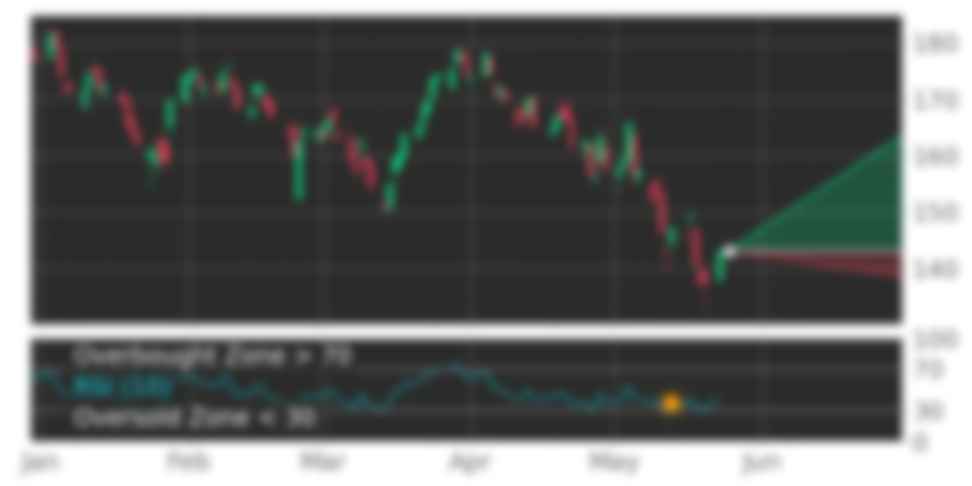
MATW, the stock of Matthews International Corporation — a Pittsburgh-based diversified industrial company operating across memorialization products, industrial technologies, and brand solutions — cratered roughly 15% on Friday. The shares closed the prior session at $27.66 and plummeted to approximately $23.51 in intraday trading, as markets reacted with force to a disappointing fiscal third-quarter earnings report released after Thursday's close. The company not only missed analyst estimates by a wide margin but also lowered its full-year profit outlook, triggering a wave of selling that pushed the stock toward the lower end of its 52-week range.
The sell-off was overwhelmingly driven by Matthews International's fiscal Q3 2026 results, which fell short on nearly every meaningful metric. The company posted adjusted earnings of just $0.06 per share, a fraction of the $0.38 consensus estimate, while revenue of $246.01 million missed the Street's $272.5 million target. On a GAAP basis, Matthews swung to a net loss of $23.7 million, or $0.75 per share, compared with net income of $15.4 million, or $0.49 per share, in the year-ago quarter. CEO Joseph Bartolacci acknowledged on the earnings call that all four risks the company had previously flagged — engineering order timing, tariffs, Propelis synergy delays, and geopolitical economic headwinds — materialized simultaneously during the quarter.
Perhaps more damaging than the quarterly miss itself was the guidance reduction. Management lowered its fiscal 2026 adjusted EBITDA forecast to between $158 million and $162 million, down from prior expectations. The downward revision reflected both the weak quarterly results and a cautious outlook for the remainder of the fiscal year, particularly within the challenged industrial technologies operations.
The most severe pain radiated from the Industrial Technologies segment, where sales collapsed 56.8% year-over-year to $38.0 million, and adjusted EBITDA swung from a $9.0 million profit to a $(5.4) million loss. The revenue decline reflected both the impact of divestitures — including the December 2025 sale of tooling and warehouse automation businesses — and underlying weakness in the engineering business. Engineering revenue totaled just $14 million in the quarter, as energy storage customers continued to delay orders amid persistent battery-production overcapacity across the industry. The company also disclosed that it lost two expected orders in June and that one anticipated coating-and-converting contract at OLBRICH was modified by the customer shortly after award, limiting near-term revenue recognition.
In response, Matthews announced a restructuring program targeting $10 million in annual cost savings from its European engineering operations, though CFO Steven Nicola cautioned that German labor regulations would delay the full benefit. The company also launched a strategic alternatives review for the industrial technologies businesses, signaling that more dramatic changes could be forthcoming.
The Memorialization segment — Matthews' largest and most stable business — provided a relative bright spot, with sales rising 2.1% to $208.1 million, aided by the acquisition of The Dodge Company. However, adjusted EBITDA edged lower to $42.2 million from $42.8 million, and margins compressed to 20.3% from 21.0%. Management attributed the margin erosion to surging input costs, with copper prices climbing from $4.50 to $6.60 per pound, steel prices up 21% year-over-year, and fuel costs exceeding prior expectations. Tariffs further compounded the cost squeeze, and the company noted some customer migration toward lower-priced products in response to its own price increases. Declining U.S. death rates — which fell roughly 4.6% last year to the lowest per-capita level on record — also reduced unit sales of caskets and cemetery memorials.
The sell-off in MATW was amplified by exceptionally heavy trading volume. More than 1.1 million shares changed hands, dwarfing the 306,000-share daily average and underscoring the urgency with which institutional and retail investors moved to reduce exposure. The stock gapped down at the open, trading as low as $23.00 before finding marginal support, and remained deeply negative throughout the session. The move diverged sharply from the broader market, with the S&P 500 and Nasdaq Composite showing far more measured action, confirming that MATW's decline was company-specific rather than macro-driven. From a technical standpoint, the stock sliced through both its 50-day moving average near $26.78 and its 200-day moving average around $26.60, breaking key support levels that had held for months.
The immediate focus for MATW investors will be the company's strategic alternatives review for the industrial technologies segment, which management expects to conclude during the fiscal fourth quarter. Progress on the dry battery electrode (DBE) technology initiative also looms large, with mass-production machine commissioning underway and customer testing scheduled for October. However, meaningful commercial traction is not expected until 2027 at the earliest. On the downside, the unresolved arbitration with TSLA (Tesla) continues to overhang the stock, with damages and counterclaim phases still pending. Rising input costs and historically low death rates present ongoing headwinds for the core Memorialization business. With the dividend payout ratio now exceeding 300%, questions about the sustainability of the $0.255 quarterly distribution may also surface if earnings do not recover.
In volatile market environments like the one affecting MATW today, traders increasingly turn to algorithmic strategies for disciplined decision-making. Tickeron's Trending AI Robots page offers access to hundreds of AI-powered trading bots that span thousands of tickers across diverse strategies, timeframes, and performance metrics. Only the strongest performers under current market conditions are curated in this featured section, allowing users to quickly identify bots that have demonstrated adaptability and consistency. Whether you seek short-term momentum plays or longer-duration positioning, exploring the Trending AI Robots page may help you discover data-driven approaches tailored to today's market realities.
The information on this webpage is provided for general informational and educational purposes only and is not intended as investment advice, a recommendation to purchase or sell any security, or an offer or solicitation related to investments. It does not consider your personal financial situation, goals, or risk profile, and all investing carries inherent risks, including the possibility of losing your entire investment. For more details, please review our full disclaimer.
Financial analyst and market blogger with expertise in equity research, fundamental analysis, and macroeconomic trends. I regularly publish coverage on individual stocks, ETFs, and sector developments — combining rigorous financial analysis with clear, engaging writing for a broad investment audience.
The RSI Oscillator for MATW moved into overbought territory on August 07, 2026. Be on the watch for a price drop or consolidation in the future -- when this happens, think about selling the stock or exploring put options.
The 10-day moving average for MATW crossed bullishly above the 50-day moving average on July 16, 2026. This indicates that the trend has shifted higher and could be considered a buy signal. In of 13 past instances when the 10-day crossed above the 50-day, the stock continued to move higher over the following month. The odds of a continued upward trend are .
Following a 3-day Advance, the price is estimated to grow further. Considering data from situations where MATW advanced for three days, in of 299 cases, the price rose further within the following month. The odds of a continued upward trend are .
MATW may jump back above the lower band and head toward the middle band. Traders may consider buying the stock or exploring call options.
The Aroon Indicator entered an Uptrend today. In of 218 cases where MATW Aroon's Indicator entered an Uptrend, the price rose further within the following month. The odds of a continued Uptrend are .
The Stochastic Oscillator may be shifting from an upward trend to a downward trend. In of 57 cases where MATW's Stochastic Oscillator exited the overbought zone, the price fell further within the following month. The odds of a continued downward trend are .
The Momentum Indicator moved below the 0 level on August 07, 2026. You may want to consider selling the stock, shorting the stock, or exploring put options on MATW as a result. In of 96 cases where the Momentum Indicator fell below 0, the stock fell further within the subsequent month. The odds of a continued downward trend are .
The Moving Average Convergence Divergence Histogram (MACD) for MATW turned negative on August 05, 2026. This could be a sign that the stock is set to turn lower in the coming weeks. Traders may want to sell the stock or buy put options. Tickeron's A.I.dvisor looked at 52 similar instances when the indicator turned negative. In of the 52 cases the stock turned lower in the days that followed. This puts the odds of success at .
MATW moved below its 50-day moving average on August 07, 2026 date and that indicates a change from an upward trend to a downward trend.
Following a 3-day decline, the stock is projected to fall further. Considering past instances where MATW declined for three days, the price rose further in of 62 cases within the following month. The odds of a continued downward trend are .
The Tickeron Valuation Rating of (best 1 - 100 worst) indicates that the company is seriously undervalued in the industry. This rating compares market capitalization estimated by our proprietary formula with the current market capitalization. This rating is based on the following metrics, as compared to industry averages: P/B Ratio (1.445) is normal, around the industry mean (6.561). P/E Ratio (79.067) is within average values for comparable stocks, (68.280). MATW's Projected Growth (PEG Ratio) (0.000) is slightly lower than the industry average of (1.530). Dividend Yield (0.043) settles around the average of (0.030) among similar stocks. P/S Ratio (0.615) is also within normal values, averaging (2.496).
The Tickeron PE Growth Rating for this company is (best 1 - 100 worst), pointing to outstanding earnings growth. The PE Growth rating is based on a comparative analysis of stock PE ratio increase over the last 12 months compared against S&P 500 index constituents.
The Tickeron Price Growth Rating for this company is (best 1 - 100 worst), indicating steady price growth. MATW’s price grows at a higher rate over the last 12 months as compared to S&P 500 index constituents.
The Tickeron SMR rating for this company is (best 1 - 100 worst), indicating weak sales and an unprofitable business model. SMR (Sales, Margin, Return on Equity) rating is based on comparative analysis of weighted Sales, Income Margin and Return on Equity values compared against S&P 500 index constituents. The weighted SMR value is a proprietary formula developed by Tickeron and represents an overall profitability measure for a stock.
The Tickeron Profit vs. Risk Rating rating for this company is (best 1 - 100 worst), indicating that the returns do not compensate for the risks. MATW’s unstable profits reported over time resulted in significant Drawdowns within these last five years. A stable profit reduces stock drawdown and volatility. The average Profit vs. Risk Rating rating for the industry is 78, placing this stock worse than average.
The average fundamental analysis ratings, where 1 is best and 100 is worst, are as follows
a manufacturer of memorial products and caskets for the cemetery and funeral industries
Industry IndustrialConglomerates