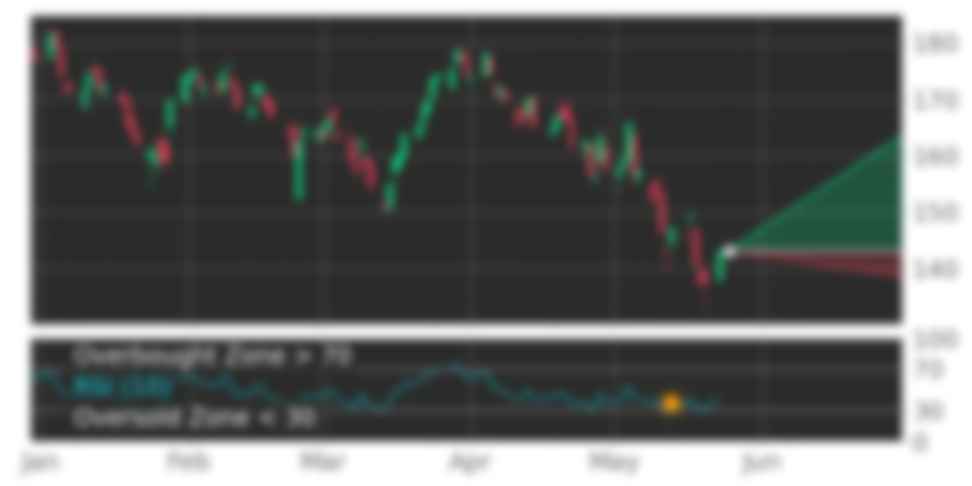
Both AIRR and PRN deliver specialized access to the U.S. industrials sector, yet they take distinct paths to pursuing growth. AIRR homes in on companies poised to gain from a domestic manufacturing comeback, while PRN applies momentum screens to spotlight leaders in the same broad group. The comparison matters for investors weighing thematic versus quantitative approaches amid evolving supply-chain policies and capital spending trends.
The First Trust RBA American Industrial Renaissance ETF (AIRR) is a passively managed fund that tracks the Richard Bernstein Advisors American Industrial Renaissance Index. It targets U.S. firms in commercial services, construction, electrical equipment, machinery, and related areas, with a focus on those generating most revenue at home. The fund usually holds 50–60 securities, mostly small- and mid-cap, and rebalances quarterly. Its expense ratio is 0.69%. I also checked this using Tickeron’s AI Screener to see how the holdings stack up against peers. Key features include screening out companies with heavy overseas sales and a growth tilt inside the industrials space.
The Invesco Dorsey Wright Industrials Momentum ETF (PRN) is a passively managed fund that follows the Dorsey Wright Industrials Technical Leaders Index. It picks at least 30 U.S. industrial names showing strong relative strength or momentum traits. The portfolio typically runs 40–50 holdings and sees quarterly reconstitution and rebalancing. The expense ratio is 0.60%. PRN layers on a technical approach that favors stocks with positive price momentum, creating a more dynamic and concentrated stance within the sector.
The U.S. industrials sector keeps drawing support from policies favoring domestic manufacturing, infrastructure outlays, and supply-chain resilience efforts. Macro factors include spending cycles in automation and defense, plus rules that encourage onshoring. Both ETFs operate in this setting, where sector rotation and earnings momentum among industrial leaders shape results. Risks include sensitivity to interest-rate shifts, commodity swings, and any pullback in global trade that might curb demand for capital goods.
Across recent market cycles, AIRR’s small-cap and thematic bent has generated distinct returns linked to reshoring news and industrial policy moves. PRN’s momentum method has produced stretches of outperformance in strong trends but also steeper drops when leadership changes. Relative positioning shows AIRR spreading exposure more broadly across smaller names, while PRN concentrates on higher-momentum large- and mid-cap industrials. Volatility gaps trace back to these design choices, with AIRR often showing higher standard deviation from its size and cyclical leanings.
Based on structural strength, cost efficiency, diversification profile, and sector momentum, Tickeron’s AI would currently assign a modest probabilistic edge to First Trust RBA American Industrial Renaissance ETF (AIRR). Its dedicated thematic construction and small-cap exposure align with durable industrial-renaissance tailwinds, offering a differentiated risk-return profile relative to momentum-driven alternatives.
I regularly turn to Tickeron’s AI Screener when comparing sector ETFs like these. The platform lets me filter on technical patterns, fundamentals, volatility, and AI signals to quickly surface ideas that match a given strategy. It has become a practical part of my routine for spotting opportunities across industrials without sifting through data manually.
The information on this webpage is provided for general informational and educational purposes only and is not intended as investment advice, a recommendation to purchase or sell any security, or an offer or solicitation related to investments. It does not consider your personal financial situation, goals, or risk profile, and all investing carries inherent risks, including the possibility of losing your entire investment. For more details, please review our full disclaimer.
Financial analyst and market blogger with expertise in equity research, fundamental analysis, and macroeconomic trends. I regularly publish coverage on individual stocks, ETFs, and sector developments — combining rigorous financial analysis with clear, engaging writing for a broad investment audience.
The Moving Average Convergence Divergence (MACD) for PRN turned positive on September 17, 2026. Looking at past instances where PRN's MACD turned positive, the stock continued to rise in 45 of 52 cases over the following month. The odds of a continued upward trend are 87%.
The RSI Indicator points to a transition from a downward trend to an upward trend -- in cases where PRN's RSI Oscillator exited the oversold zone, 17 of 21 resulted in an increase in price. Tickeron's analysis proposes that the odds of a continued upward trend are 81%.
Following a +1.63% 3-day Advance, the price is estimated to grow further. Considering data from situations where PRN advanced for three days, in 309 of 361 cases, the price rose further within the following month. The odds of a continued upward trend are 86%.
PRN may jump back above the lower band and head toward the middle band. Traders may consider buying the stock or exploring call options.
The Stochastic Oscillator has been in the overbought zone for 2 days. Expect a price pull-back in the near future.
The Momentum Indicator moved below the 0 level on September 25, 2026. You may want to consider selling the stock, shorting the stock, or exploring put options on PRN as a result. In 66 of 82 cases where the Momentum Indicator fell below 0, the stock fell further within the subsequent month. The odds of a continued downward trend are 80%.
The 50-day moving average for PRN moved below the 200-day moving average on September 21, 2026. This could be a long-term bearish signal for the stock as the stock shifts to an downward trend.
Following a 3-day decline, the stock is projected to fall further. Considering past instances where PRN declined for three days, the price rose further in 50 of 62 cases within the following month. The odds of a continued downward trend are 79%.
The Aroon Indicator for PRN entered a downward trend on September 24, 2026. This could indicate a strong downward move is ahead for the stock. Traders may want to consider selling the stock or buying put options.
The average fundamental analysis ratings, where 1 is best and 100 is worst, are as follows
Category Industrials