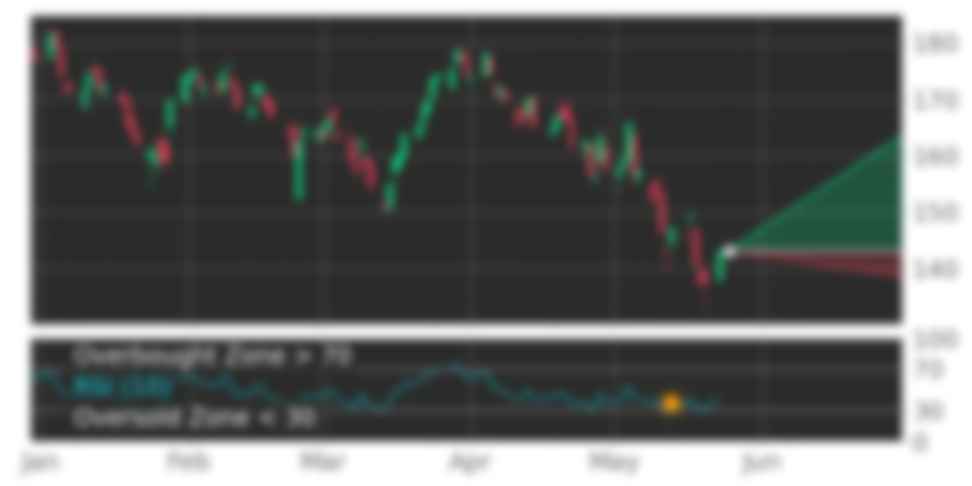
Riley Exploration Permian, Inc. (REPX) is down 13.02% in today’s session, trading around $35.00 versus yesterday’s close of $40.26.
The drop comes just one day after REPX hit a new 52‑week high of $41.26, extending a rally of more than 70% over the past 12 months and leaving the stock vulnerable to profit‑taking.
Recent Q4 earnings showed revenue of $97.28 million, down 5.3% year over year and about 8.4% below analyst expectations, even as EBITDA beat estimates—fueling concerns about top‑line momentum.
The selloff follows a period of bullish analyst coverage, a newly expanded $100 million buyback authorization (roughly 18% of shares), and a rich 4%+ dividend yield, making today’s move look more technical and positioning‑driven than thesis‑breaking.
Traders are watching whether REPX can stabilize in the mid‑$30s and how the market digests softer revenue, strong capital‑return policies, and commodity‑price volatility.
Riley Exploration Permian, Inc. (REPX) is an independent oil and natural gas producer focused on horizontal development in conventional, oil‑saturated, liquids‑rich formations in the Permian Basin of Texas and New Mexico. Today, REPX shares are down 13.02%, trading near $35.00 compared with a prior close of $40.26 on April 13, 2026. That confirms a sharp downward move immediately after the stock set a new 52‑week high of $41.26. The market reaction appears driven by a combination of profit‑taking after a big run, a recent revenue miss, and normal volatility in a small‑cap E&P name tied closely to oil prices.
Riley’s latest quarterly numbers were mixed. A recent post‑quarter review noted that REPX reported Q4 revenue of $97.28 million, down 5.3% year over year and 8.4% below Wall Street expectations. At the same time, the company beat EBITDA estimates, suggesting cost discipline and solid field‑level profitability even as volumes and realized prices pressured the top line.
Despite that mixed print, sentiment had been constructive. MarketBeat reports that multiple research firms, including William Blair, Zacks, and Truist, have issued “Outperform,” “Strong Buy,” or “Buy” ratings on REPX, supporting a consensus “Strong Buy” view with an average target of about $41.50. The company also highlighted a 4.2% dividend yield (around $0.40 quarterly) and strong free‑cash‑flow generation, which underpinned its enlarged buyback program. Still, the revenue shortfall has lingered in investors’ minds, and after such a large price rally, any hint of decelerating growth can catalyze a pullback.
Fundamentals heading into today’s selloff looked solid but not cheap. At yesterday’s close around $40.26, Riley’s market capitalization stood near $878 million, with a P/E ratio of roughly 7.2 and a beta of 1.10, according to MarketBeat. StockTITAN and company‑provided data show that over the past 12 months, REPX has gained about 70–71%, outpacing many E&P peers, and trades comfortably above both its 50‑day simple moving average of $32.15 and 200‑day average of $28.64.
The board’s decision to authorize a $100 million share‑repurchase plan, covering up to roughly 18% of shares outstanding, further buoyed bullish sentiment. However, that was partly offset by insider selling earlier in the year: filings show the CEO and other executives unloading shares in February at prices in the high‑$20s, leaving insiders with about 4.7% ownership while institutions hold roughly 59%. Against this backdrop of strong performance, buyback support, and some insider profit‑taking, today’s 13% slide looks like a classic reset after a breakout to new highs, rather than a fundamental deterioration in the business overnight.
Recent trading patterns underscore the volatility. StockInvest data show that on April 13, 2026, REPX gained 3.19%, rising from $39.54 to $40.26, with an intraday range between $38.99 and $41.26, the new 52‑week high. Over the last 12 months, Riley has climbed from around $24 to over $40, with Barchart and TradingEconomics tracking a 12‑month gain north of 70%.
Today’s 13.02% drop to about $35.00 brings REPX back toward, but still above, its 50‑day moving average, suggesting the stock remains in a longer‑term uptrend despite the near‑term setback. Volume has been elevated around recent moves—MarketBeat cites roughly 115,600 shares traded on prior “gap‑down” sessions and more than 66,000 on the 52‑week‑high day—indicating that both rallies and pullbacks have been driven by active institutional participation. Sector‑wise, E&P names remain sensitive to daily oil‑price swings and macro sentiment; with no new company‑specific shock today, the downside appears primarily technical and positioning‑driven.
For traders dealing with sharp two‑way moves in small‑cap energy names like REPX, Tickeron’s Trending AI Robots page showcases AI‑driven trading bots that are currently performing best in live market conditions. Tickeron operates hundreds of algorithmic strategies across thousands of tickers, but only the top‑performing bots under current volatility and trend regimes appear in this curated Trending section. These include momentum and breakout systems that aim to ride rallies like REPX’s run to a new 52‑week high, as well as mean‑reversion and volatility‑focused models designed to identify opportunities after steep pullbacks such as today’s 13% drop. Each bot discloses historical returns, maximum drawdowns, holding periods, and traded symbols, helping traders align strategies with their timeframe and risk profile. Active investors in REPX can use these AI‑powered tools as a systematic complement to their own commodity, macro, and fundamental analysis.
Looking ahead, the key questions for REPX center on execution, capital returns, and commodity prices. Investors will focus on the next quarterly report for updates on production volumes, realized pricing, and operating costs, as well as any color on hedging strategy and development plans in the San Andres and broader Permian positions. The market will also monitor how aggressively management deploys the $100 million buyback while maintaining its 4%+ dividend, and whether free cash flow can comfortably cover both shareholder returns and growth capex.
Externally, crude‑oil and natural‑gas prices, OPEC+ policy, U.S. shale‑activity trends, and broader risk appetite for small‑cap energy stocks will remain crucial. After today’s drop, REPX trades below its recent highs but still well above its 200‑day average, suggesting room for continued volatility in either direction. If Riley can stabilize revenues, continue to beat on cash‑flow metrics, and demonstrate disciplined balance‑sheet management, today’s selloff may ultimately look like a consolidation within a longer‑term uptrend. Conversely, further revenue softness or commodity‑price weakness could keep pressure on REPX in the near term.
The information on this webpage is provided for general informational and educational purposes only and is not intended as investment advice, a recommendation to purchase or sell any security, or an offer or solicitation related to investments. It does not consider your personal financial situation, goals, or risk profile, and all investing carries inherent risks, including the possibility of losing your entire investment. For more details, please review our full disclaimer.
The Moving Average Convergence Divergence (MACD) for REPX turned positive on August 10, 2026. Looking at past instances where REPX's MACD turned positive, the stock continued to rise in 42 of 49 cases over the following month. The odds of a continued upward trend are 86%.
The Momentum Indicator moved above the 0 level on August 10, 2026. You may want to consider a long position or call options on REPX as a result. In 78 of 96 past instances where the momentum indicator moved above 0, the stock continued to climb. The odds of a continued upward trend are 81%.
REPX moved above its 50-day moving average on August 06, 2026 date and that indicates a change from a downward trend to an upward trend.
The 10-day moving average for REPX crossed bullishly above the 50-day moving average on August 10, 2026. This indicates that the trend has shifted higher and could be considered a buy signal. In 17 of 24 past instances when the 10-day crossed above the 50-day, the stock continued to move higher over the following month. The odds of a continued upward trend are 71%.
Following a +0.86% 3-day Advance, the price is estimated to grow further. Considering data from situations where REPX advanced for three days, in 231 of 309 cases, the price rose further within the following month. The odds of a continued upward trend are 75%.
The Aroon Indicator entered an Uptrend today. In 152 of 210 cases where REPX Aroon's Indicator entered an Uptrend, the price rose further within the following month. The odds of a continued Uptrend are 72%.
The RSI Indicator demonstrates that the ticker has stayed in the overbought zone for 8 days. The longer the ticker stays in the overbought zone, the sooner a price pull-back is expected.
The Stochastic Oscillator demonstrated that the ticker has stayed in the overbought zone for 10 days. The longer the ticker stays in the overbought zone, the sooner a price pull-back is expected.
Following a 3-day decline, the stock is projected to fall further. Considering past instances where REPX declined for three days, the price rose further in 50 of 62 cases within the following month. The odds of a continued downward trend are 74%.
REPX broke above its upper Bollinger Band on September 02, 2026. This could be a sign that the stock is set to drop as the stock moves back below the upper band and toward the middle band. You may want to consider selling the stock or exploring put options.
The Tickeron Valuation Rating of 17 (best 1 - 100 worst) indicates that the company is slightly undervalued in the industry. This rating compares market capitalization estimated by our proprietary formula with the current market capitalization. This rating is based on the following metrics, as compared to industry averages: P/B Ratio (1.522) is normal, around the industry mean (5.125). P/E Ratio (7.756) is within average values for comparable stocks, (24.494). Projected Growth (PEG Ratio) (0.000) is also within normal values, averaging (2.866). Dividend Yield (0.037) settles around the average of (0.046) among similar stocks. P/S Ratio (1.906) is also within normal values, averaging (6.104).
The Tickeron PE Growth Rating for this company is 21 (best 1 - 100 worst), pointing to outstanding earnings growth. The PE Growth rating is based on a comparative analysis of stock PE ratio increase over the last 12 months compared against S&P 500 index constituents.
The Tickeron Profit vs. Risk Rating rating for this company is 32 (best 1 - 100 worst), indicating low risk on high returns. The average Profit vs. Risk Rating rating for the industry is 68, placing this stock better than average.
The Tickeron Price Growth Rating for this company is 37 (best 1 - 100 worst), indicating steady price growth. REPX’s price grows at a higher rate over the last 12 months as compared to S&P 500 index constituents.
The Tickeron SMR rating for this company is 46 (best 1 - 100 worst), indicating strong sales and a profitable business model. SMR (Sales, Margin, Return on Equity) rating is based on comparative analysis of weighted Sales, Income Margin and Return on Equity values compared against S&P 500 index constituents. The weighted SMR value is a proprietary formula developed by Tickeron and represents an overall profitability measure for a stock.
The Tickeron Seasonality Score of 50 (best 1 - 100 worst) indicates that the company is fair valued in the industry. The Tickeron Seasonality score describes the variance of predictable price changes around the same period every calendar year. These changes can be tied to a specific month, quarter, holiday or vacation period, as well as a meteorological or growing season.
The average fundamental analysis ratings, where 1 is best and 100 is worst, are as follows
Industry OilGasProduction