SolarEdge Technologies, Inc. (SEDG), the Israel-based solar inverter and energy technology company, has already proven that $80 is within reach. The stock hit a 52-week high of $81.25 earlier in 2026, before pulling back to approximately $55 as of mid-July 2026. The question now confronting investors is whether SEDG can reclaim that level and sustain it, especially given that the broader analyst community remains decidedly cautious. With the stock having rallied more than 99% in 2026 and over 112% in 2025, momentum traders and value-focused investors alike are debating whether the recovery has further room to run or whether the most attractive gains have already been captured.
SolarEdge designs, develops, and sells direct current (DC) optimized inverter systems for solar photovoltaic installations, serving residential, commercial, and small utility-scale markets globally. The company's integrated product ecosystem — spanning power optimizers, inverters, home battery storage, EV chargers, and a cloud-based monitoring platform — differentiates it from commoditized inverter competitors. After suffering a brutal downturn that saw shares fall from above $300 in 2023 to below $12 in early 2025, the company has staged a significant operational turnaround. Trailing twelve-month revenue reached $1.28 billion, reflecting approximately 39% growth, and revenue for fiscal year 2025 came in at $1.18 billion, a 31% increase from the prior year. I also checked this using Tickeron’s AI Screener to see how the stock compares to others in the industry.
Several structural tailwinds could support a return to the $80 level. First, European distribution channels, which had been bloated with excess inventory throughout 2023 and 2024, have largely normalized. This normalization has allowed SolarEdge to resume more predictable shipment patterns and rebuild relationships with key distributors and installers across Germany, the Netherlands, and Italy. Second, the company's U.S. manufacturing footprint — with residential inverters now shipping from its Austin, Texas facility and commercial products planned from Florida — provides both geopolitical diversification and potential tariff advantages. Third, the shift toward power purchase agreements (PPAs) and lease-based residential solar models may broaden the addressable customer base, partially offsetting the anticipated demand impact from the expiration of certain residential tax credits.
Additionally, the company's next-generation SolarEdge Nexis residential solar and storage system, featuring modular battery configurations and faster commissioning, positions it to capture growing demand for integrated home energy solutions. Partnerships with grid orchestration platforms like WeaveGrid also open doors to virtual power plant and grid services revenue streams.
Despite the operational progress, significant headwinds remain. SolarEdge is still not profitable: the company reported a net loss of over $364 million on a trailing twelve-month basis, with earnings per share (EPS) of -$6.12. While losses have narrowed compared to 2024, the path to sustained profitability depends on continued revenue growth, margin expansion, and disciplined cost management — none of which are guaranteed. Intensifying price competition from well-capitalized Chinese inverter manufacturers continues to exert pressure on gross margins, particularly in European markets where pricing remains aggressive.
Policy uncertainty represents another meaningful risk. The expiration of the U.S. 25D residential solar tax credit at the end of 2025 is expected to cause a sharp contraction in that segment, with management previously estimating a potential 50% to 60% year-over-year decline. Although the shift to third-party ownership models may partially mitigate the impact, the net effect on domestic revenue growth remains unclear. Sustained high global interest rates and tighter credit conditions could further suppress project financing and consumer adoption across key international markets.
Wall Street's current posture toward SolarEdge reflects deep divisions. The consensus analyst rating sits at Hold, with an average 12-month price target of approximately $43.95 — roughly 20% below the recent trading price near $55. The range of individual targets is extraordinarily wide: from a low of under $7 to a high near $49 among the most optimistic firms. UBS, which has maintained a Neutral rating throughout the recovery, most recently set a price target of $41 as of May 2026. Wells Fargo raised its target to $42 in late 2025, while Morgan Stanley upgraded the stock to Equal-Weight with a $33 target. Even the most bullish published targets remain well below $80, suggesting that a move to that level would require earnings and revenue performance that significantly exceeds current consensus expectations.
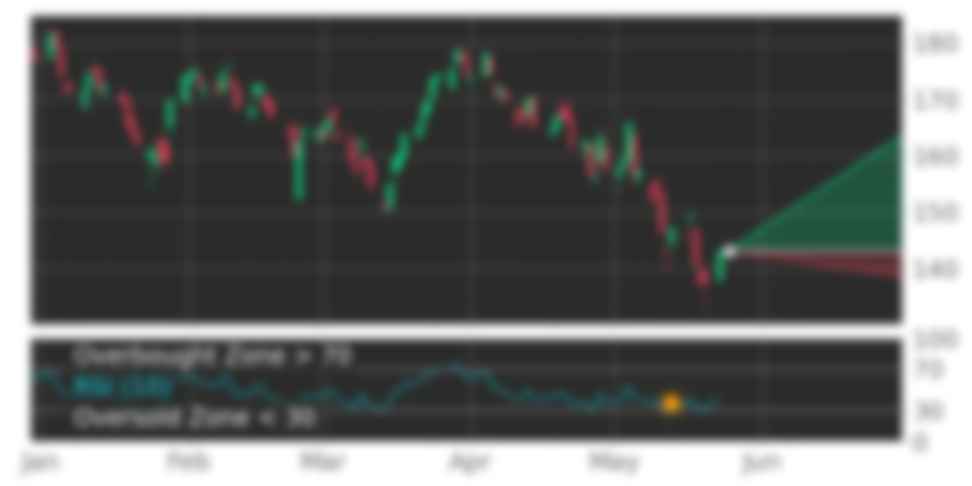
From a technical analysis perspective, the $81.25 level represents the most important near-term resistance, as it marks the 2026 cycle high. A successful breakout above that level on strong volume would signal a potential continuation of the longer-term recovery trend. On the downside, the $38-$41 zone has functioned as a critical support area, absorbing selling pressure during multiple pullbacks. The stock's tendency to exhibit extreme volatility — with over 95 daily moves exceeding 5% in a single year — underscores the importance of risk management when evaluating entries and exits around these levels.
Institutional ownership remains significant, with over 450 funds and institutions reporting positions in SolarEdge as of the most recent filings. The put/call ratio has historically leaned bullish, hovering around 0.67 to 0.80 during various reporting periods, indicating that options market participants have generally positioned for upside. However, the presence of multiple firms maintaining Sell or Underweight ratings — even while raising price targets — highlights a persistent skepticism about whether current valuations adequately price in the execution and competitive risks.
Navigating a stock as volatile as SolarEdge requires timely and data-driven decision-making. I rely on Tickeron’s AI Daily Buy/Sell Signals to help monitor high-momentum names like this one. These signals leverage artificial intelligence to continuously track thousands of stocks and ETFs, generating actionable Buy, Sell, or Hold signals based on evolving market conditions, technical patterns, and AI-driven analysis. For traders tracking SEDG or similar names, the tool helps identify emerging opportunities, manage existing positions with greater precision, and detect shifts in market trends before they become obvious to the broader market.
The possibility of SolarEdge stock reaching $80 is not speculative — it has already traded there during this cycle. However, sustaining a move to and above that level would likely require a combination of factors that are not yet fully in place: a return to GAAP profitability, meaningful gross margin improvement, durable revenue growth beyond the current recovery phase, and a more constructive policy environment for residential solar. The bullish case rests on the company's operational turnaround gaining further traction, international market share recovery, and successful execution of its new product roadmap. The bearish case warns that intense competition, policy headwinds, and an analyst community that remains broadly cautious could cap upside well below the $80 threshold. Investors should monitor quarterly earnings trends, gross margin trajectory, European demand signals, and any developments in U.S. solar policy as the most important indicators of whether $80 becomes a realistic and sustainable target for SEDG.
The information on this webpage is provided for general informational and educational purposes only and is not intended as investment advice, a recommendation to purchase or sell any security, or an offer or solicitation related to investments. It does not consider your personal financial situation, goals, or risk profile, and all investing carries inherent risks, including the possibility of losing your entire investment. For more details, please review our full disclaimer.
Disclaimers and LimitationsMoving higher for three straight days is viewed as a bullish sign. Keep an eye on this stock for future growth. Considering data from situations where SEDG advanced for three days, in of 271 cases, the price rose further within the following month. The odds of a continued upward trend are .
The Stochastic Oscillator suggests the stock price trend may be in a reversal from a downward trend to an upward trend. of 59 cases where SEDG's Stochastic Oscillator exited the oversold zone resulted in an increase in price. Tickeron's analysis proposes that the odds of a continued upward trend are .
The Momentum Indicator moved above the 0 level on July 08, 2026. You may want to consider a long position or call options on SEDG as a result. In of 92 past instances where the momentum indicator moved above 0, the stock continued to climb. The odds of a continued upward trend are .
The 10-day RSI Indicator for SEDG moved out of overbought territory on June 03, 2026. This could be a bearish sign for the stock. Traders may want to consider selling the stock or buying put options. Tickeron's A.I.dvisor looked at 27 similar instances where the indicator moved out of overbought territory. In of the 27 cases, the stock moved lower in the following days. This puts the odds of a move lower at .
The Moving Average Convergence Divergence Histogram (MACD) for SEDG turned negative on June 08, 2026. This could be a sign that the stock is set to turn lower in the coming weeks. Traders may want to sell the stock or buy put options. Tickeron's A.I.dvisor looked at 52 similar instances when the indicator turned negative. In of the 52 cases the stock turned lower in the days that followed. This puts the odds of success at .
SEDG moved below its 50-day moving average on July 07, 2026 date and that indicates a change from an upward trend to a downward trend.
The 10-day moving average for SEDG crossed bearishly below the 50-day moving average on July 01, 2026. This indicates that the trend has shifted lower and could be considered a sell signal. In of 15 past instances when the 10-day crossed below the 50-day, the stock continued to move higher over the following month. The odds of a continued downward trend are .
Following a 3-day decline, the stock is projected to fall further. Considering past instances where SEDG declined for three days, the price rose further in of 62 cases within the following month. The odds of a continued downward trend are .
The Aroon Indicator for SEDG entered a downward trend on July 10, 2026. This could indicate a strong downward move is ahead for the stock. Traders may want to consider selling the stock or buying put options.
The Tickeron PE Growth Rating for this company is (best 1 - 100 worst), pointing to consistent earnings growth. The PE Growth rating is based on a comparative analysis of stock PE ratio increase over the last 12 months compared against S&P 500 index constituents.
The Tickeron Price Growth Rating for this company is (best 1 - 100 worst), indicating steady price growth. SEDG’s price grows at a higher rate over the last 12 months as compared to S&P 500 index constituents.
The Tickeron SMR rating for this company is (best 1 - 100 worst), indicating weak sales and an unprofitable business model. SMR (Sales, Margin, Return on Equity) rating is based on comparative analysis of weighted Sales, Income Margin and Return on Equity values compared against S&P 500 index constituents. The weighted SMR value is a proprietary formula developed by Tickeron and represents an overall profitability measure for a stock.
The Tickeron Valuation Rating of (best 1 - 100 worst) indicates that the company is significantly overvalued in the industry. This rating compares market capitalization estimated by our proprietary formula with the current market capitalization. This rating is based on the following metrics, as compared to industry averages: P/B Ratio (8.170) is normal, around the industry mean (4.304). P/E Ratio (95.917) is within average values for comparable stocks, (124.216). SEDG's Projected Growth (PEG Ratio) (0.000) is slightly lower than the industry average of (1.556). SEDG's Dividend Yield (0.000) is considerably lower than the industry average of (0.095). P/S Ratio (2.577) is also within normal values, averaging (8.286).
The Tickeron Profit vs. Risk Rating rating for this company is (best 1 - 100 worst), indicating that the returns do not compensate for the risks. SEDG’s unstable profits reported over time resulted in significant Drawdowns within these last five years. A stable profit reduces stock drawdown and volatility. The average Profit vs. Risk Rating rating for the industry is 98, placing this stock worse than average.
The average fundamental analysis ratings, where 1 is best and 100 is worst, are as follows
a provider of distributed solar power harvesting and photovoltaics monitoring solutions
Industry AlternativePowerGeneration