MENU
Go to the list of all blogs
Jimmy Landsman's Avatar
published in Blogs
Aug 22, 2026
Global X Defense Tech ETF (SHLD) Offers Differentiated Defense Exposure in 2026

Global X Defense Tech ETF (SHLD) Offers Differentiated Defense Exposure in 2026

Key Takeaways

  • The Global X Defense Tech ETF (SHLD) provides exposure to approximately 50 global companies positioned at the intersection of defense spending and advanced technology, including AI, cybersecurity, and autonomous systems.
  • With roughly 89% allocated to Industrials and 11% to Information Technology, SHLD offers a differentiated portfolio compared to traditional aerospace and defense funds that typically lack meaningful tech exposure.
  • Top holdings — RTX, GD, LMT, NOC, and PLTR — account for more than 40% of net assets, meaning performance is heavily influenced by a concentrated group of defense primes and one major software name.
  • International holdings represent approximately 36% of the portfolio, including European defense contractors such as Rheinmetall, BAE Systems, Thales, Leonardo, and Saab, giving the fund direct exposure to the European rearmament cycle.
  • The fund has experienced elevated volatility in 2026, reflecting shifting interest rate expectations, geopolitical headlines, and rotation within the defense sector between traditional primes and high-growth defense technology companies.
  • Structural tailwinds — including NATO's 5% GDP defense spending target by 2035 and global military budgets projected to exceed $3 trillion annually — underpin the long-term thematic case, though near-term sentiment can shift quickly.

A Closer Look at the Global X Defense Tech ETF (SHLD)

The Global X Defense Tech ETF (SHLD) is a passively managed exchange-traded fund that seeks to track the Global X Defense Tech Index. Launched in September 2023 and issued by Global X, the fund invests in companies positioned to benefit from the increased adoption and utilization of defense technology. This includes firms involved in cybersecurity systems, artificial intelligence and big data applications, advanced military hardware such as robotics and autonomous systems, and next-generation aircraft and fuel systems.

The ETF holds approximately 50 securities and has grown to roughly $7.1 billion in net assets under management (AUM), reflecting strong investor interest in the defense technology theme. Its expense ratio is 0.50%. The portfolio is concentrated in the Industrials sector at roughly 89%, with Information Technology making up the remaining 11%. Geographically, U.S.-listed companies represent about 64% of assets, while international holdings — predominantly European defense contractors alongside select South Korean and Israeli names — account for roughly 36%. Top holdings include RTX at approximately 9.9%, General Dynamics at 9.0%, Lockheed Martin at 8.9%, Northrop Grumman at 8.0%, and Palantir Technologies at 7.4%. I also checked this using Tickeron’s AI Screener to see how the holdings stack up against broader industry peers.

The Broader Defense Technology Landscape

The defense technology sector is navigating a structural transformation driven by several long-duration catalysts. Global defense spending is projected to surpass $3 trillion in 2026, expanding at roughly a 5% annualized pace toward an estimated $3.7 trillion by 2030. NATO's June 2025 commitment to raise member defense spending to 5% of GDP by 2035 — up from the prior 2% target — represents one of the most significant policy shifts for the alliance in decades. All 32 NATO members met the 2% threshold for the first time in 2025, and several allies are already above 4%.

European rearmament has become a defining macroeconomic theme. The European Union's Readiness 2030 plan and the SAFE rearmament loan facility totaling €150 billion are channeling capital toward air and missile defense, munitions replenishment, drones, and technologies of strategic importance including AI and quantum computing. Germany has suspended its constitutional debt brake to fund defense and infrastructure spending, with its defense budget projected to reach €162 billion by 2029. These commitments directly benefit the European defense contractors that SHLD holds — Rheinmetall, BAE Systems, Thales, Leonardo, and Saab — which do not appear in traditional U.S.-only aerospace and defense funds.

Simultaneously, the center of gravity within defense is shifting from hardware to software. AI-enabled systems, autonomous drones, satellite intelligence, and digital command networks are moving from experimentation into deployment, widening margin profiles for defense technology companies and reshaping the industry's earnings structure. This convergence of defense budgets with technology adoption creates a thematic tailwind that distinguishes SHLD from conventional industrial-sector defense ETFs.

How SHLD Has Performed and Positioned Itself

SHLD has experienced a volatile 2026. After peaking near $74–$75 in early April, the fund declined sharply through late June to a 52-week low near $57.89, representing a drawdown of roughly 22% from its spring highs. The selloff coincided with several headwinds: market reactions to potential Ukraine peace negotiations, renewed uncertainty around interest rates, and rotation away from defense technology names following their strong 2025 performance. Since late June, the ETF has staged a partial recovery, climbing back into the mid-to-high $60s as bargain buying emerged and defense spending commitments remained firmly in place.

The fund's largest holdings have delivered mixed but generally constructive performance. Traditional defense primes — RTX, General Dynamics, and Lockheed Martin — have benefited from expanding order backlogs and multi-year procurement contracts. European names such as Rheinmetall have rallied on the back of Germany's defense spending acceleration and long-term revenue growth forecasts. Palantir Technologies, representing the software and AI layer of the portfolio, has been a significant source of both upside contribution and volatility given its higher-beta characteristics. The fund's 11% technology allocation has introduced a growth-equity sensitivity not present in traditional industrials-focused defense ETFs, making SHLD more responsive to shifts in risk appetite and interest rate expectations. One thing that stands out when reviewing the data is how this tech tilt adds a layer of sensitivity not found in older defense funds.

On a trailing basis, SHLD returned approximately 0.4% over the 12 months through mid-2026, though cumulative returns since inception in September 2023 have exceeded 150%, underscoring the powerful rally defense technology experienced through 2024 and 2025 before the 2026 consolidation phase began.

2026 Outlook and What to Watch

Several structural factors are likely to influence SHLD's trajectory through the remainder of 2026. NATO's 5% GDP spending target provides a multi-year demand floor for defense contractors, but the pace at which individual member states translate commitments into appropriated budgets will determine the cadence of revenue realization. European fiscal expansion — particularly Germany's defense buildup and the EU's collective rearmament framework — remains a critical variable given SHLD's approximate 36% international exposure.

Interest rate expectations and inflation trends will continue to affect the fund's technology sleeve. Higher-growth defense software and AI names, including Palantir, are more sensitive to discount rate assumptions than the established primes, meaning Federal Reserve policy signals can create divergent performance within the portfolio itself. Additionally, geopolitical developments — including the trajectory of the Ukraine conflict, U.S.-China tensions, and Middle East instability — can shift sentiment rapidly, even when underlying defense budgets remain on a structural growth path. I’m watching this closely as rate signals evolve.

Earnings cycles across the fund's top holdings represent another key monitor. Defense primes are managing record backlogs and expanding production capacity, but execution on margins, supply chain bottlenecks, and the pace at which new contract awards convert to revenue will influence near-term performance. For the European holdings, currency fluctuations add an additional layer of return variability for U.S.-dollar-based investors. Capital flows into defense-themed ETFs will also be worth watching; SHLD gathered significant assets through 2024 and early 2025, and sustained inflows would signal continued conviction in the defense technology theme, while outflows could indicate fatigue after the sector's multi-year run.

Leveraging AI for Sector Insights

One tool I frequently turn to when analyzing themes like defense technology is Tickeron’s AI Screener. It helps me scan securities efficiently using technical indicators, fundamentals, volatility measures, and AI signals to identify trends and opportunities without relying solely on manual review.

Disclaimer

The information on this webpage is provided for general informational and educational purposes only and is not intended as investment advice, a recommendation to purchase or sell any security, or an offer or solicitation related to investments. It does not consider your personal financial situation, goals, or risk profile, and all investing carries inherent risks, including the possibility of losing your entire investment. For more details, please review our full disclaimer.

Disclaimers and Limitations

Related Ticker: SHLD

Contributor

My name is Jimmy, and I’m a financial analyst. I’m passionate about identifying the most promising ETFs for trading. Every day, I review hundreds of ETFs in search of trading and investment signals based on a variety of factors. I actively use technical analysis to identify short-term opportunities, including channels, indicators, support and resistance levels, and more. I also spend a great deal of time researching ETFs from a long-term investment perspective. My goal is to build a balanced ETF portfolio that combines investment-oriented and speculative ETFs and performs effectively during both market rallies and corrections.


SHLD in downward trend: price may drop because broke its higher Bollinger Band on August 04, 2026

SHLD broke above its upper Bollinger Band on August 04, 2026. This could be a sign that the stock is set to drop as the stock moves back below the upper band and toward the middle band. You may want to consider selling the stock or exploring put options. The A.I.dvisor looked at 33 similar instances where the stock broke above the upper band. In of the 33 cases the stock fell afterwards. This puts the odds of success at .

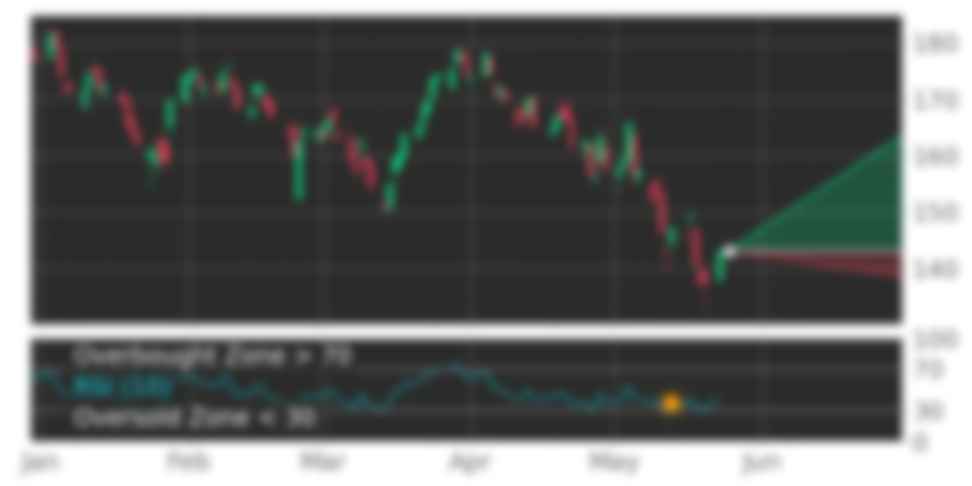
Price Prediction Chart

Technical Analysis (Indicators)

Bearish Trend Analysis

The 10-day RSI Indicator for SHLD moved out of overbought territory on August 19, 2026. This could be a bearish sign for the stock. Traders may want to consider selling the stock or buying put options. Tickeron's A.I.dvisor looked at 34 similar instances where the indicator moved out of overbought territory. In of the 34 cases, the stock moved lower in the following days. This puts the odds of a move lower at .

The Momentum Indicator moved below the 0 level on August 20, 2026. You may want to consider selling the stock, shorting the stock, or exploring put options on SHLD as a result. In of 49 cases where the Momentum Indicator fell below 0, the stock fell further within the subsequent month. The odds of a continued downward trend are .

The Moving Average Convergence Divergence Histogram (MACD) for SHLD turned negative on August 20, 2026. This could be a sign that the stock is set to turn lower in the coming weeks. Traders may want to sell the stock or buy put options. Tickeron's A.I.dvisor looked at 27 similar instances when the indicator turned negative. In of the 27 cases the stock turned lower in the days that followed. This puts the odds of success at .

Following a 3-day decline, the stock is projected to fall further. Considering past instances where SHLD declined for three days, the price rose further in of 62 cases within the following month. The odds of a continued downward trend are .

Bullish Trend Analysis

The Stochastic Oscillator is in the oversold zone. Keep an eye out for a move up in the foreseeable future.

SHLD moved above its 50-day moving average on July 30, 2026 date and that indicates a change from a downward trend to an upward trend.

The 10-day moving average for SHLD crossed bullishly above the 50-day moving average on August 03, 2026. This indicates that the trend has shifted higher and could be considered a buy signal. In of 5 past instances when the 10-day crossed above the 50-day, the stock continued to move higher over the following month. The odds of a continued upward trend are .

Following a 3-day Advance, the price is estimated to grow further. Considering data from situations where SHLD advanced for three days, in of 227 cases, the price rose further within the following month. The odds of a continued upward trend are .

The Aroon Indicator entered an Uptrend today. In of 273 cases where SHLD Aroon's Indicator entered an Uptrend, the price rose further within the following month. The odds of a continued Uptrend are .

Notable companies

The most notable companies in this group are Boeing Company (NYSE:BA), Lockheed Martin Corp (NYSE:LMT), Northrop Grumman Corp (NYSE:NOC), Antero Midstream Corp (NYSE:AM).

Industry description

The investment seeks to provide investment results that correspond generally to the price and yield performance, before fees and expenses, of the Global X Defense Tech Index. The fund invests at least 80% of its net assets, plus borrowings for investment purposes (if any), in the securities of the Global X Defense Tech Index, which may include common stocks, American Depositary Receipts ("ADRs") and Global Depositary Receipts ("GDRs") based on the securities in the underlying index. The underlying index is owned and was developed by Global X Management Company LLC, an affiliate of the fund and the fund's investment adviser. The fund is non-diversified.

Market Cap

The average market capitalization across the Global X Defense Tech ETF ETF is 65.41B. The market cap for tickers in the group ranges from 35.81M to 432.41B. PLTR holds the highest valuation in this group at 432.41B. The lowest valued company is CHG at 35.81M.

High and low price notable news

The average weekly price growth across all stocks in the Global X Defense Tech ETF ETF was 7%. For the same ETF, the average monthly price growth was 44%, and the average quarterly price growth was 33%. NPK experienced the highest price growth at 9%, while AVAV experienced the biggest fall at -16%.

Volume

The average weekly volume growth across all stocks in the Global X Defense Tech ETF ETF was 4%. For the same stocks of the ETF, the average monthly volume growth was 1% and the average quarterly volume growth was -56%

Fundamental Analysis Ratings

The average fundamental analysis ratings, where 1 is best and 100 is worst, are as follows

Valuation Rating: 61
P/E Growth Rating: 57
Price Growth Rating: 52
SMR Rating: 60
Profit Risk Rating: 55
Seasonality Score: -27 (-100 ... +100)
View a ticker or compare two or three
SHLD
Daily Signal:
Gain/Loss:
Interact to see
Advertisement
A.I.Advisor
published price charts
Last 5 trading days
A.I. Advisor
published General Information

General Information

Category Industrials

Profile
Details
Category
Industrials
Address
Global X Funds600 Lexington Avenue, 20th FloorNew York
Phone
+1 8884938631
Web
www.globalxfunds.com