Key Takeaways
- SKF is a leveraged inverse ETF (exchange-traded fund) engineered to deliver -2x the daily return of the S&P Financial Select Sector Index.
- The fund advanced roughly 9.5% over the trailing 30 days and about 7.5% over the last quarter, reflecting a modest pullback in large-cap financial equities.
- Daily reset mechanics make SKF a short-term tactical tool, not a buy-and-hold position, because compounding can cause returns to diverge materially from -2x over multi-day periods.
- Its economic exposure is dominated by mega-cap financials, including Berkshire Hathaway (BRK.B), JPMorgan Chase (JPM), Visa (V), and Mastercard (MA).
- A 0.95% expense ratio and a small asset base of roughly $10–13 million in assets under management (AUM) are important cost and liquidity considerations.
ProShares UltraShort Financials (SKF) Overview
ProShares UltraShort Financials seeks daily investment results, before fees and expenses, that correspond to two times the inverse of the daily performance of the S&P Financial Select Sector Index. The index measures large-cap U.S. financial companies drawn from the S&P 500, spanning banks, insurers, capital markets, consumer finance, and diversified financials. The fund has operated since January 2007 and carries a net expense ratio of 0.95%.
SKF is a passively managed, non-diversified product that achieves its inverse exposure through derivatives rather than direct short selling. Its portfolio is dominated by total-return swap agreements on the financial-sector index with a range of counterparties, including major global banks, alongside cash and money-market collateral. This synthetic structure means the fund's listed holdings are largely swap positions and collateral rather than individual financial stocks, and its economic exposure to the underlying index is negative. Investors should understand that the fund's leverage resets daily, so its stated -2x objective applies to single-day periods only.
Industry and Thematic Landscape
The financial sector is among the most interest-rate-sensitive corners of the equity market. Bank profitability is closely tied to net interest margins, which respond to the level and shape of the yield curve, while insurers, asset managers, and brokers are influenced by credit conditions, market volatility, and capital-markets activity. A higher-for-longer rate environment has generally supported lending margins, but it also raises questions about credit quality and deposit costs.
Monetary policy remains a central driver. Policymakers have signaled a cautious stance, holding rates steady while projecting only a limited easing path, as inflation has cooled but remains elevated relative to target. This backdrop keeps financial-sector earnings tied to rate expectations, loan growth, and the health of the consumer. Regulatory developments, including evolving capital requirements for large banks, add a further layer of influence over sector valuations and capital-return capacity. For an inverse product such as SKF, any strength in these fundamentals translates into headwinds, while sector weakness or rising credit concerns tend to lift the fund.
Performance and Positioning Snapshot
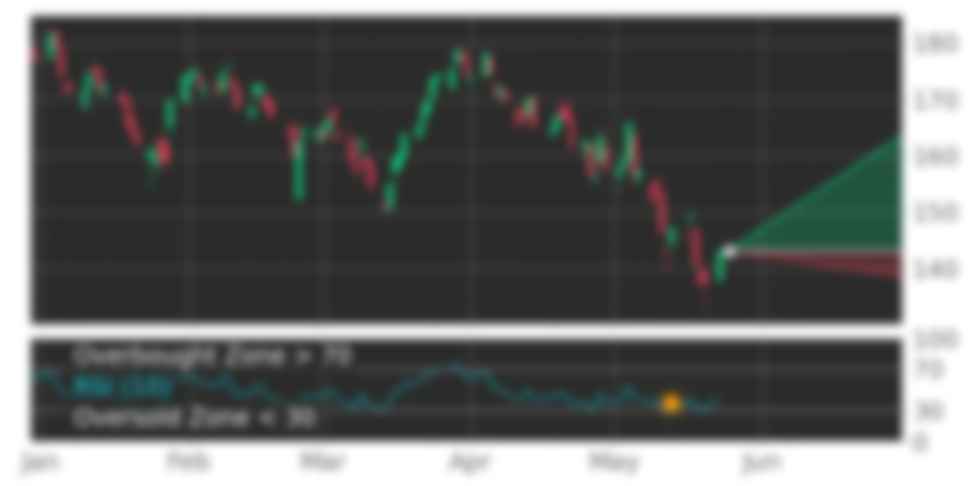
Over the trailing 30 days, SKF rose approximately 9.5%, while over the last quarter it gained roughly 7.5%. The path has been notably volatile rather than a straight line. The fund slid to the low end of its 52-week range in early August as financial stocks rallied, then staged a recovery into late September when large-cap financials pulled back, before consolidating near current levels. This choppiness is characteristic of a daily-reset inverse fund, where volatility and the sequence of daily returns shape outcomes as much as the direction of the underlying index.
The recent move reflects a modest rotation within the financial complex. Mega-cap constituents such as Berkshire Hathaway and JPMorgan Chase carry outsized weight in the underlying index, so their price action — alongside that of payment networks like Visa and Mastercard and money-center banks such as Bank of America (BAC) and Wells Fargo (WFC) — disproportionately influences SKF's behavior. Periods of rate-cut expectations, earnings results, or credit concerns that pressure these names tend to support the fund, while broad financial-sector strength works against it.
AI Screener
Tickeron's AI Screener is an AI-powered stock and ETF discovery platform that helps investors scan thousands of securities using technical indicators, fundamentals, volatility measures, AI-generated signals, market trends, price patterns, and customizable filters. It is designed to surface trending securities, breakout candidates, and new trading opportunities more efficiently than manual screening. For investors tracking inverse and leveraged products such as SKF, the screener can help identify momentum shifts, relative-strength changes, and sector rotations across the financial complex. Explore the AI Screener to refine your search by industry, signal type, and performance characteristics.
2026 Outlook and Key Factors to Monitor
Several structural forces are likely to shape SKF's behavior through 2026. The trajectory of interest rates remains paramount: sustained higher rates may support bank lending margins and pressure the fund, while a more aggressive easing cycle could compress margins and provide a tailwind. Inflation readings and the pace of any policy adjustment will therefore be closely watched, as will the shape of the yield curve, which affects bank funding costs and lending profitability.
Credit conditions and loan-loss trends are another key variable, particularly as higher borrowing costs filter through to commercial real estate, consumer lending, and corporate balance sheets. Earnings cycles among the index's largest constituents — the money-center and universal banks, payment networks, and diversified financials — will continue to drive sector leadership. Regulatory and policy developments, including capital-requirement changes and financial-sector legislation, may also influence valuations. Finally, investors should monitor fund-level characteristics such as AUM, bid-ask spreads, and the daily compounding effects that can erode returns in leveraged inverse products over time.
The information on this webpage is provided for general informational and educational purposes only and is not intended as investment advice, a recommendation to purchase or sell any security, or an offer or solicitation related to investments. It does not consider your personal financial situation, goals, or risk profile, and all investing carries inherent risks, including the possibility of losing your entire investment. For more details, please review our full disclaimer.
Disclaimers and Limitations
 GET DAILY SIGNALS