Key Takeaways
- WIP tracks the FTSE International Inflation-Linked Securities Select Index, holding inflation-linked government bonds from developed and emerging markets outside the United States.
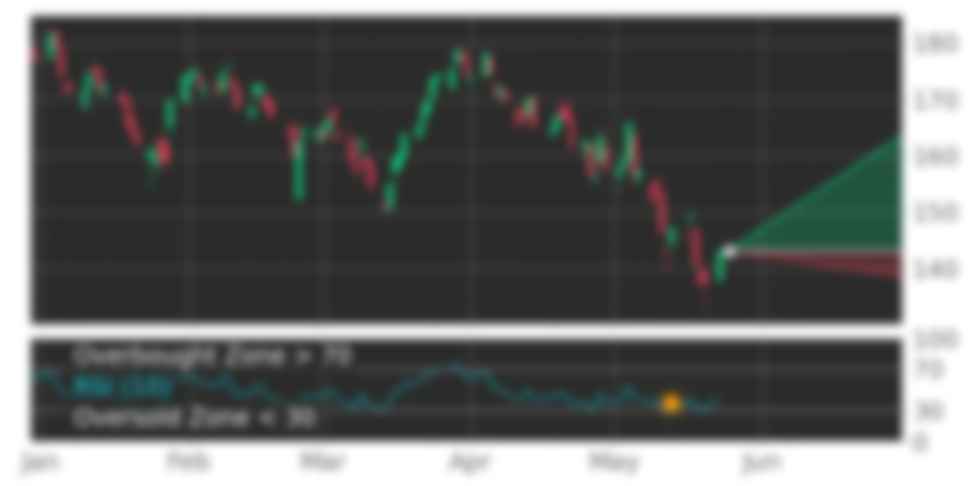
- The fund slipped roughly 0.9% over the trailing 30 days and is trading near the lower end of its 52-week range of approximately $37.64 to $41.69.
- Returns are driven primarily by two forces: local-currency real yields and foreign-exchange movements against the U.S. dollar.
- Because the fund is unhedged, a strengthening U.S. dollar can weigh on performance even when underlying bond prices are stable.
- WIP pays monthly distributions and carried a yield of roughly 6% based on recent data, with a net expense ratio of 0.50%.
- The portfolio holds roughly 194–196 securities with an effective duration near 8.8 years, offering diversified non-U.S. inflation protection.
- For additional details, explore WIP's Price Targets, Earnings, and Forecast pages for deeper research.
- Discover top-performing automated strategies on Tickeron's Trending AI Robots page.
Current Market Snapshot
The SPDR FTSE International Government Inflation-Protected Bond ETF (WIP) has traded in a relatively narrow band in recent weeks, drifting modestly lower as global fixed-income markets digested shifting inflation expectations and currency moves. The fund's share price has consolidated near the high-$37 area, close to its 52-week low, after climbing as high as $41.69 over the past year. This positioning reflects a broader environment in which non-U.S. inflation-linked bonds have delivered muted price appreciation, with income distributions contributing a meaningful share of total return.
As an unhedged international bond fund, WIP is more sensitive to foreign-exchange fluctuations than domestic Treasury Inflation-Protected Securities funds. Consequently, its near-term performance often diverges from U.S.-focused inflation hedges, making it a differentiated vehicle for investors seeking global, inflation-sensitive fixed-income exposure.
SPDR FTSE International Government Inflation-Protected Bond ETF (WIP) Business Overview and Competitive Position
WIP is an exchange-traded fund sponsored by State Street Global Advisors, launched on March 13, 2008. The fund seeks to track, before fees and expenses, the price and yield performance of the FTSE International Inflation-Linked Securities Select Index. That benchmark measures the total-return performance of fixed-rate, inflation-linked government bonds issued outside the United States, spanning both developed markets and select emerging economies.
The portfolio is diversified across more than 190 individual securities, with its largest country exposures concentrated in the United Kingdom, France, Brazil, Italy, Mexico, Spain, Germany, and Canada. Top holdings include inflation-linked debt from Germany, Spain, the United Kingdom, Poland, and France, among others. With an effective duration of roughly 8.8 years and an average maturity of about 10.6 years, the fund carries meaningful interest-rate sensitivity typical of longer-dated government bond portfolios.
WIP's competitive positioning centers on offering a single, low-cost access point to global inflation-linked debt. Its 0.50% net expense ratio and monthly distribution schedule distinguish it from many actively managed international bond strategies. Investors follow the fund primarily as a portfolio diversifier and an inflation hedge with international scope, recognizing that its unhedged structure adds a distinct currency dimension to total returns.
Recent Developments Driving WIP
Over the trailing 30 days, WIP's performance has been shaped less by single stock-specific events than by macro forces affecting the entire asset class. Inflation-linked bond prices are sensitive to real yields—nominal yields adjusted for expected inflation—across the eurozone, the United Kingdom, and emerging markets. As market participants reassess central bank policy paths and inflation trajectories, real yield movements translate directly into price changes for the fund's underlying holdings.
Currency exposure has been an equally important factor. Because WIP does not hedge its foreign-currency positions, appreciation in the U.S. dollar relative to the euro, British pound, and other local currencies reduces the dollar value of the fund's assets, all else equal. This dynamic helps explain why the fund has traded defensively even as many of its underlying issuers maintained stable credit fundamentals.
The fund's monthly distributions continue to provide an income component that partially offsets modest price weakness. With recent distributions annualizing to a yield near 6%, total-return outcomes have been supported by income even as the share price has drifted toward the lower portion of its 52-week range.
Trending AI Robots
Tickeron's Trending AI Robots page showcases a curated selection of automated trading strategies built to scan markets continuously and act on quantified signals. While Tickeron hosts hundreds of AI trading bots covering thousands of tickers, only the top-performing and most relevant bots appear in this featured section, helping investors cut through the noise. These bots vary widely in strategy, trading timeframe, and performance metrics, so each one may suit a different risk tolerance and investment style. For traders interested in systematic, data-driven approaches across equities and other instruments, the page offers a focused starting point for exploring how algorithmic strategies are applied to live market conditions.
2026 Outlook and What Investors Should Watch
Looking ahead, several themes are likely to influence WIP's performance. Inflation prints across major non-U.S. economies will remain a central driver, as surprises in headline or core inflation reshape expectations embedded in inflation-linked bond pricing. Central bank policy from the European Central Bank, the Bank of England, and other key issuers will likewise shape real yields and, by extension, the fund's net asset value.
Currency trends represent an ongoing wildcard. A sustained strengthening of the U.S. dollar would create headwinds for the unhedged portfolio, while dollar weakness could enhance returns for U.S.-based investors. Investors may also monitor relative real-yield spreads between developed and emerging markets, given the fund's meaningful exposure to issuers such as Brazil, Mexico, Colombia, and Turkey.
Finally, demand dynamics for inflation protection—driven by fiscal policy, energy prices, and global supply-chain conditions—will influence flows into the asset class. As with any fixed-income instrument, rising interest rates pose principal risk, and currency fluctuations add an additional layer of volatility that investors should weigh carefully against the fund's income and diversification benefits.
Disclaimer
The information on this webpage is provided for general informational and educational purposes only and is not intended as investment advice, a recommendation to purchase or sell any security, or an offer or solicitation related to investments. It does not consider your personal financial situation, goals, or risk profile, and all investing carries inherent risks, including the possibility of losing your entire investment. For more details, please review our full disclaimer.
Disclaimers and Limitations
 GET DAILY SIGNALS