MENU
Go to the list of all blogs
Sergey Savastiouk's Avatar
published in Blogs
Aug 13, 2026
Why Is Alpha and Omega Semiconductor Limited (AOSL) Stock Down -15.82% Today?

Why Is Alpha and Omega Semiconductor Limited (AOSL) Stock Down -15.82% Today?

Key Takeaways

  • Sharp decline: AOSL shares plunged 15.82% on Thursday, trading at $30.54 versus Wednesday's close of $36.28.
  • Primary catalyst: The sell-off followed fiscal fourth-quarter results and a September-quarter revenue outlook whose midpoint came in below Street expectations.
  • Earnings vs. estimates: Revenue and non-GAAP EPS beat consensus, but revenue still declined 3.5% year over year and the company remained loss-making.
  • Sector divergence: The drop came despite broad semiconductor-sector strength, signaling a company-specific re-rating rather than macro pressure.
  • Analyst response: B. Riley and Needham lowered their price targets Thursday, though Needham maintained a Buy rating.
  • Next focus: Traders are watching AI and server momentum, consumer-segment softness, and typhoon-related operational disruption.

Opening Summary

Alpha and Omega Semiconductor Limited (AOSL) designs, develops, and supplies power semiconductors for computing, consumer, communications, and industrial applications. The stock fell 15.82% in Thursday's session, changing hands at $30.54 as of early afternoon, down from the prior session's close of $36.28. The market reaction centered on the company's fiscal 2026 fourth-quarter report, released after Wednesday's close, and a current-quarter revenue outlook that disappointed investors even as headline results came in ahead of consensus.

Earnings Results and Guidance

AOSL reported fiscal fourth-quarter revenue of $170.4 million, down 3.5% year over year but above analyst expectations of roughly $168 million. Non-GAAP EPS came in at a loss of $0.13 per share, narrower than the $0.24 loss analysts had projected. Adjusted gross margin improved to 23.7% from 21.7% in the prior quarter.

Those headline beats were not enough to support the stock. The company guided for fiscal first-quarter revenue of $166 million to $186 million, a range whose midpoint of about $176 million fell short of the roughly $180.5 million consensus. Management also said the consumer segment is expected to decline approximately 25% sequentially, reflecting softness in home appliances, wearables, and gaming. The company flagged an estimated $2 million revenue impact from Typhoon Dolphin and related flooding in Shanghai, alongside ongoing memory-pricing constraints in traditional PC markets.

Analyst Ratings and Market Reaction

The guidance disappointment triggered immediate analyst recalibration. B. Riley lowered its price target on AOSL to $34 from $38 while maintaining a Neutral rating. Needham reduced its target to $45 from $50 but kept a Buy rating, pointing to long-term AI-related demand trends. The mixed actions reinforced the market's focus on near-term revenue visibility rather than the quarterly beat.

After-hours trading following the release had already pointed to a double-digit percentage decline, and the regular session extended the selling. The stock's negative reaction to better-than-expected quarterly results underscored how heavily investors were weighting the softer forward outlook and consumer-segment caution.

Market Context and Trading Activity

The decline was idiosyncratic rather than sector-driven. The Philadelphia Semiconductor Index advanced more than 2% intraday, and the Nasdaq Composite opened modestly higher, supported by optimism around AI infrastructure spending. Against that backdrop, AOSL moved sharply lower, indicating that investors were reacting to company-specific fundamentals.

Trading volume was elevated, with more than 900,000 shares changing hands by early afternoon compared with average daily turnover near 468,000 shares. Technically, the slide carried the stock below its 200-day moving average near $32.50 and well under its 50-day moving average near $38.29, leaving the shares in a clearly defensive short-term posture.

What Comes Next for AOSL

Investors now look to the fiscal first quarter ending September 30. The key debate is whether accelerating advanced-computing and AI-server revenue, which management expects to grow more than 60% sequentially, can offset a sharp consumer-segment decline and memory-related PC weakness. Gross-margin progression will also be in focus, with management guiding adjusted gross margin to about 23.8% at the midpoint.

Risks include the pace of recovery from typhoon-related packaging disruptions, persistent memory pricing pressure, and broader demand uncertainty in consumer electronics. Any signs that AI-related design wins are converting into sustained revenue could help stabilize sentiment, while further consumer softness would likely keep the stock under pressure.

Trending AI Robots

Tickeron offers hundreds of AI trading bots covering thousands of tickers, but only the strongest performers under current market conditions are featured in the curated Trending AI Robots section. These bots vary by strategy, timeframe, performance metrics, and traded symbols. Explore the Trending AI Robots page to see which automated strategies are currently leading.

Disclaimer

The information on this webpage is provided for general informational and educational purposes only and is not intended as investment advice, a recommendation to purchase or sell any security, or an offer or solicitation related to investments. It does not consider your personal financial situation, goals, or risk profile, and all investing carries inherent risks, including the possibility of losing your entire investment. For more details, please review our full disclaimer.

Disclaimers and Limitations

Related Ticker: AOSL

Contributor

Sergey Savastiouk, Ph.D. has a degree in Applied Mathematics from Moscow University and has extensive experience as an entrepreneur, investor, manager, and mathematician. His professional expertise is in applied mathematics, mathematical modeling, system and pattern analysis, and software and hardware system integration. He has served as the CEO of several hi-tech start-up companies and nonprofit organizations, which has given him proven capabilities in business strategy for high-tech start-up companies, market assessment, company formation, team building, product development, marketing, and sales. He has published numerous articles in journals and magazines on related fields. As a retail investor, he spent 15 years developing his proprietary trading and quantitative algorithms (now Tickeron’s A.I.), which brought him significant returns in trading the stock market. His current work and goal in founding Tickeron is to bring professional, sophisticated stock market analysis capabilities to retail investors via an easy-to-use interface.


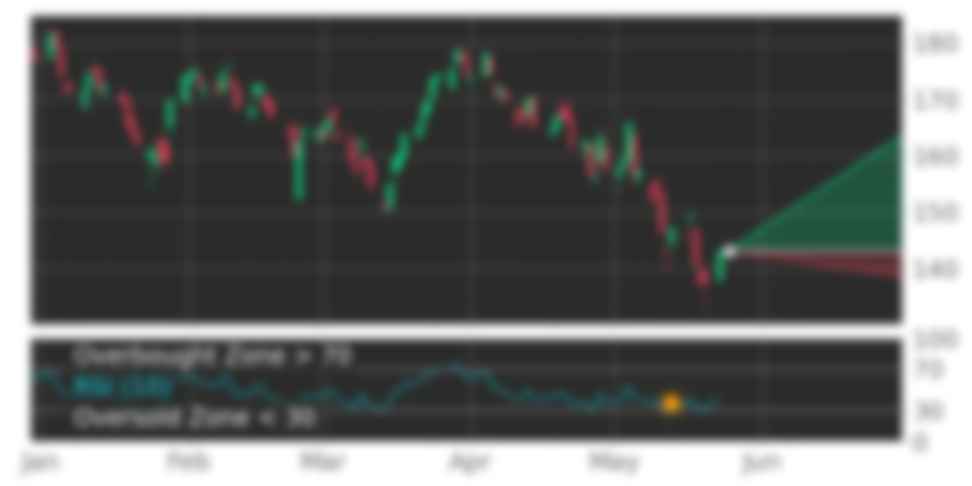
AOSL's RSI Indicator ascending out of oversold territory

The RSI Indicator for AOSL moved out of oversold territory on July 30, 2026. This could be a sign that the stock is shifting from a downward trend to an upward trend. Traders may want to buy the stock or call options. The A.I.dvisor looked at 30 similar instances when the indicator left oversold territory. In of the 30 cases the stock moved higher. This puts the odds of a move higher at .

Price Prediction Chart

Technical Analysis (Indicators)

Bullish Trend Analysis

The Moving Average Convergence Divergence (MACD) for AOSL just turned positive on August 03, 2026. Looking at past instances where AOSL's MACD turned positive, the stock continued to rise in of 48 cases over the following month. The odds of a continued upward trend are .

Following a 3-day Advance, the price is estimated to grow further. Considering data from situations where AOSL advanced for three days, in of 292 cases, the price rose further within the following month. The odds of a continued upward trend are .

Bearish Trend Analysis

The Stochastic Oscillator may be shifting from an upward trend to a downward trend. In of 67 cases where AOSL's Stochastic Oscillator exited the overbought zone, the price fell further within the following month. The odds of a continued downward trend are .

The Momentum Indicator moved below the 0 level on August 13, 2026. You may want to consider selling the stock, shorting the stock, or exploring put options on AOSL as a result. In of 79 cases where the Momentum Indicator fell below 0, the stock fell further within the subsequent month. The odds of a continued downward trend are .

Following a 3-day decline, the stock is projected to fall further. Considering past instances where AOSL declined for three days, the price rose further in of 62 cases within the following month. The odds of a continued downward trend are .

The Aroon Indicator for AOSL entered a downward trend on August 07, 2026. This could indicate a strong downward move is ahead for the stock. Traders may want to consider selling the stock or buying put options.

Fundamental Analysis (Ratings)

The Tickeron PE Growth Rating for this company is (best 1 - 100 worst), pointing to outstanding earnings growth. The PE Growth rating is based on a comparative analysis of stock PE ratio increase over the last 12 months compared against S&P 500 index constituents.

The Tickeron Valuation Rating of (best 1 - 100 worst) indicates that the company is fair valued in the industry. This rating compares market capitalization estimated by our proprietary formula with the current market capitalization. This rating is based on the following metrics, as compared to industry averages: P/B Ratio (1.167) is normal, around the industry mean (8.417). P/E Ratio (0.000) is within average values for comparable stocks, (171.291). Projected Growth (PEG Ratio) (0.000) is also within normal values, averaging (1.957). AOSL has a moderately low Dividend Yield (0.000) as compared to the industry average of (0.015). P/S Ratio (1.357) is also within normal values, averaging (58.577).

The Tickeron Price Growth Rating for this company is (best 1 - 100 worst), indicating fairly steady price growth. AOSL’s price grows at a lower rate over the last 12 months as compared to S&P 500 index constituents.

The Tickeron Profit vs. Risk Rating rating for this company is (best 1 - 100 worst), indicating that the returns do not compensate for the risks. AOSL’s unstable profits reported over time resulted in significant Drawdowns within these last five years. A stable profit reduces stock drawdown and volatility. The average Profit vs. Risk Rating rating for the industry is 72, placing this stock worse than average.

The Tickeron SMR rating for this company is (best 1 - 100 worst), indicating weak sales and an unprofitable business model. SMR (Sales, Margin, Return on Equity) rating is based on comparative analysis of weighted Sales, Income Margin and Return on Equity values compared against S&P 500 index constituents. The weighted SMR value is a proprietary formula developed by Tickeron and represents an overall profitability measure for a stock.

Notable companies

The most notable companies in this group are NVIDIA Corp (NASDAQ:NVDA), Taiwan Semiconductor Manufacturing Company Ltd (NYSE:TSM), Broadcom Inc. (NASDAQ:AVGO), Micron Technology (NASDAQ:MU), Advanced Micro Devices (NASDAQ:AMD), Intel Corp (NASDAQ:INTC), Texas Instruments (NASDAQ:TXN), Marvell Technology (NASDAQ:MRVL), Analog Devices (NASDAQ:ADI), QUALCOMM (NASDAQ:QCOM).

Industry description

The semiconductor industry manufacturers all chip-related products, including research and development. These chips are used in innumerable electronic devices, including computers, cell phones, smartphones, and GPSs. Intel Corporation, NVIDIA Corp., and Broadcomm are some of the prominent players in this industry. Semiconductor companies usually tend to do well during periods of healthy economic growth, thereby inducing further research and development in the industry – which in turn augurs well for productivity and growth in the economy. In the near future, demand for semiconductor products (and possibly innovation within the segment) should only expand further, with the proliferation of 5G, autonomous vehicles, IoT, and various AI-driven electronics set to herald a new, advanced chapter in the technology-driven world as we know it. With burgeoning prospects comes great competition. In 2015, SIA estimated that U.S. semiconductor industry ranks as the second most competitive U.S. industry out of 2882 U.S. industries designated manufacturers by the U.S. Census Bureau.

Market Cap

The average market capitalization across the Semiconductors Industry is 194.87B. The market cap for tickers in the group ranges from 13.43K to 5.45T. NVDA holds the highest valuation in this group at 5.45T. The lowest valued company is CYBL at 13.43K.

High and low price notable news

The average weekly price growth across all stocks in the Semiconductors Industry was 0%. For the same Industry, the average monthly price growth was -1%, and the average quarterly price growth was 49%. LAES experienced the highest price growth at 17%, while MOBX experienced the biggest fall at -26%.

Volume

The average weekly volume growth across all stocks in the Semiconductors Industry was -11%. For the same stocks of the Industry, the average monthly volume growth was -28% and the average quarterly volume growth was -45%

Fundamental Analysis Ratings

The average fundamental analysis ratings, where 1 is best and 100 is worst, are as follows

Valuation Rating: 60
P/E Growth Rating: 52
Price Growth Rating: 47
SMR Rating: 75
Profit Risk Rating: 72
Seasonality Score: -26 (-100 ... +100)
View a ticker or compare two or three
AOSL
Daily Signal:
Gain/Loss:
Interact to see
Advertisement
A.I.Advisor
published price charts
Last 5 trading days
A.I. Advisor
published General Information

General Information

a developer of power semiconductor products

Industry Semiconductors

Profile
Details
Industry
Semiconductors
Address
2 Church Street
Phone
+1441 4088309742
Employees
2428
Web
http://www.aosmd.com