a manufacturer of products for breast cancer
Industry Biotechnology
For the last three days, A.I.dvisor has detected that ATOS's AroonDown red line is above 70 while the AroonUp green line is below 30 for three straight days. This move could indicate a strong downtrend ahead for ATOS, and traders may view it as a Sell signal for the next month. Traders may consider selling the stock or exploring put options. A.I.dvisor backtested this indicator and found 310 similar cases, of which were successful. Based on this data, the odds of success are
ATOS saw its Moving Average Convergence Divergence Histogram (MACD) turn negative on October 27, 2026. This is a bearish signal that suggests the stock could decline going forward. Tickeron's A.I.dvisor looked at 55 instances where the indicator turned negative. In 50 of the 55 cases the stock moved lower in the days that followed. This puts the odds of a downward move at 90%.
The Momentum Indicator moved below the 0 level on October 27, 2026. You may want to consider selling the stock, shorting the stock, or exploring put options on ATOS as a result. In 78 of 90 cases where the Momentum Indicator fell below 0, the stock fell further within the subsequent month. The odds of a continued downward trend are 87%.
ATOS moved below its 50-day moving average on October 27, 2026 date and that indicates a change from an upward trend to a downward trend.
The 10-day moving average for ATOS crossed bearishly below the 50-day moving average on November 03, 2026. This indicates that the trend has shifted lower and could be considered a sell signal. In 15 of 17 past instances when the 10-day crossed below the 50-day, the stock continued to move higher over the following month. The odds of a continued downward trend are 88%.
Following a 3-day decline, the stock is projected to fall further. Considering past instances where ATOS declined for three days, the price rose further in 50 of 62 cases within the following month. The odds of a continued downward trend are 87%.
The Aroon Indicator for ATOS entered a downward trend on November 20, 2026. This could indicate a strong downward move is ahead for the stock. Traders may want to consider selling the stock or buying put options.
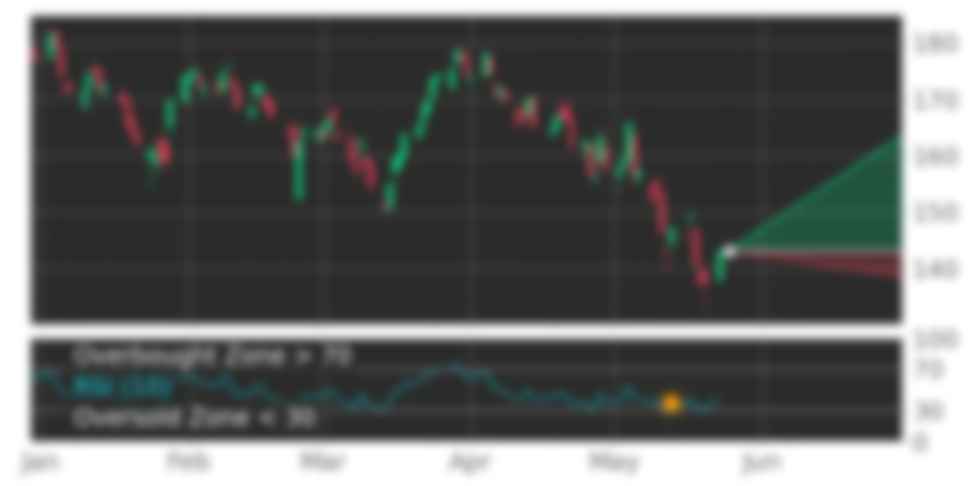
The RSI Indicator demonstrates that the ticker has stayed in the oversold zone for 2 days, which means it's wise to expect a price bounce in the near future.
The Stochastic Oscillator shows that the ticker has stayed in the oversold zone for 18 days. The price of this ticker is presumed to bounce back soon, since the longer the ticker stays in the oversold zone, the more promptly an upward trend is expected.
Following a +0.94% 3-day Advance, the price is estimated to grow further. Considering data from situations where ATOS advanced for three days, in 184 of 234 cases, the price rose further within the following month. The odds of a continued upward trend are 79%.
ATOS may jump back above the lower band and head toward the middle band. Traders may consider buying the stock or exploring call options.
The Tickeron PE Growth Rating for this company is 28 (best 1 - 100 worst), pointing to outstanding earnings growth. The PE Growth rating is based on a comparative analysis of stock PE ratio increase over the last 12 months compared against S&P 500 index constituents.
The Tickeron Valuation Rating of 52 (best 1 - 100 worst) indicates that the company is fair valued in the industry. This rating compares market capitalization estimated by our proprietary formula with the current market capitalization. This rating is based on the following metrics, as compared to industry averages: P/B Ratio (0.789) is normal, around the industry mean (3.596). P/E Ratio (-0.488) is within average values for comparable stocks, (-1.186). Projected Growth (PEG Ratio) (0.000) is also within normal values, averaging (9.158). Dividend Yield (0.000) settles around the average of (131.631) among similar stocks. P/S Ratio (0.000) is also within normal values, averaging (443.347).
The Tickeron Price Growth Rating for this company is 89 (best 1 - 100 worst), indicating slightly worse than average price growth. ATOS’s price grows at a lower rate over the last 12 months as compared to S&P 500 index constituents.
The Tickeron SMR rating for this company is 98 (best 1 - 100 worst), indicating weak sales and an unprofitable business model. SMR (Sales, Margin, Return on Equity) rating is based on comparative analysis of weighted Sales, Income Margin and Return on Equity values compared against S&P 500 index constituents. The weighted SMR value is a proprietary formula developed by Tickeron and represents an overall profitability measure for a stock.
The Tickeron Profit vs. Risk Rating rating for this company is 100 (best 1 - 100 worst), indicating that the returns do not compensate for the risks. ATOS’s unstable profits reported over time resulted in significant Drawdowns within these last five years. A stable profit reduces stock drawdown and volatility. The average Profit vs. Risk Rating rating for the industry is 94, placing this stock worse than average.
Atossa Therapeutics shares have traded in a relatively tight range in recent weeks, with the latest available price near $2.36. Measured against a closing level of about $2.34 roughly 30 days earlier, the stock is essentially flat over the trailing month, moving well below the threshold that would signal a major directional break. That headline stability, however, masks meaningful intraday volatility: the shares touched the low $1.90s in late September, rallied toward $2.91 in mid-October, and subsequently pulled back into the mid-$2.30s.
This pattern is typical of small-cap clinical-stage biotech, where modest trading volumes and event-driven positioning can produce sharp swings that do not always correspond to fundamental changes. Investor attention remains concentrated on the company's clinical pipeline, its financing position, and upcoming data catalysts rather than on near-term financial results.
Atossa Therapeutics, Inc. (Nasdaq: ATOS) is a Seattle-based clinical-stage biopharmaceutical company developing novel therapies in oncology and other areas of significant unmet medical need, with a particular focus on breast cancer. Its lead product candidate is (Z)-endoxifen, an orally administered selective estrogen receptor modulator (SERM) that acts as a potent estrogen receptor inhibitor and promotes estrogen receptor degradation.
The company is evaluating (Z)-endoxifen across multiple clinical settings, including the EVANGELINE trial, which studies (Z)-endoxifen in combination with goserelin as a neoadjuvant therapy in premenopausal women with estrogen receptor-positive, HER2-negative breast cancer. Enrollment in that trial is ongoing. Beyond breast cancer, Atossa has pursued additional applications of (Z)-endoxifen and earlier-stage programs, including a utrophin-modulating approach relevant to muscular dystrophy.
Atossa's competitive positioning rests on its intellectual property around (Z)-endoxifen and related formulations. In April 2026, the company announced a settlement with Intas Pharmaceuticals and Jina Pharmaceuticals resolving patent disputes tied to its endoxifen-related intellectual property, an agreement aimed at reducing uncertainty around its core patent portfolio.
Several developments over recent months have shaped investor sentiment, even as the stock's trailing 30-day move has remained subdued. In February 2026, Atossa completed a 1-for-15 reverse stock split, a step generally intended to address share-price levels and Nasdaq listing requirements.
In June 2026, the company closed a registered direct offering of up to $16.5 million in gross proceeds, consisting of roughly $4.5 million upfront plus up to $12 million upon exercise of accompanying warrants. Management indicated the net proceeds would support clinical development of its oncology candidates, working capital, and general corporate purposes. Financing events of this kind can weigh on shares through dilution concerns, but they also extend a clinical-stage company's operating runway.
Also in June, Atossa presented two abstracts featuring (Z)-endoxifen at the 2026 American Society of Clinical Oncology (ASCO) annual meeting. One highlighted preclinical data showing that (Z)-endoxifen delivers strong estrogen receptor inhibition even in the presence of estrogen receptor alpha gene (ESR1) mutations, while the other provided an overview of the EVANGELINE trial. These data points reinforce the scientific rationale behind the lead program, though they remain preclinical to early-clinical in nature.
Tickeron's Trending AI Robots page offers a curated view of AI-driven trading bots drawn from a broader platform that spans hundreds of bots trading thousands of tickers. Rather than listing every available bot, the section surfaces only the top-performing and most relevant strategies, helping traders cut through the noise. The bots featured there differ widely in trading style, holding timeframe, and performance metrics, so the page can serve as a starting point for comparing systematic approaches across markets. For investors seeking a more data-driven, rules-based perspective on names like Atossa Therapeutics, exploring the curated list of Trending AI Robots can offer useful context.
Looking ahead, the most important variables for Atossa Therapeutics center on clinical execution and capital. Continued enrollment and eventual data from the EVANGELINE trial represent the primary scientific milestones, while any additional readouts tied to (Z)-endoxifen's activity in ESR1-mutant or other breast cancer settings could influence the investment thesis.
Financing remains a key watch item. As a pre-revenue company, Atossa depends on its cash position and potential future capital raises to fund development, and dilution from follow-on offerings or warrant exercises is a recurring consideration. Broader biotech market sentiment, interest-rate expectations, and sector rotation into or out of small-cap healthcare names can also affect near-term trading.
Finally, investors may monitor regulatory and intellectual-property developments, given the company's reliance on its endoxifen patent portfolio. None of these factors should be read as a forecast of share-price direction, but they are the concrete drivers most likely to shape ATOS over the balance of 2026.
The information on this webpage is provided for general informational and educational purposes only and is not intended as investment advice, a recommendation to purchase or sell any security, or an offer or solicitation related to investments. It does not consider your personal financial situation, goals, or risk profile, and all investing carries inherent risks, including the possibility of losing your entire investment. For more details, please review our full disclaimer.