MENU
Go to the list of all blogs
Allana's Avatar
published in Blogs
Jun 26, 2026
Alibaba (BABA) Falls -25% in 30 Days Amid Anthropic AI Accusations

Alibaba (BABA) Falls -25% in 30 Days Amid Anthropic AI Accusations

Key Takeaways

  • Alibaba Group (BABA) shares have fallen approximately 25% over the past 30 days, sliding from an adjusted close of $126.62 on May 27, 2026, to around $94.93 as of June 26, 2026.
  • The steepest single-day drop was triggered by Anthropic's public accusation that Alibaba conducted a large-scale campaign to extract capabilities from its Claude AI models, sending shares to a 16-month low.
  • High-profile investors including Cathie Wood's ARK Invest and Michael Burry disclosed selling Alibaba positions in late June, adding to bearish sentiment.
  • Over the broader quarter, BABA has declined roughly 28%, compounding losses driven by mixed earnings, China macroeconomic concerns, and a broader tech sell-off in Hong Kong and U.S.-listed Chinese ADRs.
  • Despite the sell-off, Wall Street analysts maintain a consensus "Strong Buy" rating with a median 12-month price target near $190, implying significant potential upside from current levels.

Alibaba Group (BABA) Company Overview and Market Position

Alibaba Group Holding Limited is a Chinese multinational technology conglomerate specializing in e-commerce, cloud computing, digital media, logistics, and artificial intelligence. Founded in 1999 and headquartered in Hangzhou, China, the company operates core platforms including Taobao and Tmall — two of the world's largest digital retail marketplaces — as well as Alibaba Cloud, Cainiao logistics network, and the international e-commerce platform AliExpress. With a market capitalization of approximately $228 billion and annual revenue exceeding $150 billion, Alibaba remains one of the most widely followed Chinese technology stocks listed on U.S. exchanges. Investors track BABA closely as a bellwether for Chinese consumer demand, AI development, and the evolving regulatory landscape affecting large technology platforms.

Alibaba Group (BABA) Stock Price Performance: Last 30 Days vs. Quarter

Over the last 30 days, BABA shares have experienced a pronounced decline of approximately 25%, falling from an adjusted closing price of $126.62 on May 27, 2026, to roughly $94.93 in intraday trading on June 26, 2026. The sell-off accelerated sharply in the final week of the period, with the stock dropping from above $107 on June 18 to below $95 by June 26 — a decline of more than 11% in just over a week. Trading volume surged well above the 10-day average during the steepest down days, signaling elevated institutional repositioning. I also checked this using Tickeron’s AI Screener to see how the stock compares to others in the industry.

Zooming out to the quarterly view, the stock has shed roughly 28% since late March 2026, when shares traded near the $131–$132 range. The quarterly decline reflects a combination of post-earnings volatility, deteriorating sentiment toward Chinese technology equities, and the late-June shock from the Anthropic AI controversy. The stock now trades near the bottom of its 52-week range of $91.99 to $192.67, a stark contrast to the October 2025 highs.

What Drove BABA Stock Price in the Last 30 Days

The most significant catalyst behind the 30-day decline was the explosive allegation made by U.S. artificial intelligence startup Anthropic on June 25, 2026. Anthropic accused Alibaba of conducting what it described as "the largest known distillation attack" against its Claude AI models, alleging that the Chinese tech giant created approximately 25,000 fraudulent accounts and interacted with Claude millions of times in an effort to extract proprietary AI capabilities. The news, first reported by The Wall Street Journal, sent BABA shares tumbling more than 4.5% in a single session and pushed the stock to a 16-month low. The Hong Kong-listed shares of Alibaba (9988.HK) fell 4.47% in sympathy, briefly dragging the Hang Seng Index below the 23,000-point mark for the first time in a year.

Compounding the AI-related sell-off, regulatory filings and disclosures revealed that several prominent institutional investors reduced or exited their Alibaba positions. Cathie Wood's ARK Invest ETFs sold BABA shares on June 25, while Michael Burry — known for his prescient bets during the 2008 financial crisis — disclosed selling his Alibaba stake in favor of U.S. big-tech names. These high-profile exits amplified negative sentiment among retail and institutional traders alike.

Earlier in the 30-day window, Alibaba reported fiscal Q4 2026 earnings on May 13, delivering mixed results. While the stock initially surged over 8% on the day of the release, the gains proved short-lived. Revenue of 243.38 billion CNY missed consensus estimates of 247.09 billion CNY, and earnings per share came in well below expectations. The subsequent weeks saw a steady erosion of those post-earnings gains as investors reassessed the company's near-term growth trajectory amid a softening Chinese consumer environment and intensifying AI competition.

What Drove BABA Stock Performance Over the Last Quarter

Alibaba's quarterly decline of roughly 28% reflects a broader narrative of mounting headwinds for Chinese technology stocks. The quarter began with shares already under pressure from a March sell-off that erased nearly 13% of the stock's value, driven by renewed U.S.-China trade tensions and uncertainty around Chinese economic stimulus measures. A brief April rebound of approximately 5% gave way to further declines in May, as the post-earnings optimism faded and macroeconomic data pointed to uneven consumer recovery in China.

Throughout the quarter, Alibaba continued to invest heavily in its cloud and AI infrastructure — a strategy that has drawn both praise from analysts who see long-term value and concern from those worried about near-term margin compression. The company's Cloud Intelligence Group has shown accelerating revenue growth, and the Qwen large language model family has gained traction among enterprise clients. However, the Anthropic allegations have cast a shadow over Alibaba's AI ambitions, raising questions about the methods behind its rapid AI development and the potential for regulatory or legal repercussions in Western markets. The quarter also saw Alibaba actively repurchasing shares, including a buyback of 974,500 shares disclosed in late June, signaling management's view that the stock is undervalued at current levels.

BABA Stock Forecast Drivers: What Investors Should Watch Next

Looking ahead, several key factors will shape Alibaba's stock trajectory. The company's next earnings report, estimated for August 27, 2026, will be closely scrutinized for updates on cloud revenue growth, AI monetization progress, and the health of core e-commerce margins. Any further developments in the Anthropic dispute — including potential legal action, regulatory inquiries, or diplomatic fallout — could materially impact investor sentiment and the company's ability to expand its AI business internationally.

Macroeconomic conditions in China remain a critical variable, with consumer spending trends, property market stabilization, and government stimulus measures all influencing Alibaba's domestic revenue outlook. Additionally, U.S.-China relations and the regulatory environment for Chinese ADRs listed on American exchanges continue to pose structural risks. On the positive side, Alibaba's aggressive share buyback program and a consensus analyst price target of approximately $190 — more than double the current trading price — suggest that many institutional analysts view the recent sell-off as a significant dislocation from fair value. Investors should monitor institutional ownership filings, short interest data, and any signs of stabilization in the stock's technical picture for clues about a potential bottoming process. One thing that stands out here is how the valuation gap has widened so dramatically.

Using AI Tools for Market Analysis

In volatile market environments like the one currently affecting Alibaba, I often turn to automated strategies to help navigate price swings with discipline and speed. Tickeron's Trending AI Robots page offers a curated selection of top-performing AI-powered trading bots drawn from a marketplace of hundreds of bots trading thousands of tickers. Only the most relevant and consistently performing bots appear in this section, giving traders a streamlined view of strategies that have demonstrated real-time effectiveness. These bots vary widely in approach — from short-term momentum and swing trading to longer-duration trend-following models — and each displays transparent performance metrics, allowing users to evaluate historical results before making any decisions. For those seeking data-driven tools to complement their market analysis, exploring the Trending AI Robots page can provide actionable insight into how algorithmic strategies are positioning across current market conditions. I’m watching this closely as a way to add discipline when fundamentals alone feel uncertain.

Disclaimer

The information on this webpage is provided for general informational and educational purposes only and is not intended as investment advice, a recommendation to purchase or sell any security, or an offer or solicitation related to investments. It does not consider your personal financial situation, goals, or risk profile, and all investing carries inherent risks, including the possibility of losing your entire investment. For more details, please review our full disclaimer.

Disclaimers and Limitations

Related Ticker: BABA

BABA in downward trend: 10-day moving average crossed below 50-day moving average on May 29, 2026

The 10-day moving average for BABA crossed bearishly below the 50-day moving average on May 29, 2026. This indicates that the trend has shifted lower and could be considered a sell signal. In of 18 past instances when the 10-day crossed below the 50-day, the stock continued to move higher over the following month. The odds of a continued downward trend are .

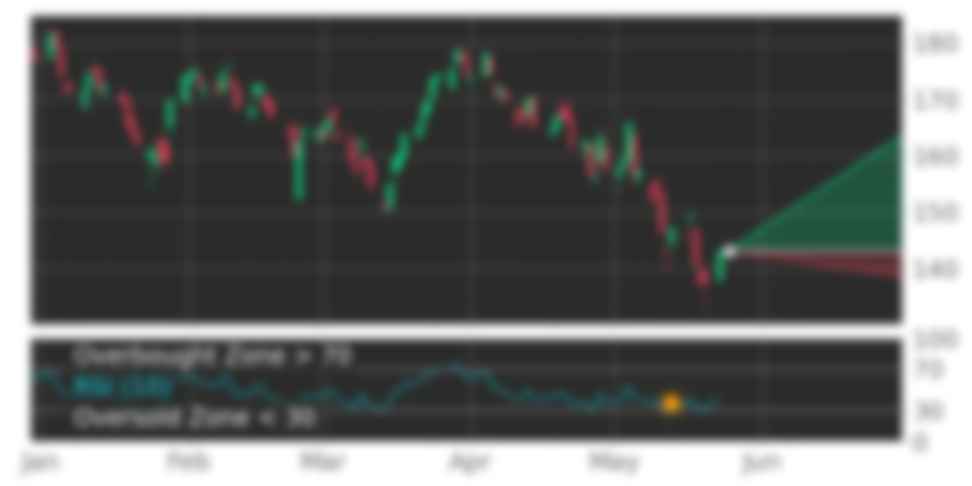
Price Prediction Chart

Technical Analysis (Indicators)

Bearish Trend Analysis

Following a 3-day decline, the stock is projected to fall further. Considering past instances where BABA declined for three days, the price rose further in of 62 cases within the following month. The odds of a continued downward trend are .

The Aroon Indicator for BABA entered a downward trend on June 30, 2026. This could indicate a strong downward move is ahead for the stock. Traders may want to consider selling the stock or buying put options.

Bullish Trend Analysis

The RSI Indicator shows that the ticker has stayed in the oversold zone for 13 days. The price of this ticker is presumed to bounce back soon, since the longer the ticker stays in the oversold zone, the more promptly an Uptrend is expected.

The Stochastic Oscillator shows that the ticker has stayed in the oversold zone for 16 days. The price of this ticker is presumed to bounce back soon, since the longer the ticker stays in the oversold zone, the more promptly an upward trend is expected.

Following a 3-day Advance, the price is estimated to grow further. Considering data from situations where BABA advanced for three days, in of 249 cases, the price rose further within the following month. The odds of a continued upward trend are .

BABA may jump back above the lower band and head toward the middle band. Traders may consider buying the stock or exploring call options.

Fundamental Analysis (Ratings)

The Tickeron Valuation Rating of (best 1 - 100 worst) indicates that the company is slightly undervalued in the industry. This rating compares market capitalization estimated by our proprietary formula with the current market capitalization. This rating is based on the following metrics, as compared to industry averages: P/B Ratio (1.607) is normal, around the industry mean (6.423). P/E Ratio (16.152) is within average values for comparable stocks, (41.068). Projected Growth (PEG Ratio) (0.363) is also within normal values, averaging (1.217). Dividend Yield (0.010) settles around the average of (0.082) among similar stocks. P/S Ratio (1.669) is also within normal values, averaging (1.377).

The Tickeron PE Growth Rating for this company is (best 1 - 100 worst), pointing to consistent earnings growth. The PE Growth rating is based on a comparative analysis of stock PE ratio increase over the last 12 months compared against S&P 500 index constituents.

The Tickeron SMR rating for this company is (best 1 - 100 worst), indicating slightly better than average sales and a considerably profitable business model. SMR (Sales, Margin, Return on Equity) rating is based on comparative analysis of weighted Sales, Income Margin and Return on Equity values compared against S&P 500 index constituents. The weighted SMR value is a proprietary formula developed by Tickeron and represents an overall profitability measure for a stock.

The Tickeron Price Growth Rating for this company is (best 1 - 100 worst), indicating slightly worse than average price growth. BABA’s price grows at a lower rate over the last 12 months as compared to S&P 500 index constituents.

The Tickeron Profit vs. Risk Rating rating for this company is (best 1 - 100 worst), indicating that the returns do not compensate for the risks. BABA’s unstable profits reported over time resulted in significant Drawdowns within these last five years. A stable profit reduces stock drawdown and volatility. The average Profit vs. Risk Rating rating for the industry is 94, placing this stock worse than average.

Notable companies

The most notable companies in this group are Amazon.com (NASDAQ:AMZN), Alibaba Group Holding Limited (NYSE:BABA), PDD Holdings (NASDAQ:PDD), eBay (NASDAQ:EBAY), JD.com (NASDAQ:JD), Wayfair (NYSE:W), Chewy (NYSE:CHWY), Vipshop Holdings Limited (NYSE:VIPS), Revolve Group (NYSE:RVLV), Jumia Technologies AG (NYSE:JMIA).

Industry description

The internet retail industry includes companies that sell products and services through the Internet. With more and more consumers using online retailers, the companies have seen a big increase in the use of their services. Some of the companies in the group are focused on selling business-to-business products and services. Others sell business-to-consumer products and services. Internet retailers offer a wide variety of products like books, apparel, and electronics. Some companies even specialize in only one or two categories. One potentially critical factor for players to thrive in this space is the quality and speed of product delivery. This requires an investment in efficient distribution networks. Things like logistics are important factors in the success in the extremely competitive industry. For a company to stay relevant in the industry it must have effective pricing strategies and upgraded websites. The websites must be easy to navigate and engaging for customers. In addition to the revenues generated from straight sales, internet retailers can generate revenue from subscription fees and advertising. Amazon.com, Inc., Alibaba Group, and JD.com are some of the global leaders.

Market Cap

The average market capitalization across the Internet Retail Industry is 84.6B. The market cap for tickers in the group ranges from 622 to 2.6T. AMZN holds the highest valuation in this group at 2.6T. The lowest valued company is RBZHF at 622.

High and low price notable news

The average weekly price growth across all stocks in the Internet Retail Industry was 0%. For the same Industry, the average monthly price growth was -7%, and the average quarterly price growth was -22%. NEXR experienced the highest price growth at 43%, while MI experienced the biggest fall at -15%.

Volume

The average weekly volume growth across all stocks in the Internet Retail Industry was 115%. For the same stocks of the Industry, the average monthly volume growth was 32% and the average quarterly volume growth was 292%

Fundamental Analysis Ratings

The average fundamental analysis ratings, where 1 is best and 100 is worst, are as follows

Valuation Rating: 54
P/E Growth Rating: 70
Price Growth Rating: 64
SMR Rating: 77
Profit Risk Rating: 93
Seasonality Score: -10 (-100 ... +100)
View a ticker or compare two or three
BABA
Daily Signal:
Gain/Loss:
Interact to see
Advertisement
A.I.Advisor
published price charts
Last 5 trading days
A.I. Advisor
published General Information

General Information

an online and mobile commerce company

Industry InternetRetail

Profile
Details
Industry
Internet Retail
Address
1 Matheson Street, Causeway Bay
Phone
+852 22155100
Employees
235216
Web
https://www.alibabagroup.com