a maker of medical diagnostic products
Industry MedicalNursingServices
This price move could be a signal that BMRA may jump back above the lower band and head toward the middle band. Traders may consider buying the stock or exploring call options. A.I.dvisor backtested 35 similar cases where BMRA's price broke its lower Bollinger Band, and of them led to a successful outcome. Odds of Success:
The price of this ticker is presumed to bounce back soon, since the longer the ticker stays in the oversold zone, the more promptly an uptrend is expected.
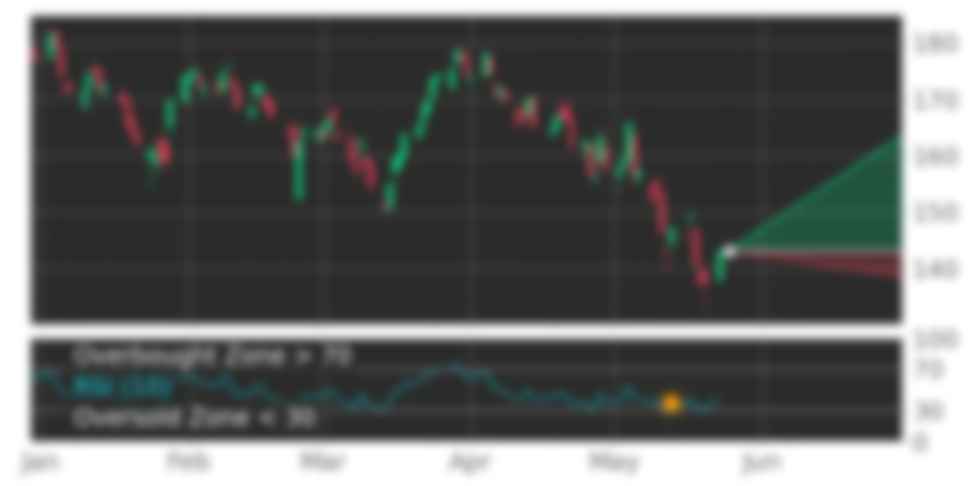
The RSI Indicator shows that the ticker has stayed in the oversold zone for 12 days. The price of this ticker is presumed to bounce back soon, since the longer the ticker stays in the oversold zone, the more promptly an Uptrend is expected.
Following a +2.92% 3-day Advance, the price is estimated to grow further. Considering data from situations where BMRA advanced for three days, in 181 of 236 cases, the price rose further within the following month. The odds of a continued upward trend are 77%.
BMRA may jump back above the lower band and head toward the middle band. Traders may consider buying the stock or exploring call options.
The Moving Average Convergence Divergence Histogram (MACD) for BMRA turned negative on November 06, 2026. This could be a sign that the stock is set to turn lower in the coming weeks. Traders may want to sell the stock or buy put options. Tickeron's A.I.dvisor looked at 41 similar instances when the indicator turned negative. In 36 of the 41 cases the stock turned lower in the days that followed. This puts the odds of success at 88%.
The 50-day moving average for BMRA moved below the 200-day moving average on November 12, 2026. This could be a long-term bearish signal for the stock as the stock shifts to an downward trend.
Following a 3-day decline, the stock is projected to fall further. Considering past instances where BMRA declined for three days, the price rose further in 50 of 62 cases within the following month. The odds of a continued downward trend are 87%.
The Aroon Indicator for BMRA entered a downward trend on November 23, 2026. This could indicate a strong downward move is ahead for the stock. Traders may want to consider selling the stock or buying put options.
The Tickeron Valuation Rating of 40 (best 1 - 100 worst) indicates that the company is fair valued in the industry. This rating compares market capitalization estimated by our proprietary formula with the current market capitalization. This rating is based on the following metrics, as compared to industry averages: P/B Ratio (2.214) is normal, around the industry mean (4.142). P/E Ratio (-0.994) is within average values for comparable stocks, (3.291). Projected Growth (PEG Ratio) (0.000) is also within normal values, averaging (11.253). Dividend Yield (0.000) settles around the average of (0.011) among similar stocks. P/S Ratio (1.578) is also within normal values, averaging (40.124).
The Tickeron Seasonality Score of 42 (best 1 - 100 worst) indicates that the company is fair valued in the industry. The Tickeron Seasonality score describes the variance of predictable price changes around the same period every calendar year. These changes can be tied to a specific month, quarter, holiday or vacation period, as well as a meteorological or growing season.
The Tickeron PE Growth Rating for this company is 48 (best 1 - 100 worst), pointing to consistent earnings growth. The PE Growth rating is based on a comparative analysis of stock PE ratio increase over the last 12 months compared against S&P 500 index constituents.
The Tickeron Price Growth Rating for this company is 85 (best 1 - 100 worst), indicating slightly worse than average price growth. BMRA’s price grows at a lower rate over the last 12 months as compared to S&P 500 index constituents.
The Tickeron SMR rating for this company is 98 (best 1 - 100 worst), indicating weak sales and an unprofitable business model. SMR (Sales, Margin, Return on Equity) rating is based on comparative analysis of weighted Sales, Income Margin and Return on Equity values compared against S&P 500 index constituents. The weighted SMR value is a proprietary formula developed by Tickeron and represents an overall profitability measure for a stock.
The Tickeron Profit vs. Risk Rating rating for this company is 100 (best 1 - 100 worst), indicating that the returns do not compensate for the risks. BMRA’s unstable profits reported over time resulted in significant Drawdowns within these last five years. A stable profit reduces stock drawdown and volatility. The average Profit vs. Risk Rating rating for the industry is 94, placing this stock worse than average.
Biomerica, Inc. is a biomedical technology company based in Irvine, California, that develops, patents, manufactures, and markets advanced diagnostic and therapeutic products. Its test kits analyze blood, urine, nasal, and fecal samples to aid in the diagnosis of diseases, food intolerances, and other medical conditions, and are sold to clinical laboratories and point-of-care settings, including physicians' offices and over-the-counter channels. The company also provides contract development and manufacturing (CDMO) services to third parties.
Biomerica's flagship program is inFoods IBS, a diagnostic-guided therapy designed to help manage irritable bowel syndrome, alongside products such as hp+detect, an FDA-cleared Helicobacter pylori stool antigen test, and EZ Detect, an at-home colon disease screening test. Investors follow the stock primarily for progress in commercializing inFoods IBS, particularly its Medicare reimbursement pathway, and for the company's emerging CDMO revenue stream.
Over the last 30 days, BMRA fell approximately 27%, moving from a closing price near $1.85 to about $1.35. The decline accelerated in mid-November, when a sharp single-session drop pushed the stock to an intraday low near $1.27, marking a new 52-week low.
The trailing-quarter picture is more volatile. From roughly $1.55 in mid-August, the stock rallied strongly on financing and strategic-review news, peaking near $2.78 in late September before reversing. From that peak, shares lost more than half their value through November, leaving the stock down roughly 13% over the trailing three months despite the earlier spike. The net result is a high-volatility round trip rather than a steady trend.
The recent decline reflects a combination of disappointing financial results and rising dilution concerns. In mid-October, Biomerica reported fiscal 2027 first-quarter revenue of approximately $1.27 million, well below consensus expectations of around $3.63 million, while posting a loss per share of $0.37. The revenue shortfall reinforced a broader pattern of declining sales that has persisted across recent fiscal years.
Separately, regulatory filings disclosing a $250 million mixed securities shelf and the potential resale of up to 1.4 million shares added an equity-dilution overhang, which can weigh particularly heavily on a small, thinly traded micro-cap stock. Combined with the company's lack of profitability, limited cash reserves, and a float of roughly 4.6 million shares, these factors intensified selling pressure and contributed to the stock testing multi-month lows.
The broader quarterly trend was defined first by optimism, then by reversal. In late August, Biomerica announced a $2.23 million private placement priced at $1.60 per share and engaged B. Riley as its exclusive financial advisor to evaluate potential strategic opportunities. The strategic-review angle triggered a sharp rally that carried the stock from about $1.55 to a late-September high near $2.78.
That enthusiasm faded as investors refocused on fundamentals. Fiscal 2026 year-end results, reported in early September, showed full-year net sales of roughly $4.5 million, down from about $5.3 million a year earlier, and a net loss of about $3.8 million. The weaker-than-expected fiscal 2027 first-quarter report and subsequent equity filings then reversed the rally, leaving the stock lower for the quarter despite its mid-period spike.
Tickeron's Trending AI Robots page offers a curated view of AI-driven trading bots that are actively trading thousands of tickers. While Tickeron's platform hosts hundreds of AI robots, only the top-performing and most relevant strategies are highlighted in this section, helping users focus on approaches that are currently gaining traction. The bots vary in strategy, timeframe, and performance metrics, spanning short-term signals and longer-term trend-following models. This makes the page a practical starting point for traders who want to observe how automated systems approach markets such as small-cap healthcare names. Readers interested in systematic approaches can browse the section to see which AI strategies are currently standing out.
Looking ahead, investors are likely to focus on several factors. The commercialization trajectory of inFoods IBS remains central, including growth in Medicare-related test orders, the share of claims paid at the $300 reimbursement rate, and expansion of physician adoption. Progress on the company's strategic review with B. Riley could also shape the outlook, as could any updates on CDMO agreements and the international rollout of products such as hp+detect.
On the financial side, revenue stabilization, cash position, and the pace of operating losses will be closely watched, along with any further equity issuance. As a thinly traded micro-cap with a small float and no current profitability, BMRA may continue to exhibit significant price volatility. These considerations are informational and do not constitute investment advice.
The information on this webpage is provided for general informational and educational purposes only and is not intended as investment advice, a recommendation to purchase or sell any security, or an offer or solicitation related to investments. It does not consider your personal financial situation, goals, or risk profile, and all investing carries inherent risks, including the possibility of losing your entire investment. For more details, please review our full disclaimer.