a bookstore operator
Industry SpecialtyStores
This price move could indicate a change in the trend, and may be a sell signal for investors. A.I.dvisor found 46 similar cases, and were successful. Based on this data, the odds of success are
BNED moved below its 50-day moving average on November 20, 2026 date and that indicates a change from an upward trend to a downward trend. In 41 of 46 similar past instances, the stock price decreased further within the following month. The odds of a continued downward trend are 89%.
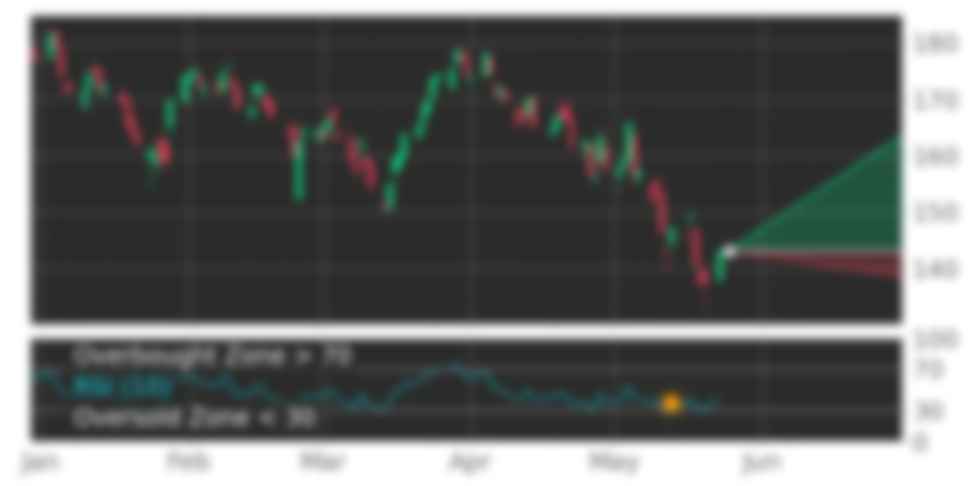
The 10-day RSI Indicator for BNED moved out of overbought territory on October 23, 2026. This could be a bearish sign for the stock. Traders may want to consider selling the stock or buying put options. Tickeron's A.I.dvisor looked at 19 similar instances where the indicator moved out of overbought territory. In 15 of the 19 cases, the stock moved lower in the following days. This puts the odds of a move lower at 79%.
The Momentum Indicator moved below the 0 level on November 16, 2026. You may want to consider selling the stock, shorting the stock, or exploring put options on BNED as a result. In 74 of 87 cases where the Momentum Indicator fell below 0, the stock fell further within the subsequent month. The odds of a continued downward trend are 85%.
The Moving Average Convergence Divergence Histogram (MACD) for BNED turned negative on October 29, 2026. This could be a sign that the stock is set to turn lower in the coming weeks. Traders may want to sell the stock or buy put options. Tickeron's A.I.dvisor looked at 38 similar instances when the indicator turned negative. In 31 of the 38 cases the stock turned lower in the days that followed. This puts the odds of success at 82%.
Following a 3-day decline, the stock is projected to fall further. Considering past instances where BNED declined for three days, the price rose further in 50 of 62 cases within the following month. The odds of a continued downward trend are 85%.
BNED broke above its upper Bollinger Band on October 15, 2026. This could be a sign that the stock is set to drop as the stock moves back below the upper band and toward the middle band. You may want to consider selling the stock or exploring put options.
The Stochastic Oscillator shows that the ticker has stayed in the oversold zone for 4 days. The price of this ticker is presumed to bounce back soon, since the longer the ticker stays in the oversold zone, the more promptly an upward trend is expected.
Following a +5.10% 3-day Advance, the price is estimated to grow further. Considering data from situations where BNED advanced for three days, in 233 of 287 cases, the price rose further within the following month. The odds of a continued upward trend are 81%.
The Aroon Indicator entered an Uptrend today. In 114 of 149 cases where BNED Aroon's Indicator entered an Uptrend, the price rose further within the following month. The odds of a continued Uptrend are 77%.
The Tickeron PE Growth Rating for this company is 10 (best 1 - 100 worst), pointing to outstanding earnings growth. The PE Growth rating is based on a comparative analysis of stock PE ratio increase over the last 12 months compared against S&P 500 index constituents.
The Tickeron Price Growth Rating for this company is 38 (best 1 - 100 worst), indicating steady price growth. BNED’s price grows at a higher rate over the last 12 months as compared to S&P 500 index constituents.
The Tickeron Valuation Rating of 49 (best 1 - 100 worst) indicates that the company is fair valued in the industry. This rating compares market capitalization estimated by our proprietary formula with the current market capitalization. This rating is based on the following metrics, as compared to industry averages: P/B Ratio (1.567) is normal, around the industry mean (2.178). P/E Ratio (19.061) is within average values for comparable stocks, (18.032). Projected Growth (PEG Ratio) (0.090) is also within normal values, averaging (1.159). Dividend Yield (0.025) settles around the average of (0.102) among similar stocks. P/S Ratio (0.212) is also within normal values, averaging (1.080).
The Tickeron SMR rating for this company is 76 (best 1 - 100 worst), indicating weak sales and an unprofitable business model. SMR (Sales, Margin, Return on Equity) rating is based on comparative analysis of weighted Sales, Income Margin and Return on Equity values compared against S&P 500 index constituents. The weighted SMR value is a proprietary formula developed by Tickeron and represents an overall profitability measure for a stock.
The Tickeron Profit vs. Risk Rating rating for this company is 100 (best 1 - 100 worst), indicating that the returns do not compensate for the risks. BNED’s unstable profits reported over time resulted in significant Drawdowns within these last five years. A stable profit reduces stock drawdown and volatility. The average Profit vs. Risk Rating rating for the industry is 89, placing this stock worse than average.
Barnes & Noble Education, Inc. is a leading solutions provider for the higher-education industry, operating primarily through its Barnes & Noble College (BNC) campus retail and academic-solutions business. The company manages campus bookstores, course-materials distribution, and digital learning programs across hundreds of colleges and universities nationwide, while also providing wholesale capabilities and related services.
Its flagship offering, First Day Complete, bundles required course materials into a per-student, per-course fee, giving students access to textbooks and digital resources on or before the first day of class. The program has become a central growth engine, combining affordability for students with a recurring, predictable revenue model for the company and its institutional partners. Investors follow BNED closely because of its turnaround from heavy debt and losses toward sustained profitability, its momentum in signing new campus partnerships, and its progress in strengthening the balance sheet.
Over the trailing 30 days, BNED shares climbed from a closing level near $11.18 to approximately $12.87, a gain of about 15.1%. The move was not linear: the stock pulled back sharply in early-to-mid September, dipping toward the low $10 range before a steady recovery through October carried it back above the $13 level at its peak and into the high $12 range.
Viewed over a full quarter, the picture is more subdued. Three months earlier the stock traded near $13.03, leaving the share price down roughly 1% over that span. In effect, the recent 30-day advance largely reflects a rebound that recovered losses incurred during the September selloff, rather than a breakout to new multi-month highs.
The recent advance coincided with a series of company announcements that reinforced the firm's improving fundamentals. In late September, the board declared a quarterly cash dividend of $0.08 per share, payable to shareholders of record in mid-October. The dividend declaration signaled management's confidence in the business and in its capacity to return capital to shareholders.
In early October, the company announced that it had ended its fiscal September period with no outstanding borrowings on its revolving credit facility and $4.1 million of cash on hand — the first time since 2019 that BNED reached fiscal September month-end with no revolver borrowings and positive cash. The update also highlighted continued First Day Complete growth, with the program reaching 263 campus stores and more than 1.43 million students during the fall term, alongside new institutional partnerships including the University of California, Berkeley and the University of Nebraska Omaha. These announcements underscored the execution of the strategic priorities laid out at the company's June 2026 Investor Day and provided tangible evidence of improving capital efficiency, which investors responded to favorably.
The broader multi-month trend is anchored in a multi-year turnaround. For full-year fiscal 2026, Barnes & Noble Education reported total sales of approximately $1.71 billion and returned to profitability with net income of about $16.9 million, compared with a net loss of $65.8 million in the prior year. Adjusted EBITDA rose to roughly $76.5 million, and the company meaningfully reduced its debt load.
Despite these improvements, the stock traded in a volatile range over the quarter. Seasonal factors play a large role, as the company generates the bulk of its sales and operating profit around the fall rush and back-to-school period. Investor attention remained fixed on the pace of First Day Complete enrollment growth, new partnership wins, and continued debt reduction. The September dip and subsequent October recovery reflect a market weighing near-term seasonality against a steadily improving long-term financial profile.
Tickeron's Trending AI Robots page curates a selection of AI-driven trading bots that monitor thousands of tickers across the market. While Tickeron offers hundreds of bots, only top-performing and most relevant strategies appear in this featured section, helping traders surface ideas more efficiently. These bots differ in strategy, timeframe, and performance metrics, ranging from short-term momentum approaches to longer-horizon trend models, so users can compare approaches that fit different objectives and risk tolerances. For those looking to complement their own analysis with systematic, data-driven signals, exploring the curated robots can be a useful starting point.
Looking ahead, several factors are likely to shape the stock's direction. First, investors will watch for updates on First Day Complete enrollment and any newly announced campus partnerships, which directly affect the recurring revenue base. Second, quarterly earnings and guidance will be important, particularly confirmation of the fiscal 2027 Adjusted EBITDA target of $85 million to $92 million. Third, balance-sheet progress remains in focus, including whether the company can sustain positive cash levels and further reduce debt and interest expense. Finally, broader higher-education enrollment trends, consumer spending conditions, and competitive dynamics in the campus retail market could all influence demand. As with any equity, these factors carry uncertainty, and outcomes may differ from current expectations.
The information on this webpage is provided for general informational and educational purposes only and is not intended as investment advice, a recommendation to purchase or sell any security, or an offer or solicitation related to investments. It does not consider your personal financial situation, goals, or risk profile, and all investing carries inherent risks, including the possibility of losing your entire investment. For more details, please review our full disclaimer.