Industry InternetSoftwareServices
For the last three days, A.I.dvisor has detected that BZFD's AroonDown red line is above 70 while the AroonUp green line is below 30 for three straight days. This move could indicate a strong downtrend ahead for BZFD, and traders may view it as a Sell signal for the next month. Traders may consider selling the stock or exploring put options. A.I.dvisor backtested this indicator and found 294 similar cases, of which were successful. Based on this data, the odds of success are
The 10-day moving average for BZFD crossed bearishly below the 50-day moving average on October 20, 2026. This indicates that the trend has shifted lower and could be considered a sell signal. In 13 of 14 past instances when the 10-day crossed below the 50-day, the stock continued to move higher over the following month. The odds of a continued downward trend are 90%.
The 50-day moving average for BZFD moved below the 200-day moving average on November 06, 2026. This could be a long-term bearish signal for the stock as the stock shifts to an downward trend.
Following a 3-day decline, the stock is projected to fall further. Considering past instances where BZFD declined for three days, the price rose further in 50 of 62 cases within the following month. The odds of a continued downward trend are 90%.
The Aroon Indicator for BZFD entered a downward trend on November 20, 2026. This could indicate a strong downward move is ahead for the stock. Traders may want to consider selling the stock or buying put options.
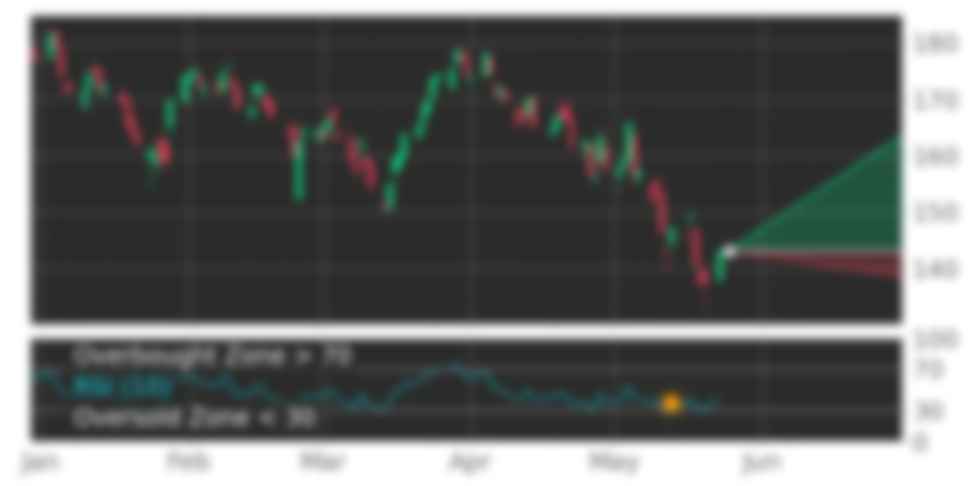
The RSI Indicator shows that the ticker has stayed in the oversold zone for 4 days. The price of this ticker is presumed to bounce back soon, since the longer the ticker stays in the oversold zone, the more promptly an Uptrend is expected.
The Stochastic Oscillator shows that the ticker has stayed in the oversold zone for 14 days. The price of this ticker is presumed to bounce back soon, since the longer the ticker stays in the oversold zone, the more promptly an upward trend is expected.
Following a +1.44% 3-day Advance, the price is estimated to grow further. Considering data from situations where BZFD advanced for three days, in 168 of 211 cases, the price rose further within the following month. The odds of a continued upward trend are 80%.
BZFD may jump back above the lower band and head toward the middle band. Traders may consider buying the stock or exploring call options.
The Tickeron PE Growth Rating for this company is 9 (best 1 - 100 worst), pointing to outstanding earnings growth. The PE Growth rating is based on a comparative analysis of stock PE ratio increase over the last 12 months compared against S&P 500 index constituents.
The Tickeron Valuation Rating of 37 (best 1 - 100 worst) indicates that the company is fair valued in the industry. This rating compares market capitalization estimated by our proprietary formula with the current market capitalization. This rating is based on the following metrics, as compared to industry averages: P/B Ratio (0.850) is normal, around the industry mean (0.974). P/E Ratio (-0.345) is within average values for comparable stocks, (-39.046). Projected Growth (PEG Ratio) (0.000) is also within normal values, averaging (17.274). Dividend Yield (0.000) settles around the average of (0.979) among similar stocks. P/S Ratio (0.267) is also within normal values, averaging (71.888).
The Tickeron Price Growth Rating for this company is 95 (best 1 - 100 worst), indicating slightly worse than average price growth. BZFD’s price grows at a lower rate over the last 12 months as compared to S&P 500 index constituents.
The Tickeron SMR rating for this company is 98 (best 1 - 100 worst), indicating weak sales and an unprofitable business model. SMR (Sales, Margin, Return on Equity) rating is based on comparative analysis of weighted Sales, Income Margin and Return on Equity values compared against S&P 500 index constituents. The weighted SMR value is a proprietary formula developed by Tickeron and represents an overall profitability measure for a stock.
The Tickeron Profit vs. Risk Rating rating for this company is 100 (best 1 - 100 worst), indicating that the returns do not compensate for the risks. BZFD’s unstable profits reported over time resulted in significant Drawdowns within these last five years. A stable profit reduces stock drawdown and volatility. The average Profit vs. Risk Rating rating for the industry is 94, placing this stock worse than average.
BuzzFeed, Inc. is a digital media company that distributes content across its owned and operated properties as well as third-party platforms in the United States and internationally. Its portfolio includes the BuzzFeed brand, known for entertainment, pop culture, articles, quizzes, and videos; Tasty, a food-focused content platform; and HuffPost, a digital news and lifestyle publisher. The company generates revenue primarily through display, programmatic, and video advertising, along with content licensing and commerce.
Investors follow BZFD because of its recognizable brands and its ongoing effort to reposition itself for a post-social-media landscape. Under a leadership transition that brought Byron Allen in as incoming Chairman and CEO, the company has announced an AI-focused restructuring designed to streamline operations and move toward profitability. The stock's appeal sits alongside meaningful risks: sustained net losses, declining top-line revenue, and intense competition in digital advertising.
Over the last 30 days, BZFD fell approximately 54%, declining from a closing price near $1.03 to roughly $0.48. Much of that decline was concentrated immediately after the company's third-quarter earnings release, when the stock dropped sharply in a matter of sessions and continued grinding lower, ultimately falling below the $1 level.
The quarterly picture is similarly negative. From around $1.14 in mid-August to roughly $0.48 in mid-November, the stock lost approximately 58%. The trend over both periods has been firmly downward, punctuated by brief rallies that failed to hold, reflecting persistent selling pressure tied to weakening fundamentals and execution uncertainty rather than a single isolated event.
The dominant catalyst was the company's fiscal 2026 third-quarter report. Revenue fell 43.8% year over year to $26.03 million, and the net loss widened to $18.66 million—well short of expectations. The results underscored the structural contraction in BuzzFeed's advertising-driven business and its transition away from traditional publishing metrics.
Analyst action added to the pressure, with Craig-Hallum cutting its price target to $1.00 amid skepticism about the company's AI and platform pivot. The stock's move below $1 further weighed on sentiment, as persistent losses and the absence of dividends or buybacks left little support for a recovery. Management's emphasis on cost preservation over growth—consistent with the restructuring that removed roughly 35% of the workforce and dedicated contractors—reinforced the view that near-term revenue gains are unlikely to offset widening losses.
The broader multi-month decline reflects a strategic reset rather than a single news event. In mid-2026, BuzzFeed completed a $120 million majority investment by an affiliate of Byron Allen's family office, issuing 40 million shares at $3.00 per share and giving the investor roughly 51% voting control. Byron Allen was named incoming Chairman and CEO, with founder Jonah Peretti transitioning to President.
Alongside that leadership change, the company announced an aggressive restructuring intended to accelerate a path to profitability and positive cash flow, including the workforce reduction and a shift toward AI-assisted content and platform models. While the transition is positioned as a long-term reset, quarterly results have continued to deteriorate, and investor confidence has eroded as revenue declines outpaced cost savings in the near term.
Tickeron's Trending AI Robots page highlights a curated selection of the platform's AI-powered trading bots. Tickeron offers hundreds of automated bots that trade thousands of tickers, but only the top-performing and most relevant strategies are featured in this section. These bots vary in approach, timeframe, and performance metrics, giving traders a way to compare AI-driven signals across different market conditions. For investors looking to complement their own research with quantitative, rules-based tools, exploring this section can provide additional perspective on how automated systems are navigating current market volatility.
Going forward, investors will monitor whether BuzzFeed's restructuring translates into a meaningful reduction in cash burn and a narrower path toward profitability. Upcoming earnings reports and any updated operational targets will be closely watched, particularly given management's decision to emphasize full-year goals rather than quarterly guidance. The trajectory of digital advertising demand, the company's ability to monetize its AI and platform initiatives, and any further changes in leadership or capital structure are also key considerations.
The stock's sub-$1 price level raises watchpoints around exchange listing standards, while the ongoing integration of the Byron Allen investment and associated debt will remain in focus. Competitive pressures from larger digital platforms and established media groups will continue to shape the revenue outlook. These factors, rather than short-term price swings, are likely to determine whether the company can stabilize its fundamentals.
The information on this webpage is provided for general informational and educational purposes only and is not intended as investment advice, a recommendation to purchase or sell any security, or an offer or solicitation related to investments. It does not consider your personal financial situation, goals, or risk profile, and all investing carries inherent risks, including the possibility of losing your entire investment. For more details, please review our full disclaimer.