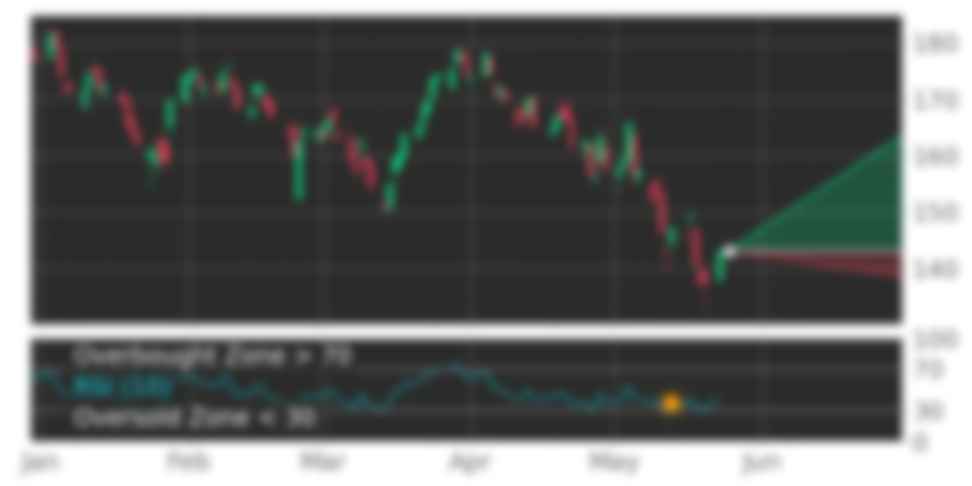
Howmet Aerospace (HWM) declined roughly 18.4% over the past 30 days, falling from $283.71 (August 10 close) to $231.53 (September 8 close). The selloff was triggered by Elon Musk's announcement that SpaceX (SPCX) plans to cast its own industrial gas turbine blades and vanes, raising competitive concerns in Howmet's fastest-growing business segment.
Curtiss-Wright (CW) shares fell roughly 22.7% over the last 30 days, from $723.71 on August 12, 2026, to $559.74 on September 10, 2026. The decline accelerated even after second-quarter results beat earnings expectations and management raised full-year guidance.
Bending Spoons (BSP) shares have declined roughly 19% over the last 30 days, pulling back from a closing price near $48.98 in mid-August to about $39.67 in early September. The slide followed a second-quarter 2026 earnings report that beat estimates but revealed slowing organic revenue growth and elevated leverage, triggering an approximately 18% single-day decline.
Stryker (SYK) shares fell about 22% over the last 30 days, sliding from roughly $347 to near $270 and trading at or near 52-week lows. The sell-off accelerated in early September after management warned that manufacturing and supply problems in its peripheral vascular business would persist into the fourth quarter.
Transformational pivot is the core thesis: IREN (formerly Iris Energy) is converting its low-cost power and data-center footprint into AI cloud and high-performance computing (HPC) capacity, a shift that is reshaping how analysts value the company. Contracted revenue underpins the near-term runway: A five-year, roughly $9.7 billion agreement with Microsoft and multi-year contracts with Together AI, Fluidstack, and Fireworks AI provide visibility that is unusual for a company of IREN's size.
IREN (formerly Iris Energy Limited) is an Australian-founded, Nasdaq-listed data center company focused on AI cloud services and Bitcoin mining, powered by 100% renewable energy. The company is in the middle of a strategic transition, shifting from Bitcoin mining toward AI cloud and high-performance computing infrastructure for customers such as MSFT and NVDA .
DLLL seeks to deliver 2x (200%) the daily percentage return of DELL , using swaps and options, with a 1.50% net expense ratio. As a single-name, non-diversified fund, its performance hinges almost entirely on Dell Technologies and the AI-infrastructure demand cycle.
MSOX advanced roughly 31% over the trailing 30 days, powered by a rebound in U.S. cannabis equities amplified by its 2x daily leverage. Over the trailing three months, the ETF finished roughly 4% lower after a sharp June rally, a July pullback, and an August recovery.
MUU, a leveraged single-stock ETF (exchange-traded fund) seeking 2x the daily return of Micron Technology , advanced roughly 22% over the last 30 days, roughly double Micron's own ~12% gain over the same window. The rally extends an August rebound from a sharp July drawdown; over the last quarter the fund remains down about 44%.
IREX rose about 16% over the last 30 days, climbing from roughly $13.19 to $15.33, as its sole underlying stock, IREN Limited, rebounded from July lows. IREX is a leveraged single-stock ETF that seeks 200% of IREN's daily return rather than a diversified index or sector basket.
The Tema Memory ETF (DISK) has gained roughly 14% over the past 30 days, rebounding from a sharp July drawdown that followed its late-June 2026 launch. The fund is an actively managed, high-conviction portfolio of about 18 global memory-chip companies spanning HBM, DRAM, and NAND flash.
EOLS is trading down about -8.75% to roughly $7.82 during regular market hours, versus a prior-session close of $8.57. The slide extends a multi-day pullback from its 52-week high near $9.31, leaving shares roughly -16% below that recent peak.
ALM fell -8.57% to roughly $16.76 during regular trading, down from a $18.33 prior-session close. The decline occurred intraday, extending the prior session's -4.13% drop as the stock pulls back from its $24.41 52-week high.
LECO fell -8.60% (-$23.34) to about $248.18 during Thursday's regular session, on pace for its largest one-day drop since April 2025. The primary catalyst was cautious commentary at the Jefferies Global Industrials Conference, where management signaled Q3 incremental margins tracking in the "low 20s," down from prior "mid-20s" guidance.
AXGN fell -9.92% to $42.58 during regular trading, from a prior-session close of $47.27. Primary catalyst: the company priced a 4.91M-share underwritten public offering at $42.50, a >10% discount that dilutes existing shareholders.
AEO is down -15.51% to about $14.27, versus a prior close of $16.89. The stock gapped lower in premarket and continued falling during the regular session after Q2 FY2026 results released Wednesday post-close.
BHVN dropped -15.93% to $12.61 during regular trading, after the FDA disclosed a partial clinical hold on its BHV-7000 epilepsy program. The decline began premarket as Biohaven revealed the FDA paused new patient enrollment in the Phase 2/3 trial after rodent studies flagged a potentially toxic drug metabolite.
Tenon Medical (TNON) shares have fallen roughly 60% over the past 30 days, closing at $2.44 on September 9, 2026, down from $6.14 in early August. The move reflects a 1-for-35 reverse stock split, continued share dilution, and a second-quarter earnings miss, only partly offset by the full repayment of convertible notes.
BKR is down -5.23% during regular trading, falling to about $60.31 from a prior close of $63.64. The selloff tracked crude oil dropping to its lowest since the start of the Iran conflict, as tankers resumed Strait of Hormuz transit and U.S.-Iran signaled de-escalation progress.
VRT is down -5.24% in regular trading, near $249 versus a prior-session close of $262.89, extending yesterday's -9.6% slide. The drop reflects follow-through profit-taking and a valuation reset across AI-infrastructure names, with no new company-specific filing driving the move.