Key Takeaways
- EFV is a passively managed fund tracking the MSCI EAFE Value Index, a basket of large- and mid-cap value stocks across developed markets in Europe, Australasia, and the Far East, excluding the U.S. and Canada.
- The portfolio holds roughly 420 securities and is heavily concentrated in financials, which account for approximately 40% of assets, followed by industrials, consumer staples, healthcare, and energy.
- The fund's net expense ratio is 0.31%, with about $30 billion in assets under management (AUM) and a trailing 12-month distribution yield above 4%.
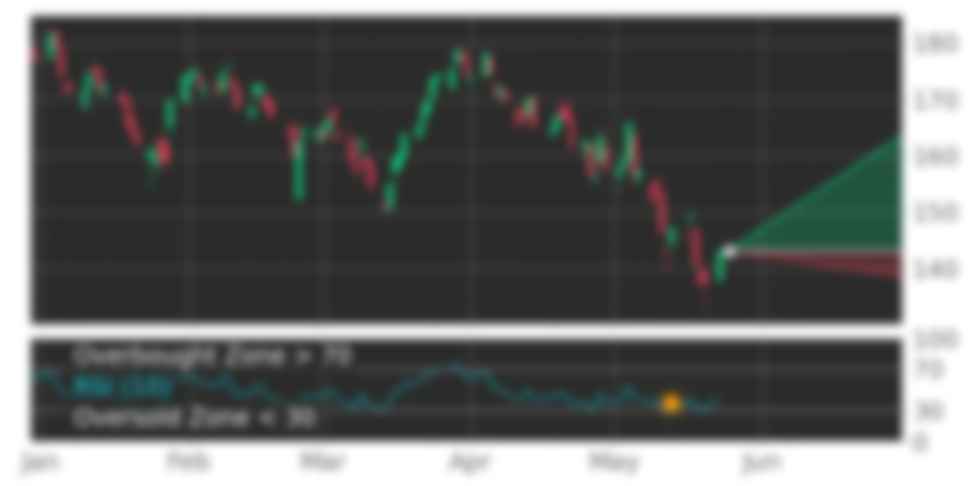
- On a split-adjusted basis, EFV's 30-day move has been essentially flat to modestly higher, reflecting a period of consolidation rather than a sharp directional trend.
- International value equities have benefited from a broader rotation away from richly valued U.S. mega-cap technology names toward cheaper, dividend-paying developed-market stocks.
- Key risks include a strong U.S. dollar, concentrated financials exposure, and sensitivity to global interest-rate and inflation trends.
- For additional detail on this fund, explore its Price Targets and Forecast pages.
- Discover related trading strategies through Trending AI Robots.
iShares MSCI EAFE Value ETF (EFV) Overview
The iShares MSCI EAFE Value ETF seeks to track the investment results of the MSCI EAFE Value Index, a subset of the broader MSCI EAFE Index that selects developed-market equities exhibiting value characteristics such as lower price-to-book and price-to-earnings ratios. The fund generally invests at least 80% of its assets in index components, offering broad geographic diversification across Japan, the United Kingdom, France, Germany, Switzerland, and Australia, among other markets.
With roughly 420 holdings, EFV is a large, liquid, passively managed vehicle. Its largest positions include HSBC, Shell, Nestlé, Mitsubishi UFJ Financial Group, Roche, Allianz, Novartis, Toyota, TotalEnergies, and Siemens. Financials dominate the sector mix at about 40%, followed by industrials (around 10%), consumer staples (about 9%), healthcare (roughly 7.5%), and energy (about 7%). Technology represents only a small single-digit weighting, a defining feature that separates EFV from growth-oriented international funds. The net expense ratio is 0.31%.
Industry and Thematic Landscape
EFV operates at the intersection of two durable investment themes: international diversification and value investing. After a prolonged stretch of U.S. mega-cap technology leadership, investors have increasingly looked overseas for relative valuation support, favorable dividend yields, and exposure to cyclical sectors tied to global economic activity.
The fund's financials overweight links its fortunes to the global banking cycle, where higher-for-longer interest rates have generally supported net interest margins and profitability at major European and Japanese lenders. Energy and basic materials exposure ties performance to commodity prices and industrial demand, while the limited technology footprint means EFV has comparatively low sensitivity to the artificial-intelligence-driven volatility that has defined U.S. large-cap growth. Monetary policy, inflation, and currency movements—particularly the U.S. dollar—are central to the fund's environment.
Performance and Positioning Snapshot
EFV's recent price action reflects consolidation rather than a decisive trend. On a split-adjusted basis, the fund's 30-day return has been roughly flat to slightly positive, following a 2-for-1 share split that took effect in early November 2026 and mechanically halved the nominal share price without altering underlying value. Investors viewing raw price charts should account for this corporate action when comparing levels.
Over a longer horizon, the fund's positioning has been constructive. International value equities posted a solid year-to-date advance of roughly 13%, supported by resilient bank earnings, steady dividends from multinational staples and healthcare names, and a rotation toward cheaper developed-market stocks. The fund's top holdings—led by HSBC, Shell, and Mitsubishi UFJ—reflect a portfolio oriented toward income and cyclical recovery rather than high-multiple growth, which has helped EFV navigate periods of elevated U.S. equity valuation risk.
AI Screener
Tickeron's AI Screener is an AI-powered stock and ETF discovery platform that helps investors search thousands of securities using technical indicators, fundamentals, volatility measures, AI-generated signals, market trends, price patterns, and customizable filters. The tool is designed to surface trending securities, breakout candidates, and new trading opportunities more efficiently than manual screening, allowing users to compare funds such as EFV against peers by sector exposure, performance characteristics, and risk metrics. For investors looking to streamline their research workflow, the AI Screener offers a practical starting point.
2026 Outlook and Key Factors to Monitor
Several structural factors are likely to shape EFV's trajectory through 2026. The global interest-rate cycle remains pivotal: persistent or rising rates generally support bank margins and value-style equities, while aggressive easing could favor growth and technology names at value's expense. Inflation trends and central-bank policy in the eurozone, Japan, and the United Kingdom will be closely watched, as will currency dynamics—particularly a strong U.S. dollar, which can dampen returns on unhedged international exposure.
The earnings cycle of major financial holdings is a core driver, given the sector's dominant weighting. Commodity prices will influence the energy and materials sleeve, while regulatory and capital-market developments across European and Japanese banks could affect sentiment. Finally, continued competition in the low-cost international value ETF space and the broader debate over U.S. versus international equity leadership will shape institutional capital flows. These themes present both opportunities and risks, without implying any specific price prediction.
The information on this webpage is provided for general informational and educational purposes only and is not intended as investment advice, a recommendation to purchase or sell any security, or an offer or solicitation related to investments. It does not consider your personal financial situation, goals, or risk profile, and all investing carries inherent risks, including the possibility of losing your entire investment. For more details, please review our full disclaimer.
Disclaimers and Limitations
 GET DAILY SIGNALS