MENU
Go to the list of all blogs
Arthur Evans's Avatar
published in Blogs
Sep 15, 2026
Why Is Enova International (ENVA) Stock Down -22.36% Today?

Why Is Enova International (ENVA) Stock Down -22.36% Today?

Key Takeaways

  • ENVA shares plunged roughly 22.4% in Tuesday's session after the company withdrew its regulatory applications for the proposed Grasshopper Bancorp acquisition.
  • The move marks one of the stock's sharpest single-day declines, erasing a substantial portion of recent gains.
  • Enova reaffirmed its full-year 2026 guidance and said it would accelerate share repurchases, but the signal was not enough to offset the strategic setback.
  • Analyst reaction turned cautious, with at least one firm cutting its price target while keeping a bullish rating.
  • Traders are now watching for regulatory commentary, capital-return execution, and the company's upcoming earnings report.

Opening Summary

Enova International, Inc. (ENVA), a Chicago-based fintech that provides online consumer and small-business lending through brands such as CashNetUSA, NetCredit, OnDeck, and Headway Capital, tumbled sharply on Tuesday. The stock fell 22.36%, sliding from a prior close of $226.72 to around $176.03 in intraday trading. The decline was driven primarily by the company's announcement that it is withdrawing its applications to acquire Grasshopper Bancorp, a move that undercuts a long-anticipated strategic expansion into bank-chartered operations and lower-cost funding.

Withdrawal of the Grasshopper Bancorp Acquisition

The dominant catalyst behind the sell-off was Enova's decision to pull its regulatory applications for the acquisition of Grasshopper Bancorp. The proposed deal had been viewed by investors as a path toward a bank charter, which would have given the company access to cheaper deposits and diversified funding sources. In announcing the withdrawal, Chief Executive Officer Steve Cunningham said the company had worked "constructively and transparently" with regulators but concluded that withdrawing was "the best decision for Enova and our shareholders."

Enova framed the setback as a product of an outdated regulatory environment, arguing that guidelines have not kept pace with the reality of serving consumers and small businesses that are underserved by traditional banks. While the company reaffirmed its 2026 guidance and pledged to accelerate share repurchases, the market focused on the loss of a strategic catalyst that had supported the stock's premium valuation and its strong run over the past year.

Analyst Reaction and Recalibrated Expectations

The strategic retreat prompted a quick reassessment on Wall Street. Citizens JMP lowered its price target on ENVA to $215 from $270, while maintaining a "market outperform" rating. The adjustment reflected the removal of a growth and funding-benefit scenario that analysts had incorporated into their models. Even so, the broader analyst community has retained a generally positive stance, with the stock carrying an average "Buy" rating and consensus targets that remain well above Tuesday's depressed share price.

The recalibration highlights a key tension: Enova's underlying operating performance has been strong, but the Grasshopper acquisition had become a meaningful part of the bull thesis. With that pillar removed, investors were quick to de-risk positions.

Market Context and Trading Activity

The decline was accompanied by heavy trading volume, consistent with a fundamental repricing rather than a routine pullback. The move diverged sharply from the broader financial sector and the wider equity market, signaling that the sell-off was company-specific rather than a reflection of macro or credit-market stress. Consumer-finance and specialty-lending peers did not exhibit the same magnitude of weakness, underscoring that the catalyst was idiosyncratic to Enova.

From a technical standpoint, the drop took the stock well below its 50-day moving average and back toward levels not seen in months, after a period in which ENVA had been trading near the upper end of its 52-week range. The rapid move below prior support levels suggests momentum traders and longer-term holders alike participated in the de-risking.

What Comes Next for ENVA

Looking ahead, investors will be monitoring how Enova deploys the capital that had been earmarked for the Grasshopper transaction. Management's pledge to accelerate share repurchases could provide some support for the stock, but it is unlikely to fully replace the funding-cost benefits a bank charter would have delivered. The company's next earnings report will be closely watched for signs that core loan growth and credit performance remain intact despite the strategic setback.

Key risks include the possibility of further regulatory scrutiny, the loss of a lower-cost funding avenue, and the need to rebuild the growth narrative that had underpinned the stock's premium. On the other hand, Enova's fundamentals have remained solid, with recent quarters showing better-than-expected earnings and double-digit revenue growth. How the market weighs these competing forces will likely determine the stock's near-term trajectory.

Trending AI Robots

Tickeron's Trending AI Robots page highlights a curated selection of AI-powered trading bots from a platform that offers hundreds of bots covering thousands of tickers. Only the strongest performers under current market conditions are featured, and bots vary by strategy, timeframe, performance metrics, and traded symbols. Explore the page to see which strategies are gaining traction right now.

Disclaimer

The information on this webpage is provided for general informational and educational purposes only and is not intended as investment advice, a recommendation to purchase or sell any security, or an offer or solicitation related to investments. It does not consider your personal financial situation, goals, or risk profile, and all investing carries inherent risks, including the possibility of losing your entire investment. For more details, please review our full disclaimer.

Disclaimers and Limitations

Related Ticker: ENVA

Contributor

Financial writer and active order flow futures trader with a focus on fundamental analysis, macroeconomic factors, and equity research. I make in-depth blogs on stocks and ETFs, bridging the gap between raw market data and real-world trading decisions.


ENVA sees MACD Histogram just turned negative

ENVA saw its Moving Average Convergence Divergence Histogram (MACD) turn negative on August 10, 2026. This is a bearish signal that suggests the stock could decline going forward. Tickeron's A.I.dvisor looked at 40 instances where the indicator turned negative. In 26 of the 40 cases the stock moved lower in the days that followed. This puts the odds of a downward move at 65%.

Price Prediction Chart

Technical Analysis (Indicators)

Bearish Trend Analysis

The Momentum Indicator moved below the 0 level on August 19, 2026. You may want to consider selling the stock, shorting the stock, or exploring put options on ENVA as a result. In 52 of 85 cases where the Momentum Indicator fell below 0, the stock fell further within the subsequent month. The odds of a continued downward trend are 61%.

ENVA moved below its 50-day moving average on August 26, 2026 date and that indicates a change from an upward trend to a downward trend.

The 10-day moving average for ENVA crossed bearishly below the 50-day moving average on September 01, 2026. This indicates that the trend has shifted lower and could be considered a sell signal. In 9 of 16 past instances when the 10-day crossed below the 50-day, the stock continued to move higher over the following month. The odds of a continued downward trend are 56%.

Following a 3-day decline, the stock is projected to fall further. Considering past instances where ENVA declined for three days, the price rose further in 50 of 62 cases within the following month. The odds of a continued downward trend are 63%.

The Aroon Indicator for ENVA entered a downward trend on September 15, 2026. This could indicate a strong downward move is ahead for the stock. Traders may want to consider selling the stock or buying put options.

Bullish Trend Analysis

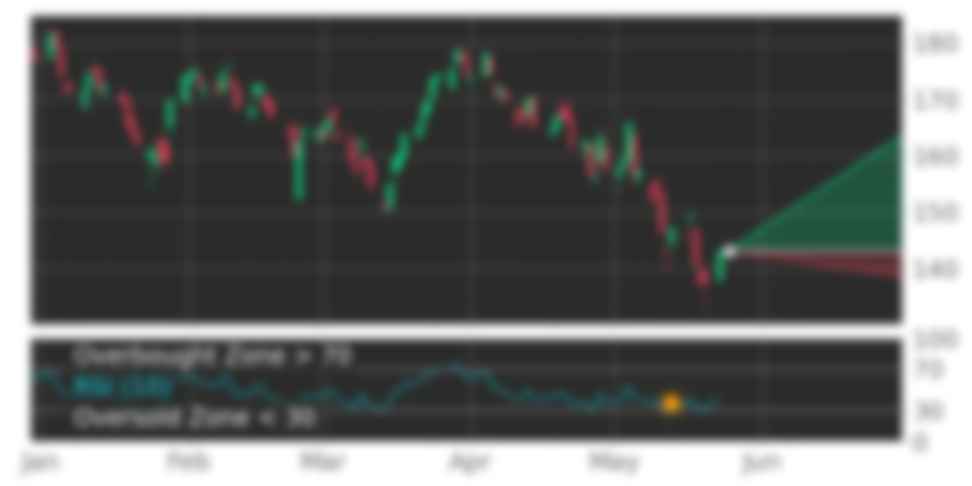
The RSI Indicator entered the oversold zone -- be on the watch for ENVA's price rising or consolidating in the future. That's also the time to consider buying the stock or exploring call options.

The Stochastic Oscillator shows that the ticker has stayed in the oversold zone for 13 days. The price of this ticker is presumed to bounce back soon, since the longer the ticker stays in the oversold zone, the more promptly an upward trend is expected.

Following a +1.64% 3-day Advance, the price is estimated to grow further. Considering data from situations where ENVA advanced for three days, in 278 of 370 cases, the price rose further within the following month. The odds of a continued upward trend are 75%.

ENVA may jump back above the lower band and head toward the middle band. Traders may consider buying the stock or exploring call options.

Fundamental Analysis (Ratings)

The Tickeron Profit vs. Risk Rating rating for this company is 30 (best 1 - 100 worst), indicating low risk on high returns. The average Profit vs. Risk Rating rating for the industry is 77, placing this stock better than average.

The Tickeron PE Growth Rating for this company is 34 (best 1 - 100 worst), pointing to consistent earnings growth. The PE Growth rating is based on a comparative analysis of stock PE ratio increase over the last 12 months compared against S&P 500 index constituents.

The Tickeron SMR rating for this company is 37 (best 1 - 100 worst), indicating strong sales and a profitable business model. SMR (Sales, Margin, Return on Equity) rating is based on comparative analysis of weighted Sales, Income Margin and Return on Equity values compared against S&P 500 index constituents. The weighted SMR value is a proprietary formula developed by Tickeron and represents an overall profitability measure for a stock.

The Tickeron Price Growth Rating for this company is 38 (best 1 - 100 worst), indicating steady price growth. ENVA’s price grows at a higher rate over the last 12 months as compared to S&P 500 index constituents.

The Tickeron Valuation Rating of 78 (best 1 - 100 worst) indicates that the company is slightly overvalued in the industry. This rating compares market capitalization estimated by our proprietary formula with the current market capitalization. This rating is based on the following metrics, as compared to industry averages: P/B Ratio (2.888) is normal, around the industry mean (4.247). P/E Ratio (12.898) is within average values for comparable stocks, (15.233). Projected Growth (PEG Ratio) (0.000) is also within normal values, averaging (2.298). Dividend Yield (0.000) settles around the average of (0.082) among similar stocks. P/S Ratio (1.331) is also within normal values, averaging (5.969).

Notable companies

The most notable companies in this group are VISA (NYSE:V), Mastercard (NYSE:MA), American Express Company (NYSE:AXP), Capital One Financial (NYSE:COF), PayPal Holdings (NASDAQ:PYPL), Synchrony Financial (NYSE:SYF), SLM Corp (NASDAQ:SLM), Bread Financial Holdings (NYSE:BFH), LexinFintech Holdings Ltd (NASDAQ:LX).

Industry description

A savings bank primary function is to take deposits and paying interest on those deposits. Originating in Europe during the 18th century, these banks were generally introduced to incentivize people of all stripes to save money and park them with banks. By the 1990s, the internet ushered in online savings banks that allowed savers to deposit/transact with banks digitally, without requiring to visit a branch office. Savings banks have potentially encouraged lower-income population to save and have access to a financial institution to earn interest on their money. New York Community Bancorp, Inc, Webster Financial Corporation, Washington Federal, Inc. are examples of savings banks.

Market Cap

The average market capitalization across the Savings Banks Industry is 33.84B. The market cap for tickers in the group ranges from 1.46M to 706.71B. V holds the highest valuation in this group at 706.71B. The lowest valued company is DXF at 1.46M.

High and low price notable news

The average weekly price growth across all stocks in the Savings Banks Industry was -2%. For the same Industry, the average monthly price growth was -7%, and the average quarterly price growth was 9%. TROO experienced the highest price growth at 10%, while ENVA experienced the biggest fall at -23%.

Volume

The average weekly volume growth across all stocks in the Savings Banks Industry was 27%. For the same stocks of the Industry, the average monthly volume growth was 19% and the average quarterly volume growth was -45%

Fundamental Analysis Ratings

The average fundamental analysis ratings, where 1 is best and 100 is worst, are as follows

Valuation Rating: 51
P/E Growth Rating: 63
Price Growth Rating: 56
SMR Rating: 46
Profit Risk Rating: 76
Seasonality Score: -35 (-100 ... +100)
View a ticker or compare two or three
ENVA
Daily Signal:
Gain/Loss:
Interact to see
Advertisement
A.I.Advisor
published price charts
A.I. Advisor
published General Information

General Information

a provider of online financial services

Industry SavingsBanks

Profile
Details
Industry
Finance Or Rental Or Leasing
Address
175 West Jackson Boulevard
Phone
+1 312 568-4200
Employees
1836
Web
https://www.enova.com