MENU
Go to the list of all blogs
Sergey Savastiouk's Avatar
published in Blogs
Sep 09, 2026
EOS: Can Eaton Vance Enhanced Equity Income Fund II Reach $25?

EOS: Can Eaton Vance Enhanced Equity Income Fund II Reach $25?

Key Takeaways

  • The price target in focus is $25 per share, roughly 14% above EOS's recent trading range near $22.
  • The strongest bullish case is valuation, not momentum: EOS trades at an unusually wide discount to its net asset value (NAV), with the NAV itself already sitting around $24.40.
  • The biggest obstacle is the fund's covered-call strategy, which is designed to generate income but caps how much share-price appreciation the fund can capture in a rally.
  • Key levels to watch: the 52-week market high near $24.49 acts as resistance, while the 52-week low near $19.44 marks the downside support zone.
  • The takeaway for investors: reaching $25 is plausible, but it would most likely come from a narrowing of the NAV discount plus modest portfolio gains, rather than from explosive price growth.

Understanding What EOS Is

Eaton Vance Enhanced Equity Income Fund II (EOS) is a closed-end fund, or CEF, rather than a conventional stock or exchange-traded fund. It issues a fixed number of shares that trade on an exchange, and those shares can trade above or below the value of the underlying assets. EOS invests primarily in large-cap U.S. growth companies and overlays that portfolio with an option-writing (covered-call) program designed to boost current income. From what I see, this structure is central to both its income appeal and its performance limits.

Why the $25 Level Stands Out

The $25 level is a natural psychological milestone. EOS's 52-week market-price range runs from roughly $19.44 to $24.49, and the fund's NAV has traded as high as approximately $25.25 over the same period. With the share price recently hovering near $22, a move to $25 would represent a meaningful, but not extreme, gain of around 14% — a realistic distance that makes the target a legitimate subject of investor discussion rather than an arbitrary figure. I also checked this using Tickeron’s AI Daily Buy/Sell Signals to see how current conditions line up with historical patterns.

Current Positioning and the NAV Discount

The defining feature of EOS's current setup is its discount to NAV. The fund's NAV has recently been reported near $24.34 to $24.42, while the market price has been near $22 — implying a discount of roughly 9%. That is notable because EOS has historically traded much closer to its NAV; its five-year average discount has been only about 1.8%. In other words, EOS is priced at its deepest discount in years even though the underlying portfolio value remains close to its highs.

This matters directly for the $25 question. Because the NAV is already near $24.40, the share price does not need dramatic portfolio growth to approach $25 — it mainly needs the discount to narrow toward its historical norm. A return to a modest discount or a slight premium, combined with stable NAV, would be enough to put $25 within reach.

Factors That Could Support Higher Prices

Several factors support a higher price. First, the unusually wide discount offers room for mean reversion; if investor sentiment toward income-oriented funds improves, the discount could compress toward its long-term average. Second, EOS's portfolio is heavily weighted toward large-cap technology, which has been a primary engine of market gains. Top holdings have historically included names such as NVIDIA (NVDA), Microsoft (MSFT), and Apple (AAPL).

Third, the fund delivers a monthly distribution of about $0.1523 per share, translating to a distribution yield near 8.3% at recent market prices. Persistent demand for high-yield income vehicles could support the share price and help close the discount.

Potential Headwinds to Consider

The primary structural headwind is the covered-call strategy itself. EOS writes call options on a meaningful portion of its portfolio, generally a bit less than 10% out of the money. This generates premium income but also caps the fund's upside participation during strong rallies. As a result, EOS tends to lag broad market benchmarks such as the SPDR S&P 500 ETF Trust (SPY) during powerful bull-market advances. That capped upside limits how quickly the NAV can rise.

Concentration risk is another concern. With technology representing a substantial share of the portfolio — roughly a third of assets — a rotation away from mega-cap tech would pressure both the NAV and the share price. Finally, there is no guarantee the discount will narrow; closed-end fund discounts can persist or widen if income investors rotate elsewhere or if rate expectations shift.

Important Technical Levels

From a technical analysis perspective, the 52-week market high near $24.49 is the clearest resistance level standing between the current price and $25. Above that sits the psychological round-number level at $25 itself, which aligns closely with the fund's upper NAV range. On the downside, the NAV of roughly $24.34 acts as an anchor that has historically pulled the market price toward it, while the 52-week low near $19.44 represents the major support zone.

Final Assessment

The $25 target for EOS appears realistic but is not guaranteed. The strongest argument in its favor is the wide discount to NAV: with the underlying portfolio value already near $24.40, the share price has meaningful room to appreciate simply by closing that gap toward its historical norm. The largest risk is that the covered-call strategy caps upside, meaning the fund is less likely to deliver the kind of rapid appreciation that would push shares well beyond $25 in a strong market. Investors should monitor the discount to NAV, the performance of large-cap technology holdings, and any changes to the monthly distribution, as these factors will largely determine whether EOS can reach — and hold — the $25 level.

AI Daily Buy/Sell Signals in My Research

In my own analysis of funds like EOS, I find it helpful to cross-reference ideas with Tickeron’s AI Daily Buy/Sell Signals. The tool applies artificial intelligence to scan thousands of securities and generate signals based on technical behavior and market conditions, which can add efficiency when tracking discount dynamics or sector exposure.

Disclaimer

The information on this webpage is provided for general informational and educational purposes only and is not intended as investment advice, a recommendation to purchase or sell any security, or an offer or solicitation related to investments. It does not consider your personal financial situation, goals, or risk profile, and all investing carries inherent risks, including the possibility of losing your entire investment. For more details, please review our full disclaimer.

Disclaimers and Limitations

Related Ticker: EOS

Contributor

Sergey Savastiouk, Ph.D. has a degree in Applied Mathematics from Moscow University and has extensive experience as an entrepreneur, investor, manager, and mathematician. His professional expertise is in applied mathematics, mathematical modeling, system and pattern analysis, and software and hardware system integration. He has served as the CEO of several hi-tech start-up companies and nonprofit organizations, which has given him proven capabilities in business strategy for high-tech start-up companies, market assessment, company formation, team building, product development, marketing, and sales. He has published numerous articles in journals and magazines on related fields. As a retail investor, he spent 15 years developing his proprietary trading and quantitative algorithms (now Tickeron’s A.I.), which brought him significant returns in trading the stock market. His current work and goal in founding Tickeron is to bring professional, sophisticated stock market analysis capabilities to retail investors via an easy-to-use interface.


EOS in upward trend: price may jump up because it broke its lower Bollinger Band on August 20, 2026

EOS may jump back above the lower band and head toward the middle band. Traders may consider buying the stock or exploring call options. In of 51 cases where EOS's price broke its lower Bollinger Band, its price rose further in the following month. The odds of a continued upward trend are .

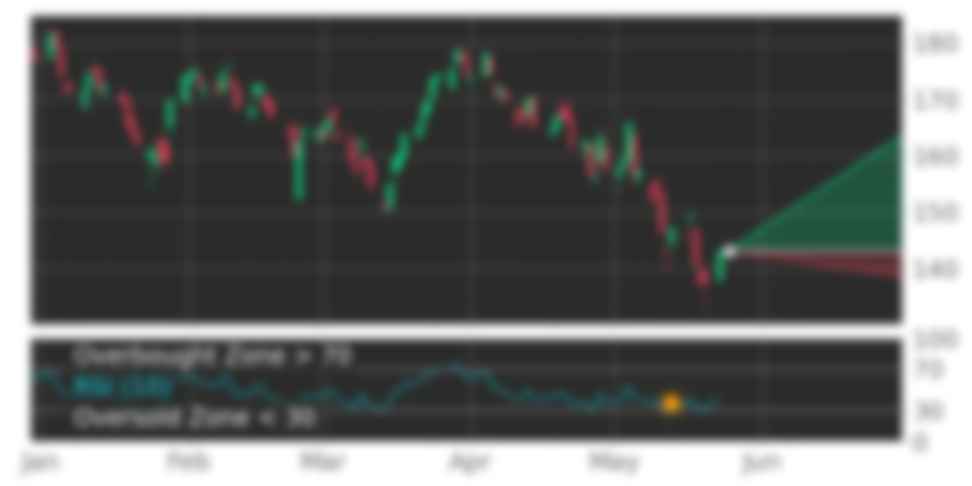
Price Prediction Chart

Technical Analysis (Indicators)

Bullish Trend Analysis

The Stochastic Oscillator suggests the stock price trend may be in a reversal from a downward trend to an upward trend. of 52 cases where EOS's Stochastic Oscillator exited the oversold zone resulted in an increase in price. Tickeron's analysis proposes that the odds of a continued upward trend are .

The Momentum Indicator moved above the 0 level on September 03, 2026. You may want to consider a long position or call options on EOS as a result. In of 88 past instances where the momentum indicator moved above 0, the stock continued to climb. The odds of a continued upward trend are .

EOS moved above its 50-day moving average on September 03, 2026 date and that indicates a change from a downward trend to an upward trend.

Following a 3-day Advance, the price is estimated to grow further. Considering data from situations where EOS advanced for three days, in of 306 cases, the price rose further within the following month. The odds of a continued upward trend are .

Bearish Trend Analysis

The Moving Average Convergence Divergence Histogram (MACD) for EOS turned negative on August 20, 2026. This could be a sign that the stock is set to turn lower in the coming weeks. Traders may want to sell the stock or buy put options. Tickeron's A.I.dvisor looked at 47 similar instances when the indicator turned negative. In of the 47 cases the stock turned lower in the days that followed. This puts the odds of success at .

The 10-day moving average for EOS crossed bearishly below the 50-day moving average on August 28, 2026. This indicates that the trend has shifted lower and could be considered a sell signal. In of 15 past instances when the 10-day crossed below the 50-day, the stock continued to move higher over the following month. The odds of a continued downward trend are .

Following a 3-day decline, the stock is projected to fall further. Considering past instances where EOS declined for three days, the price rose further in of 62 cases within the following month. The odds of a continued downward trend are .

Industry description

Eaton Vance Enhanced Equity Income Fund II is a diversified, closed-end management investment company. The fund's primary investment objective is to provide current income, with a secondary objective of capital appreciation. Under normal market conditions, the Fund invests at least 80% of its total assets in common stocks. It invests in a portfolio of large and mid-cap securities in sectors such as Information Technology, Consumer Discretionary, Communication Services, Healthcare, Industrials, Consumer Staples, Financials, Materials, and Energy.

Volume

The average weekly volume growth across all stocks in the Eaton Vance Enhance Equity Income Fund II ETF was -29%. For the same stocks of the ETF, the average monthly volume growth was -21% and the average quarterly volume growth was -50%

Fundamental Analysis Ratings

The average fundamental analysis ratings, where 1 is best and 100 is worst, are as follows

Valuation Rating: 52
P/E Growth Rating: 69
Price Growth Rating: 41
SMR Rating: 23
Profit Risk Rating: 44
Seasonality Score: -34 (-100 ... +100)
View a ticker or compare two or three
EOS
Daily Signal:
Gain/Loss:
Interact to see
Advertisement
A.I.Advisor
published price charts
A.I. Advisor
published General Information

General Information

Category Unknown

Profile
Details
Category
Derivative Income
Address
The Eaton Vance Building255 State StreetBoston
Phone
N/A
Web
www.eatonvance.com