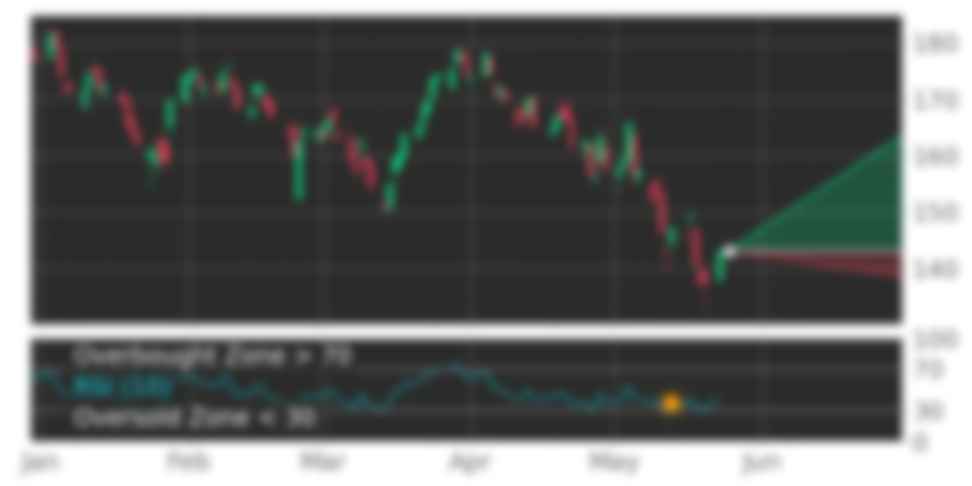
Five Below (FIVE) closed near $191.50 in mid-July, consolidating well below its 52-week high of $251.63 reached on April 21, 2026. The stock currently trades beneath both its 50-day moving average of approximately $202 and its 200-day moving average near $209, reflecting a technical posture that has tilted defensive since the early June earnings release. With a market capitalization of roughly $10.6 billion and a price-to-earnings ratio of about 24, the valuation has compressed from loftier levels seen earlier in the year, though it remains above the specialty retail peer group average. Trading volumes have moderated in recent weeks, suggesting that the intense selling pressure that followed the Q1 report has largely subsided, leaving the stock in a period of relative equilibrium as investors await the next catalyst.
Five Below, Inc. is a Philadelphia-based specialty discount retailer offering a broad assortment of trend-right merchandise primarily priced at $5 or below, with an expanded "Five Beyond" section featuring items up to $25. Founded in 2002 and publicly traded since 2012, the company targets tweens, teens, and value-conscious shoppers through a treasure-hunt shopping experience that emphasizes novelty, pop-culture relevance, and rapid merchandise turnover. As of mid-2026, Five Below operates approximately 2,000 stores across 46 states, with a long-term target of more than 3,500 locations. Under CEO Winnie Park, appointed in December 2024, the company has sharpened its merchandising strategy, strengthened social-media-driven marketing, and integrated its Five Beyond assortment into core in-store categories. Five Below occupies a distinct retail niche — differentiated from traditional dollar stores like Dollar Tree (DLTR) by its trend-focused buying strategy and from broader discount competitors by its aggressive price discipline. The retailer's ability to sustain 22.7% comparable-store sales growth in Q1 underscores its current operational momentum, though its reliance on imported goods ties the cost structure directly to trade policy outcomes.
The most consequential event during the last 30 days remains the aftermath of Five Below's Q1 FY2026 earnings report on June 3. The company posted revenue of $1.29 billion and adjusted EPS of $2.22, surpassing consensus estimates of $1.23 billion and $1.77, respectively. Comparable-store sales surged 22.7%, powered by a 19% increase in transactions and broad-based strength across 15 of 18 merchandise departments. Management raised full-year guidance to net sales of $5.40–$5.48 billion and adjusted EPS of $8.65–$9.05. Despite these impressive figures, shares tumbled roughly 13% the following day. The selloff was driven by the fine print: the raised guidance assumes that elevated tariff rates currently in place through July 24 will revert to lower levels seen at the start of the fiscal year — an assumption many investors consider optimistic given ongoing trade policy uncertainty.
In the weeks since, several other developments have shaped sentiment. Wolfe Research downgraded Five Below to Peer Perform from Outperform on June 23, citing concerns about slowing top-line growth and early signs that viral product trends like Squishy Dumplings may be fading. Conversely, Mizuho upgraded the stock to Buy on July 9, while Telsey Advisory and Bank of America maintained Buy ratings with price targets of $260 and $305, respectively. The company also announced key leadership additions: Rodney Lastinger joined as Chief Retail Officer from GNC, and Christos Yatrakis was named Chief Legal Officer. Separately, Five Below celebrated the opening of its 2,000th store in LaGrange, Georgia — a milestone that underscores the retailer's continued expansion ambitions. Board governance was further strengthened with the election of Shake Shack CEO Robert Lynch as an independent director. I also checked this using Tickeron’s AI Screener to see how the stock compares to others in the industry.
For investors seeking a data-driven edge in navigating stock movements like those seen in Five Below, Tickeron's Trending AI Robots page offers a curated view of the platform's most relevant AI trading bots. Tickeron hosts hundreds of AI-powered bots that trade thousands of tickers, but only the top-performing and most timely strategies appear in this section — making it a streamlined starting point for traders who want to monitor algorithmic signals without sifting through the entire bot library. Each bot varies in strategy, timeframe, and performance metrics, ranging from short-term swing trading models to longer-duration trend-following approaches, allowing users to find tools aligned with their own trading style. Exploring the Trending AI Robots page can help traders identify which automated strategies are currently generating the strongest signals across the market.
Looking ahead, the primary catalyst for Five Below will be its Q2 FY2026 earnings report, anticipated around August 26, which will provide the first concrete data on whether the company can sustain strong comparable-store sales growth as it laps more challenging year-ago comparisons. Management guided Q2 comps at 7%–9% and revenue of $1.18–$1.20 billion, with adjusted EPS of $1.17–$1.29. The trajectory of U.S. trade policy after the July 24 tariff deadline looms as the single most important macro variable — if tariffs remain elevated beyond that date, full-year guidance will face downward pressure. On the operational side, investors should monitor the integration of new leadership hires, the productivity of approximately 150 planned new stores, and the ability of Five Below's social-media-driven merchandising engine to generate the next viral product cycle. Broader consumer discretionary spending trends, inflation readings, and labor market data will also influence sentiment, as the retailer's value proposition thrives when households seek affordable indulgences but faces headwinds when discretionary budgets contract. With analyst price targets spanning from $210 to $325, the wide dispersion reflects genuine uncertainty about how these competing forces will resolve through year-end. From what I see, this is important because the next few months will clarify whether the strong momentum can hold.
The information on this webpage is provided for general informational and educational purposes only and is not intended as investment advice, a recommendation to purchase or sell any security, or an offer or solicitation related to investments. It does not consider your personal financial situation, goals, or risk profile, and all investing carries inherent risks, including the possibility of losing your entire investment. For more details, please review our full disclaimer.
FIVE may jump back above the lower band and head toward the middle band. Traders may consider buying the stock or exploring call options. In of 33 cases where FIVE's price broke its lower Bollinger Band, its price rose further in the following month. The odds of a continued upward trend are .
The RSI Indicator points to a transition from a downward trend to an upward trend -- in cases where FIVE's RSI Oscillator exited the oversold zone, of 31 resulted in an increase in price. Tickeron's analysis proposes that the odds of a continued upward trend are .
The Momentum Indicator moved above the 0 level on July 10, 2026. You may want to consider a long position or call options on FIVE as a result. In of 71 past instances where the momentum indicator moved above 0, the stock continued to climb. The odds of a continued upward trend are .
The Moving Average Convergence Divergence (MACD) for FIVE just turned positive on July 08, 2026. Looking at past instances where FIVE's MACD turned positive, the stock continued to rise in of 47 cases over the following month. The odds of a continued upward trend are .
Following a 3-day Advance, the price is estimated to grow further. Considering data from situations where FIVE advanced for three days, in of 308 cases, the price rose further within the following month. The odds of a continued upward trend are .
The Stochastic Oscillator entered the overbought zone. Expect a price pull-back in the foreseeable future.
Following a 3-day decline, the stock is projected to fall further. Considering past instances where FIVE declined for three days, the price rose further in of 62 cases within the following month. The odds of a continued downward trend are .
The Aroon Indicator for FIVE entered a downward trend on July 13, 2026. This could indicate a strong downward move is ahead for the stock. Traders may want to consider selling the stock or buying put options.
The Tickeron SMR rating for this company is (best 1 - 100 worst), indicating strong sales and a profitable business model. SMR (Sales, Margin, Return on Equity) rating is based on comparative analysis of weighted Sales, Income Margin and Return on Equity values compared against S&P 500 index constituents. The weighted SMR value is a proprietary formula developed by Tickeron and represents an overall profitability measure for a stock.
The Tickeron Seasonality Score of (best 1 - 100 worst) indicates that the company is fair valued in the industry. The Tickeron Seasonality score describes the variance of predictable price changes around the same period every calendar year. These changes can be tied to a specific month, quarter, holiday or vacation period, as well as a meteorological or growing season.
The Tickeron Price Growth Rating for this company is (best 1 - 100 worst), indicating fairly steady price growth. FIVE’s price grows at a lower rate over the last 12 months as compared to S&P 500 index constituents.
The Tickeron PE Growth Rating for this company is (best 1 - 100 worst), pointing to average earnings growth. The PE Growth rating is based on a comparative analysis of stock PE ratio increase over the last 12 months compared against S&P 500 index constituents.
The Tickeron Valuation Rating of (best 1 - 100 worst) indicates that the company is slightly overvalued in the industry. This rating compares market capitalization estimated by our proprietary formula with the current market capitalization. This rating is based on the following metrics, as compared to industry averages: P/B Ratio (4.581) is normal, around the industry mean (4.968). P/E Ratio (24.154) is within average values for comparable stocks, (29.862). Projected Growth (PEG Ratio) (0.984) is also within normal values, averaging (1.446). FIVE has a moderately low Dividend Yield (0.000) as compared to the industry average of (0.028). P/S Ratio (2.095) is also within normal values, averaging (1.265).
The Tickeron Profit vs. Risk Rating rating for this company is (best 1 - 100 worst), indicating that the returns do not compensate for the risks. FIVE’s unstable profits reported over time resulted in significant Drawdowns within these last five years. A stable profit reduces stock drawdown and volatility. The average Profit vs. Risk Rating rating for the industry is 89, placing this stock worse than average.
The average fundamental analysis ratings, where 1 is best and 100 is worst, are as follows
a retaier of clothing and other accessories for teens
Industry SpecialtyStores