MENU
Go to the list of all blogs
Jimmy Landsman's Avatar
published in Blogs
Apr 17, 2026

FNCL: Positioning for Financial Sector Gains Amid Higher Rates and Cyclical Tailwinds

Key Takeaways

  • Sustained higher interest rates could enhance net interest margins (NIM, a key profitability measure for banks) for major holdings, positioning FNCL for potential outperformance.
  • Growth in capital markets activity and merger-and-acquisition (M&A) deals may boost investment banking revenues within the ETF's diversified financial exposures.
  • Digital payment trends favor top holdings like Visa and Mastercard, supporting long-term portfolio growth amid rising transaction volumes.
  • Potential ETF inflows as investors seek value-oriented sectors amid equity market rotations toward cyclicals.
  • Credit cycle risks loom if economic slowdowns lead to higher loan losses, though improving credit demand could mitigate this.
  • Broad market-cap exposure across large, mid, and small-cap financials provides structural diversification for varying growth phases.

Understanding FNCL's Portfolio and Strategy

From what I see, the Fidelity MSCI Financials Index ETF (FNCL) offers a solid way to gain exposure to the U.S. financials sector. It tracks the MSCI USA IMI Financials 25/50 Index, covering large-, mid-, and small-cap segments. This Investable Market Index (IMI) approach captures about 99% of the investable opportunity set in U.S. financial equities, with 25/50 constraints to limit single-issuer risks.

Using a passive strategy, FNCL puts at least 80% of its assets into index securities through representative sampling, holding around 380 names for diversification. Top holdings recently include JPMorgan Chase (JPM) at about 9.9%, Berkshire Hathaway (BRK.B) at 8.4%, Visa (V) at 6.5%, Mastercard (MA) at 5.3%, and Bank of America (BAC) at around 4%, making up nearly 47% of its $2.2 billion in assets under management (AUM).

Within financials, allocations lean toward diversified banks (roughly 45-50%), insurance (15-20%), and consumer finance/capital markets, with over 95% U.S. focus. The low expense ratio of 0.084% adds to its appeal for long-term investors tilting toward financials. This setup plays into cyclical recoveries and fintech growth, with performance tied to economic cycles and monetary policy.

Key Catalysts on the Horizon

Federal Reserve decisions are front and center for me, especially with markets expecting limited cuts or holds into 2026 due to sticky inflation. This could widen net interest margins for banks and boost insurance float investments. Earnings from leaders like JPM and BAC will shed light on loan growth and credit quality, potentially signaling stronger demand.

Capital markets are picking up too, with more M&A and equity issuances lifting investment banking fees for diversified firms. Regulatory easing on bank capital could add fuel, and if financials start outperforming, ETF inflows might follow sector rotations. Index rebalances under MSCI rules could tweak things slightly, but FNCL's breadth keeps volatility in check. These factors highlight its link to economic rebounds.

Sector, Index, and Macro Outlook

Heading into 2026, the U.S. financials sector looks promising to me, thanks to higher-for-longer rates aiding bank profits and insurance yields, plus GDP growth supporting credit. The MSCI USA IMI Financials Index stands to gain, particularly with yields over 4% lifting NIM and asset returns.

Fed policy and inflation will influence yield curve steepening, benefiting regional and money-center banks in FNCL. Cyclicals like financials could ride AI productivity and corporate trends, though global trade risks linger for any international ties. Bond dynamics affect funding costs indirectly, with commodities less relevant. Overall, the macro setup suits the index's makeup for steady performance in moderate growth.

Trend Prediction Engine

One tool I turn to regularly in my analysis is Tickeron’s Trend Prediction Engine. This AI-powered forecaster helps me spot potential bullish, bearish, or sideways moves for stocks, ETFs like FNCL, and other assets over the next week or month. It digs into massive datasets to identify trends, breakouts, or reversals across thousands of instruments, with searchable categories, historical context, and alerts. Whether for short-term trades or portfolio adjustments, it sharpens my edge in shifting markets. I’ve found it invaluable for staying proactive—worth checking out if you’re building your research toolkit.

Long-Term Outlook and Enduring Trends

Over the longer haul, FNCL's performance will depend on steady financial sector expansion. Digital payments growth lifts Visa and Mastercard as e-commerce rises. Banks are adapting to fintech and open banking, which could improve efficiency and diversify revenues.

Aging demographics bolster insurance needs, and financials tend to shine in expansions. Post-2026 rate normalization might keep yields solid for asset managers and insurers. U.S. equity inflows support the index's home bias, while AI in risk management strengthens top holdings. With coverage across market caps, FNCL captures big-picture shifts in wealth management and capital markets.

Disclaimer

The information on this webpage is provided for general informational and educational purposes only and is not intended as investment advice, a recommendation to purchase or sell any security, or an offer or solicitation related to investments. It does not consider your personal financial situation, goals, or risk profile, and all investing carries inherent risks, including the possibility of losing your entire investment. For more details, please review our full disclaimer. Disclaimers and Limitations

Related Ticker: FNCL

FNCL's RSI Indicator peaks and leaves overbought zone

The 10-day RSI Oscillator for FNCL moved out of overbought territory on July 17, 2026. This could be a sign that the stock is shifting from an upward trend to a downward trend. Traders may want to look at selling the stock or buying put options. Tickeron's A.I.dvisor looked at 38 instances where the indicator moved out of the overbought zone. In of the 38 cases the stock moved lower in the days that followed. This puts the odds of a move down at .

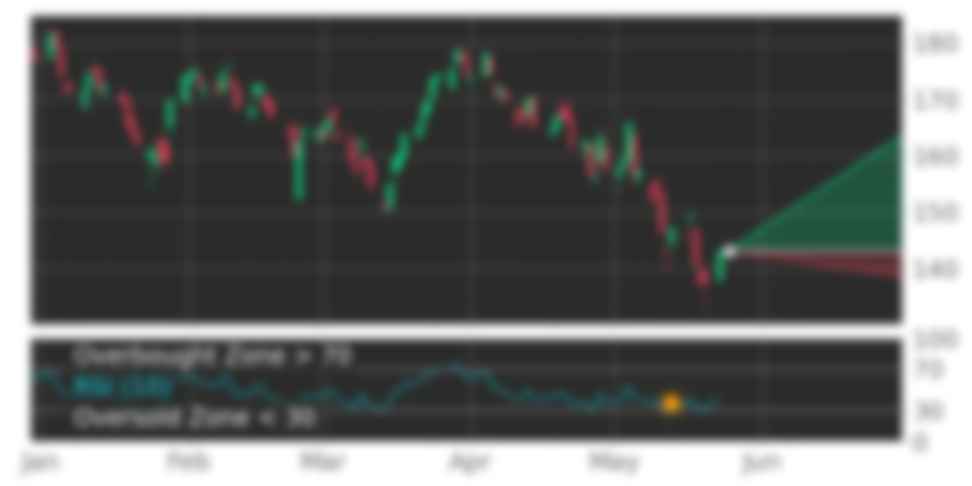
Price Prediction Chart

Technical Analysis (Indicators)

Bearish Trend Analysis

The Stochastic Oscillator demonstrated that the ticker has stayed in the overbought zone for 5 days. The longer the ticker stays in the overbought zone, the sooner a price pull-back is expected.

The Momentum Indicator moved below the 0 level on July 20, 2026. You may want to consider selling the stock, shorting the stock, or exploring put options on FNCL as a result. In of 81 cases where the Momentum Indicator fell below 0, the stock fell further within the subsequent month. The odds of a continued downward trend are .

Following a 3-day decline, the stock is projected to fall further. Considering past instances where FNCL declined for three days, the price rose further in of 62 cases within the following month. The odds of a continued downward trend are .

FNCL broke above its upper Bollinger Band on July 01, 2026. This could be a sign that the stock is set to drop as the stock moves back below the upper band and toward the middle band. You may want to consider selling the stock or exploring put options.

Bullish Trend Analysis

The 50-day moving average for FNCL moved above the 200-day moving average on June 26, 2026. This could be a long-term bullish signal for the stock as the stock shifts to an upward trend.

Following a 3-day Advance, the price is estimated to grow further. Considering data from situations where FNCL advanced for three days, in of 339 cases, the price rose further within the following month. The odds of a continued upward trend are .

The Aroon Indicator entered an Uptrend today. In of 301 cases where FNCL Aroon's Indicator entered an Uptrend, the price rose further within the following month. The odds of a continued Uptrend are .

Notable companies

The most notable companies in this group are JPMorgan Chase & Co (NYSE:JPM), VISA (NYSE:V), Mastercard (NYSE:MA), Bank of America Corp (NYSE:BAC), Morgan Stanley (NYSE:MS), Goldman Sachs Group (NYSE:GS), Wells Fargo & Co (NYSE:WFC), American Express Company (NYSE:AXP), Citigroup (NYSE:C), Charles Schwab Corp (The) (NYSE:SCHW).

Industry description

The investment seeks to provide investment returns that correspond, before fees and expenses, generally to the performance of the MSCI USA IMI Financials 25/50 Index. The fund invests at least 80% of assets in securities included in the fund's underlying index. The fund's underlying index is the MSCI USA IMI Financials 25/50 Index, which represents the performance of the financial sector in the U.S. equity market. It may or may not hold all of the securities in the MSCI USA IMI Financials 25/50 Index. The fund is non-diversified.

Market Cap

The average market capitalization across the Fidelity MSCI Financials ETF ETF is 32.38B. The market cap for tickers in the group ranges from 125.51M to 900.78B. JPM holds the highest valuation in this group at 900.78B. The lowest valued company is SLQT at 125.51M.

High and low price notable news

The average weekly price growth across all stocks in the Fidelity MSCI Financials ETF ETF was 48%. For the same ETF, the average monthly price growth was 46%, and the average quarterly price growth was 164%. SNEX experienced the highest price growth at 42%, while VIRT experienced the biggest fall at -12%.

Volume

The average weekly volume growth across all stocks in the Fidelity MSCI Financials ETF ETF was 9%. For the same stocks of the ETF, the average monthly volume growth was -56% and the average quarterly volume growth was -25%

Fundamental Analysis Ratings

The average fundamental analysis ratings, where 1 is best and 100 is worst, are as follows

Valuation Rating: 55
P/E Growth Rating: 54
Price Growth Rating: 44
SMR Rating: 46
Profit Risk Rating: 53
Seasonality Score: 37 (-100 ... +100)
View a ticker or compare two or three
FNCL
Daily Signal:
Gain/Loss:
Interact to see
Advertisement
A.I.Advisor
published price charts
Last 5 trading days
A.I. Advisor
published General Information

General Information

Category Financial

Profile
Details
Category
Financial
Address
82 Devonshire StreetBoston
Phone
N/A
Web
www.institutional.fidelity.com