MENU
Go to the list of all blogs
Sergey Savastiouk's Avatar
published in Blogs
Sep 26, 2026
FUTU vs TIGR: Evaluating Two Prominent Asia-Focused Brokerage Platforms

FUTU vs TIGR: Evaluating Two Prominent Asia-Focused Brokerage Platforms

Key Takeaways

  • Both FUTU and TIGR are Asia-focused online brokerages that posted sharp double-digit revenue and profit growth in 2025, yet both stocks have pulled back from earlier highs.
  • FUTU is the larger and more profitable platform, with roughly 3.4 million funded accounts and a net margin near 50%, versus about 1.25 million funded customers for TIGR.
  • TIGR has grown faster off a smaller base, with net income rising sharply and strong traction in Singapore, Hong Kong, and Australia.
  • Both names carry concentrated exposure to Hong Kong and China equity sentiment, making them sensitive to the same macro and regulatory catalysts.
  • Relative performance diverged in recent months, with TIGR experiencing a steeper drawdown than FUTU despite comparable fundamental momentum.

Setting the Stage for These Digital Brokers

Futu Holdings and UP Fintech stand out among digital brokerage platforms, each running mobile-first apps aimed at retail investors in Greater China and Southeast Asia. Futu operates through its Futubull and moomoo applications, while UP Fintech runs Tiger Brokers. Given their overlapping focus on users, offerings, and regions, direct comparisons help clarify how differences in scale, margins, and positioning influence results. I also checked this using Tickeron’s AI Screener to see how the stocks compare to others in the industry. The sections that follow examine recent financial results, performance trends, and risk considerations.

FUTU: Scale and Recent Results

Futu Holdings, based in Hong Kong, provides online brokerage, margin financing, wealth management, and IPO distribution services. For the full year 2025, revenue reached approximately HK$22.8 billion, reflecting roughly 68% year-over-year growth, while net income more than doubled. Funded accounts climbed to about 3.4 million, a 40% increase from the previous year, and client assets grew to roughly HK$1.23 trillion. Despite these solid figures, FUTU shares have come under pressure lately. Management pointed to a downturn in Hong Kong equities that affected asset values and slowed new client sign-ups there, even as activity picked up in Japan, Malaysia, and the United States. The stock’s mixed price action mirrors this balance of strong earnings against softer sentiment around China-linked financial names.

TIGR: Growth Trajectory and Market Moves

UP Fintech, parent of Tiger Brokers and headquartered in Singapore, offers equities, options, futures, wealth products, and crypto trading across global markets. Fiscal 2025 revenues rose 56.3% to around US$612 million, and net income attributable to ordinary shareholders surged roughly 181% to about US$170.9 million. Total account balances increased 45.7% to approximately US$60.8 billion, with deposit customers reaching about 1.25 million. Even so, TIGR has shown notable volatility and a sharper price decline than many peers. The firm has highlighted its shift since 2022 toward Singapore, Hong Kong, Australia, and New Zealand, where client assets have expanded quickly, along with underwriting 47 U.S. and Hong Kong IPOs. These strengths have not fully shielded the stock from broader caution around China-related financials.

Side-by-Side Analysis

Although the companies share similar models, their profiles differ meaningfully. FUTU benefits from greater scale, stronger profitability, and a leading position in Hong Kong among online brokers. Its higher net margin stems from operating leverage and a revenue mix that includes brokerage fees, interest income, and wealth management. TIGR, meanwhile, represents a smaller but faster-growing platform with deeper diversification into Singapore and Australia and greater emphasis on options, futures, and corporate services such as ESOP administration. Growth paths also vary: Futu has drawn broad client additions across several markets and rising wealth-management assets, while Tiger has targeted affluent, tech-oriented users and invested in self-clearing and AI-driven capabilities. Both remain exposed to regulatory oversight, geopolitical factors, and swings in trading volumes. At present, Futu appears steadier on margins and stability, whereas Tiger offers higher-beta exposure with a lower valuation but larger recent price decline.

AI Assessment of the Two Names

Considering factors such as trend consistency, earnings momentum, profitability, and relative stability, Tickeron’s AI framework would likely lean toward FUTU in the current setting. The larger scale, stronger margins, and steadier price behavior point to a more reliable trend profile, while Tiger’s deeper drawdown and higher volatility suggest a less settled near-term picture despite its growth numbers. This view remains probabilistic: renewed risk appetite toward China-linked financials could lift the higher-beta TIGR more sharply. I’m watching this closely as conditions change.

Exploring Tickeron’s AI Trading Bots

When evaluating systematic strategies for names like these, I often review Tickeron’s Trending AI Robots page, which highlights top-performing AI trading bots suited to current market conditions. These bots cover a range of approaches and timeframes, helping align tactics with personal risk preferences.

Disclaimer

The information on this webpage is provided for general informational and educational purposes only and is not intended as investment advice, a recommendation to purchase or sell any security, or an offer or solicitation related to investments. It does not consider your personal financial situation, goals, or risk profile, and all investing carries inherent risks, including the possibility of losing your entire investment. For more details, please review our full disclaimer.

Disclaimers and Limitations

Related Ticker: TIGR, FUTU

Contributor

Sergey Savastiouk, Ph.D. has a degree in Applied Mathematics from Moscow University and has extensive experience as an entrepreneur, investor, manager, and mathematician. His professional expertise is in applied mathematics, mathematical modeling, system and pattern analysis, and software and hardware system integration. He has served as the CEO of several hi-tech start-up companies and nonprofit organizations, which has given him proven capabilities in business strategy for high-tech start-up companies, market assessment, company formation, team building, product development, marketing, and sales. He has published numerous articles in journals and magazines on related fields. As a retail investor, he spent 15 years developing his proprietary trading and quantitative algorithms (now Tickeron’s A.I.), which brought him significant returns in trading the stock market. His current work and goal in founding Tickeron is to bring professional, sophisticated stock market analysis capabilities to retail investors via an easy-to-use interface.


TIGR in +6.05% Uptrend, rising for three consecutive days on September 04, 2026

Moving higher for three straight days is viewed as a bullish sign. Keep an eye on this stock for future growth. Considering data from situations where TIGR advanced for three days, in 197 of 239 cases, the price rose further within the following month. The odds of a continued upward trend are 82%.

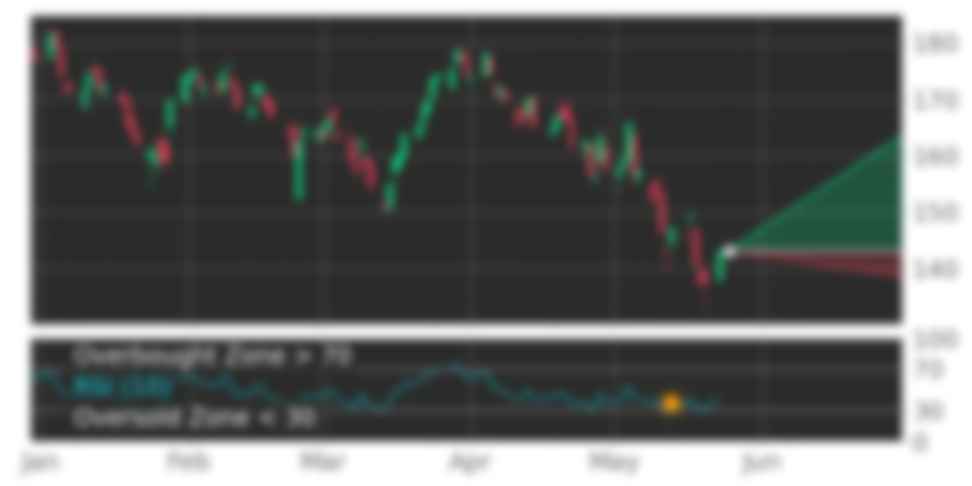
Price Prediction Chart

Technical Analysis (Indicators)

Bullish Trend Analysis

The Stochastic Oscillator demonstrated that the ticker has stayed in the oversold zone for 2 days, which means it's wise to expect a price bounce in the near future.

Bearish Trend Analysis

The 10-day RSI Indicator for TIGR moved out of overbought territory on August 27, 2026. This could be a bearish sign for the stock. Traders may want to consider selling the stock or buying put options. Tickeron's A.I.dvisor looked at 25 similar instances where the indicator moved out of overbought territory. In 19 of the 25 cases, the stock moved lower in the following days. This puts the odds of a move lower at 76%.

The Momentum Indicator moved below the 0 level on September 04, 2026. You may want to consider selling the stock, shorting the stock, or exploring put options on TIGR as a result. In 72 of 84 cases where the Momentum Indicator fell below 0, the stock fell further within the subsequent month. The odds of a continued downward trend are 86%.

The Moving Average Convergence Divergence Histogram (MACD) for TIGR turned negative on September 01, 2026. This could be a sign that the stock is set to turn lower in the coming weeks. Traders may want to sell the stock or buy put options. Tickeron's A.I.dvisor looked at 41 similar instances when the indicator turned negative. In 35 of the 41 cases the stock turned lower in the days that followed. This puts the odds of success at 85%.

TIGR moved below its 50-day moving average on September 23, 2026 date and that indicates a change from an upward trend to a downward trend.

The 10-day moving average for TIGR crossed bearishly below the 50-day moving average on September 18, 2026. This indicates that the trend has shifted lower and could be considered a sell signal. In 10 of 14 past instances when the 10-day crossed below the 50-day, the stock continued to move higher over the following month. The odds of a continued downward trend are 71%.

Following a 3-day decline, the stock is projected to fall further. Considering past instances where TIGR declined for three days, the price rose further in 50 of 62 cases within the following month. The odds of a continued downward trend are 81%.

TIGR broke above its upper Bollinger Band on August 25, 2026. This could be a sign that the stock is set to drop as the stock moves back below the upper band and toward the middle band. You may want to consider selling the stock or exploring put options.

The Aroon Indicator for TIGR entered a downward trend on September 29, 2026. This could indicate a strong downward move is ahead for the stock. Traders may want to consider selling the stock or buying put options.

Fundamental Analysis (Ratings)

The Tickeron Seasonality Score of 50 (best 1 - 100 worst) indicates that the company is fair valued in the industry. The Tickeron Seasonality score describes the variance of predictable price changes around the same period every calendar year. These changes can be tied to a specific month, quarter, holiday or vacation period, as well as a meteorological or growing season.

The Tickeron SMR rating for this company is 59 (best 1 - 100 worst), indicating strong sales and a profitable business model. SMR (Sales, Margin, Return on Equity) rating is based on comparative analysis of weighted Sales, Income Margin and Return on Equity values compared against S&P 500 index constituents. The weighted SMR value is a proprietary formula developed by Tickeron and represents an overall profitability measure for a stock.

The Tickeron Price Growth Rating for this company is 63 (best 1 - 100 worst), indicating fairly steady price growth. TIGR’s price grows at a lower rate over the last 12 months as compared to S&P 500 index constituents.

The Tickeron Valuation Rating of 71 (best 1 - 100 worst) indicates that the company is slightly overvalued in the industry. This rating compares market capitalization estimated by our proprietary formula with the current market capitalization. This rating is based on the following metrics, as compared to industry averages: P/B Ratio (0.943) is normal, around the industry mean (4.351). P/E Ratio (9.688) is within average values for comparable stocks, (30.023). Projected Growth (PEG Ratio) (0.020) is also within normal values, averaging (0.809). Dividend Yield (0.000) settles around the average of (0.016) among similar stocks. P/S Ratio (1.257) is also within normal values, averaging (16.763).

The Tickeron PE Growth Rating for this company is 85 (best 1 - 100 worst), pointing to worse than average earnings growth. The PE Growth rating is based on a comparative analysis of stock PE ratio increase over the last 12 months compared against S&P 500 index constituents.

The Tickeron Profit vs. Risk Rating rating for this company is 100 (best 1 - 100 worst), indicating that the returns do not compensate for the risks. TIGR’s unstable profits reported over time resulted in significant Drawdowns within these last five years. A stable profit reduces stock drawdown and volatility. The average Profit vs. Risk Rating rating for the industry is 86, placing this stock worse than average.

Notable companies

The most notable companies in this group are Morgan Stanley (NYSE:MS), Goldman Sachs Group (NYSE:GS), Charles Schwab Corp (The) (NYSE:SCHW), Gold.com Inc. (NYSE:GOLD).

Industry description

These banks specialize in underwriting (helping companies with debt financing or equity issuances), IPOs, facilitating mergers and other corporate reorganizations and acting as a broker or financial advisor for institutions. They might also trade securities on their own accounts. Investment banks potentially thrive on expanding its network of clients, since that could help them increase profits. Goldman Sachs, Morgan Stanley and CME Group Inc are some of the largest investment banking companies.

Market Cap

The average market capitalization across the Investment Banks/Brokers Industry is 12.69B. The market cap for tickers in the group ranges from 590 to 304.12B. MS holds the highest valuation in this group at 304.12B. The lowest valued company is FSSLD at 590.

High and low price notable news

The average weekly price growth across all stocks in the Investment Banks/Brokers Industry was -5%. For the same Industry, the average monthly price growth was -2%, and the average quarterly price growth was 10%. CD experienced the highest price growth at 28%, while AXG experienced the biggest fall at -92%.

Volume

The average weekly volume growth across all stocks in the Investment Banks/Brokers Industry was -10%. For the same stocks of the Industry, the average monthly volume growth was -33% and the average quarterly volume growth was -28%

Fundamental Analysis Ratings

The average fundamental analysis ratings, where 1 is best and 100 is worst, are as follows

Valuation Rating: 66
P/E Growth Rating: 63
Price Growth Rating: 57
SMR Rating: 74
Profit Risk Rating: 85
Seasonality Score: -1 (-100 ... +100)
View a ticker or compare two or three
FUTU
Daily Signal:
Gain/Loss:
Interact to see
Advertisement
A.I.Advisor
published price charts
A.I. Advisor
published General Information

General Information

a technology company, which engages in online brokerage services and margin financing services for clients in Hong Kong and China

Industry InvestmentBanksBrokers

Industry
N/A
Address
95 Queensway
Phone
+852 25233588
Employees
3540
Web
https://www.futuholdings.com