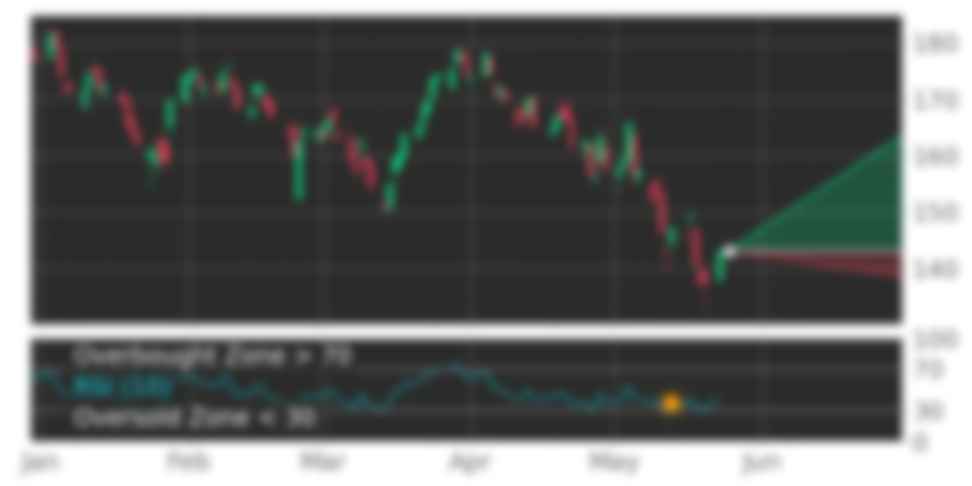
GRAIL, Inc. (GRAL) is a Menlo Park, California-based commercial-stage healthcare company focused on multi-cancer early detection (MCED) testing. Its flagship Galleri blood test is designed to detect signals from more than 50 cancer types across all stages. Shares closed at approximately $73.00 on Friday, May 30, 2026, and are indicated down roughly 11% in premarket trading on Monday, June 1, reflecting market reaction to the full NHS-Galleri clinical trial data presented as a late-breaking oral abstract at the 2026 ASCO Annual Meeting. While the Galleri test demonstrated meaningful reductions in Stage IV cancer diagnoses in later screening rounds, the aggregate primary endpoint of combined Stage III/IV reduction was not achieved, keeping regulatory and reimbursement uncertainty squarely in focus.
The central catalyst for Monday's premarket decline is the full data release from the landmark NHS-Galleri trial, a three-year, 142,000-person randomized controlled study conducted in partnership with England's National Health Service. Presented as an oral late-breaking abstract on May 30 at the ASCO Annual Meeting in Chicago, the complete dataset confirmed what top-line results had shown in February: the combined primary endpoint of a statistically significant reduction in Stage III/IV cancer diagnoses was not observed in the aggregate analysis across all three screening rounds.
The full data did contain encouraging signals. Annual Galleri blood testing reduced Stage IV diagnoses of 12 prespecified lethal cancers by 22% in the second screening round and by 26% in the third — meaningful reductions that emerged beyond the prevalent screening round. Additionally, the Galleri test increased Stage I–II cancer diagnoses by 16% when added to standard-of-care screening and reduced cancer diagnoses through emergency presentation by 25%. However, for investors tracking the FDA approval and insurance coverage thesis, the failure to demonstrate significance on the primary endpoint in aggregate remains the defining data point, and the market is re-pricing accordingly.
Also presented at ASCO on May 31, the registrational PATHFINDER 2 study of 35,878 participants delivered largely constructive results. The Galleri test increased cancer detection 6.5-fold when added to recommended screenings for breast, colorectal, cervical, and lung cancer. Seventy-one percent of newly detected cancers were in Stages I through III — supporting the thesis that earlier detection is achievable. These results form the core of GRAIL's regulatory submission strategy, as PATHFINDER 2 is the designated registrational study for the FDA's Premarket Approval process.
Despite these positives, the combination of PATHFINDER 2's favorable data and NHS-Galleri's primary endpoint miss created a mixed signal set that the market is interpreting cautiously. Investors remain uncertain whether PATHFINDER 2 data alone will be sufficient to secure both FDA approval and — critically — broad third-party insurance reimbursement. Without reimbursement, the commercial pathway for the Galleri test remains narrow, and that risk is being repriced into GRAL shares Monday morning.
The ASCO data release has prompted renewed analyst scrutiny. The consensus average price target was reduced by 13% to approximately $101, reflecting a reassessment of the probability-weighted value of GRAL's regulatory and commercial outlook. TD Cowen revised its target, and Baird had previously slashed its target from $113 to $82 following the February top-line miss while maintaining an Outperform rating. Despite the target cuts, most analysts continue to carry Buy or Outperform ratings on the stock, citing the long-term potential of the MCED market and PATHFINDER 2's favorable profile. Nonetheless, the downward target revisions have reinforced selling pressure in premarket trading.
GRAL had already declined more than 3% on May 29 before the ASCO data was formally presented, suggesting some pre-announcement positioning. Following the May 30 NHS-Galleri full-data oral presentation, the stock traded around $73.00, up modestly on the day as traders processed mixed signals — but the inability to sustain gains set the stage for the premarket selloff on June 1. Premarket volume is significantly elevated relative to average daily norms, consistent with event-driven institutional repositioning. Broader healthcare indices and MCED sector peers did not register comparable moves, confirming the action is stock-specific rather than a reflection of sector-wide rotation. Key technical support levels in the $63–$65 range are now being tested, and a break below could invite further technical selling.
For traders navigating volatile biotech situations like today's move in GRAL, Tickeron's Trending AI Robots page highlights the platform's strongest-performing automated trading bots under current market conditions. Tickeron operates hundreds of AI-powered bots covering thousands of tickers, but only the top performers — ranked by live metrics including win rate, risk-adjusted returns, strategy type, and trading timeframe — are featured in this curated section. Strategies range from momentum and swing trading to mean-reversion and volatility-capture approaches. Traders looking for systematic tools to navigate high-volatility, event-driven moves in healthcare and beyond will find the Trending AI Robots section a useful starting point for discovery.
The most consequential near-term event for GRAL remains the FDA's review of the Premarket Approval (PMA) application for the Galleri test, which the company submitted in early 2026. An FDA decision timeline has not been officially specified, but a mid-2026 approval decision remains within scope. Management is scheduled to present at the Goldman Sachs 47th Annual Global Healthcare Conference on June 9 in Miami, which will offer an opportunity to frame the ASCO data in a more constructive light and clarify the regulatory path forward. Second-quarter 2026 earnings, expected later this summer, will be watched for continued growth in Galleri test volume — which grew 50% year-over-year to more than 56,000 tests in Q1 — and revenue trajectory. Key risks include the possibility of an FDA Complete Response Letter (CRL) rather than outright approval, sustained resistance from private insurers citing the NHS-Galleri primary endpoint miss, and ongoing operating losses requiring additional capital.
The information on this webpage is provided for general informational and educational purposes only and is not intended as investment advice, a recommendation to purchase or sell any security, or an offer or solicitation related to investments. It does not consider your personal financial situation, goals, or risk profile, and all investing carries inherent risks, including the possibility of losing your entire investment. For more details, please review our full disclaimer.
GRAL moved above its 50-day moving average on April 30, 2026 date and that indicates a change from a downward trend to an upward trend. In of 10 similar past instances, the stock price increased further within the following month. The odds of a continued upward trend are .
The 10-day moving average for GRAL crossed bullishly above the 50-day moving average on April 30, 2026. This indicates that the trend has shifted higher and could be considered a buy signal. In of 6 past instances when the 10-day crossed above the 50-day, the stock continued to move higher over the following month. The odds of a continued upward trend are .
Following a 3-day Advance, the price is estimated to grow further. Considering data from situations where GRAL advanced for three days, in of 104 cases, the price rose further within the following month. The odds of a continued upward trend are .
The Aroon Indicator entered an Uptrend today. In of 84 cases where GRAL Aroon's Indicator entered an Uptrend, the price rose further within the following month. The odds of a continued Uptrend are .
The 10-day RSI Indicator for GRAL moved out of overbought territory on June 01, 2026. This could be a bearish sign for the stock. Traders may want to consider selling the stock or buying put options. Tickeron's A.I.dvisor looked at 20 similar instances where the indicator moved out of overbought territory. In of the 20 cases, the stock moved lower in the following days. This puts the odds of a move lower at .
The Stochastic Oscillator may be shifting from an upward trend to a downward trend. In of 23 cases where GRAL's Stochastic Oscillator exited the overbought zone, the price fell further within the following month. The odds of a continued downward trend are .
The Momentum Indicator moved below the 0 level on June 02, 2026. You may want to consider selling the stock, shorting the stock, or exploring put options on GRAL as a result. In of 34 cases where the Momentum Indicator fell below 0, the stock fell further within the subsequent month. The odds of a continued downward trend are .
The Moving Average Convergence Divergence Histogram (MACD) for GRAL turned negative on June 02, 2026. This could be a sign that the stock is set to turn lower in the coming weeks. Traders may want to sell the stock or buy put options. Tickeron's A.I.dvisor looked at 15 similar instances when the indicator turned negative. In of the 15 cases the stock turned lower in the days that followed. This puts the odds of success at .
Following a 3-day decline, the stock is projected to fall further. Considering past instances where GRAL declined for three days, the price rose further in of 62 cases within the following month. The odds of a continued downward trend are .
GRAL broke above its upper Bollinger Band on May 27, 2026. This could be a sign that the stock is set to drop as the stock moves back below the upper band and toward the middle band. You may want to consider selling the stock or exploring put options.
The Tickeron Valuation Rating of (best 1 - 100 worst) indicates that the company is fair valued in the industry. This rating compares market capitalization estimated by our proprietary formula with the current market capitalization. This rating is based on the following metrics, as compared to industry averages: P/B Ratio (1.049) is normal, around the industry mean (11.807). P/E Ratio (0.000) is within average values for comparable stocks, (134.874). GRAL's Projected Growth (PEG Ratio) (0.000) is slightly lower than the industry average of (1.499). GRAL has a moderately low Dividend Yield (0.000) as compared to the industry average of (0.008). P/S Ratio (15.015) is also within normal values, averaging (7.268).
The Tickeron Price Growth Rating for this company is (best 1 - 100 worst), indicating steady price growth. GRAL’s price grows at a higher rate over the last 12 months as compared to S&P 500 index constituents.
The Tickeron SMR rating for this company is (best 1 - 100 worst), indicating weak sales and an unprofitable business model. SMR (Sales, Margin, Return on Equity) rating is based on comparative analysis of weighted Sales, Income Margin and Return on Equity values compared against S&P 500 index constituents. The weighted SMR value is a proprietary formula developed by Tickeron and represents an overall profitability measure for a stock.
The Tickeron PE Growth Rating for this company is (best 1 - 100 worst), pointing to worse than average earnings growth. The PE Growth rating is based on a comparative analysis of stock PE ratio increase over the last 12 months compared against S&P 500 index constituents.
The Tickeron Profit vs. Risk Rating rating for this company is (best 1 - 100 worst), indicating that the returns do not compensate for the risks. GRAL’s unstable profits reported over time resulted in significant Drawdowns within these last five years. A stable profit reduces stock drawdown and volatility. The average Profit vs. Risk Rating rating for the industry is 93, placing this stock worse than average.
The average fundamental analysis ratings, where 1 is best and 100 is worst, are as follows