provider of cloud storage and cloud computation services
Industry PackagedSoftware
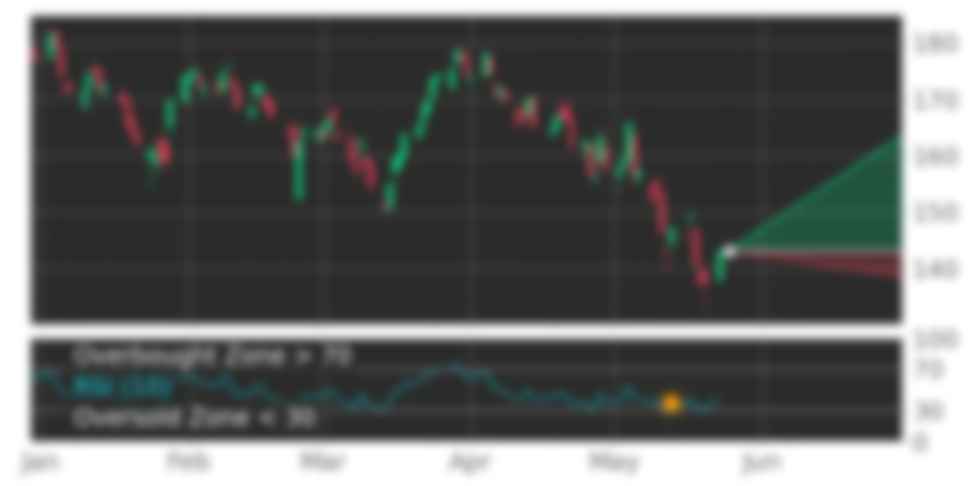
This is a signal that KC's price trend could be reversing, and it may be an opportunity to buy the stock or explore call options. A.I.dvisor identified 69 similar cases where KC's stochastic oscillator exited the oversold zone, and of them led to successful outcomes. Odds of Success:
KC may jump back above the lower band and head toward the middle band. Traders may consider buying the stock or exploring call options. In 27 of 32 cases where KC's price broke its lower Bollinger Band, its price rose further in the following month. The odds of a continued upward trend are 84%.
The RSI Indicator points to a transition from a downward trend to an upward trend -- in cases where KC's RSI Oscillator exited the oversold zone, 23 of 28 resulted in an increase in price. Tickeron's analysis proposes that the odds of a continued upward trend are 82%.
The Stochastic Oscillator suggests the stock price trend may be in a reversal from a downward trend to an upward trend. 58 of 69 cases where KC's Stochastic Oscillator exited the oversold zone resulted in an increase in price. Tickeron's analysis proposes that the odds of a continued upward trend are 84%.
Following a +7.73% 3-day Advance, the price is estimated to grow further. Considering data from situations where KC advanced for three days, in 180 of 225 cases, the price rose further within the following month. The odds of a continued upward trend are 80%.
The Momentum Indicator moved below the 0 level on November 09, 2026. You may want to consider selling the stock, shorting the stock, or exploring put options on KC as a result. In 75 of 92 cases where the Momentum Indicator fell below 0, the stock fell further within the subsequent month. The odds of a continued downward trend are 82%.
The Moving Average Convergence Divergence Histogram (MACD) for KC turned negative on November 16, 2026. This could be a sign that the stock is set to turn lower in the coming weeks. Traders may want to sell the stock or buy put options. Tickeron's A.I.dvisor looked at 45 similar instances when the indicator turned negative. In 36 of the 45 cases the stock turned lower in the days that followed. This puts the odds of success at 80%.
Following a 3-day decline, the stock is projected to fall further. Considering past instances where KC declined for three days, the price rose further in 50 of 62 cases within the following month. The odds of a continued downward trend are 87%.
The Aroon Indicator for KC entered a downward trend on November 18, 2026. This could indicate a strong downward move is ahead for the stock. Traders may want to consider selling the stock or buying put options.
The Tickeron PE Growth Rating for this company is 13 (best 1 - 100 worst), pointing to outstanding earnings growth. The PE Growth rating is based on a comparative analysis of stock PE ratio increase over the last 12 months compared against S&P 500 index constituents.
The Tickeron Valuation Rating of 22 (best 1 - 100 worst) indicates that the company is slightly undervalued in the industry. This rating compares market capitalization estimated by our proprietary formula with the current market capitalization. This rating is based on the following metrics, as compared to industry averages: P/B Ratio (0.225) is normal, around the industry mean (-2.923). P/E Ratio (-3.431) is within average values for comparable stocks, (9.743). Projected Growth (PEG Ratio) (0.000) is also within normal values, averaging (2.843). Dividend Yield (0.000) settles around the average of (0.075) among similar stocks. P/S Ratio (1.704) is also within normal values, averaging (71.334).
The Tickeron Price Growth Rating for this company is 84 (best 1 - 100 worst), indicating slightly worse than average price growth. KC’s price grows at a lower rate over the last 12 months as compared to S&P 500 index constituents.
The Tickeron SMR rating for this company is 93 (best 1 - 100 worst), indicating weak sales and an unprofitable business model. SMR (Sales, Margin, Return on Equity) rating is based on comparative analysis of weighted Sales, Income Margin and Return on Equity values compared against S&P 500 index constituents. The weighted SMR value is a proprietary formula developed by Tickeron and represents an overall profitability measure for a stock.
The Tickeron Profit vs. Risk Rating rating for this company is 100 (best 1 - 100 worst), indicating that the returns do not compensate for the risks. KC’s unstable profits reported over time resulted in significant Drawdowns within these last five years. A stable profit reduces stock drawdown and volatility. The average Profit vs. Risk Rating rating for the industry is 94, placing this stock worse than average.
Kingsoft Cloud Holdings Limited is a China-based cloud services provider that delivers public cloud, enterprise cloud, and AI-driven intelligent computing services to businesses and organizations. Listed on the Nasdaq (as an American depositary receipt) and the Hong Kong Stock Exchange, the company operates within the broader Kingsoft and Xiaomi ecosystem while also serving a large base of external enterprise customers.
The company's growth strategy has become increasingly AI-centric. It provides computing, storage, networking, and model-as-a-service offerings, with a particular focus on infrastructure supporting large language model training and inference. Its public cloud segment has been the fastest-growing part of the business, fueled by surging demand for AI compute, while its enterprise cloud business serves verticals such as healthcare, manufacturing, and public services. Investors follow the stock closely because it offers exposure to China's rapidly expanding AI and intelligent-computing market, balanced against risks tied to chip-supply constraints, heavy capital expenditures, and U.S.-China technology restrictions.
Over the past 30 days, Kingsoft Cloud shares have declined about 36%, falling from a closing price of $8.57 on October 21, 2026, to $5.47 on November 20, 2026. The move has been marked by repeated 52-week lows, with the stock briefly reaching $5.44 intraday — the bottom of its 52-week range — on November 20.
The weakness over the last month extends a longer downtrend. Over the last quarter, the stock has dropped roughly 51% from a closing level of $11.14 on August 21, 2026. Shares had climbed as high as $13.08 in early August before momentum reversed. Since its May 13, 2026 peak of $18.52, the stock has lost approximately 70% of its value, underscoring a pronounced de-rating despite improving reported fundamentals.
The recent decline has been driven largely by macro and sentiment factors rather than a deterioration in the company's operating results. In mid-November, new U.S. restrictions on the export of advanced AI chips to China renewed pressure across Chinese technology and cloud names, with Kingsoft Cloud caught in the selling. The stock also fell alongside a broader China ADR selloff in which peers such as Alibaba and BOSS Zhipin declined sharply on November 13.
Analyst actions added to the pressure, with Goldman Sachs trimming its price target to $15.50 even as it noted AI cloud growth was re-accelerating. Meanwhile, the fundamentals continued to improve: second-quarter 2026 revenue reached approximately $452.4 million, up about 38% year over year, operating income turned positive at about $3.39 million, and the net loss narrowed by roughly 79% to $13.7 million. The divergence between these improving results and the falling share price suggests the move has been driven by risk-off positioning in Chinese technology equities and persistent concerns over chip-supply constraints and heavy infrastructure spending.
Over the past three months, Kingsoft Cloud has trended steadily lower from the low-teens to the mid-single digits. After rallying to roughly $13 in early August on enthusiasm around AI-driven demand, the stock began a sustained retreat as investors reassessed the valuation of Chinese AI and cloud providers.
Several themes shaped the quarterly decline. Chip-supply constraints and rising infrastructure costs have remained a recurring concern, even as the company has reported accelerating AI-related revenue and improving adjusted profitability. High capital expenditures, elevated depreciation tied to new AI servers, and competitive pricing dynamics in China's cloud market have weighed on sentiment. At the same time, broader U.S.-China technology tensions and a rotation out of higher-beta Chinese equities compounded the selloff. The result is a stock that has de-rated significantly over the quarter despite delivering strong top-line growth and narrowing losses.
Tickeron offers hundreds of AI trading bots that trade thousands of tickers, but only the top-performing and most relevant bots are featured in the curated Trending AI Robots section. These bots vary in strategy, timeframe, and performance metrics, allowing traders to compare different automated approaches before deciding how to engage. The section is designed to surface the strategies generating the strongest recent results, giving visitors a focused view of the platform's most active opportunities. For investors seeking to complement their own research with data-driven, automated signals, the Trending AI Robots page offers a practical starting point.
Several factors will shape Kingsoft Cloud's outlook in the near term. The most immediate catalyst is the company's third-quarter 2026 earnings report, scheduled for late November, where investors will focus on AI revenue growth, adjusted profitability, and any commentary on chip supply and capital expenditure plans. Guidance on infrastructure investment and the company's ability to pass through rising input costs will also be closely watched.
Beyond earnings, developments in U.S. export controls on advanced AI chips remain a key risk, as further restrictions could constrain the company's ability to secure the computing capacity needed to support AI demand. Broader sentiment toward Chinese technology and cloud equities, competitive dynamics with larger domestic rivals, and the pace of adoption of the company's AI platform offerings will also influence the stock. While analyst consensus remains constructive, these macro and regulatory variables are likely to keep volatility elevated.
The information on this webpage is provided for general informational and educational purposes only and is not intended as investment advice, a recommendation to purchase or sell any security, or an offer or solicitation related to investments. It does not consider your personal financial situation, goals, or risk profile, and all investing carries inherent risks, including the possibility of losing your entire investment. For more details, please review our full disclaimer.