a biopharmaceutical company, which focuses on the discovery, development and commercialization of oral, small molecule therapies designed to modulate cellular protein levels as a novel treatment approach for cancer and immune disorders
Industry Biotechnology
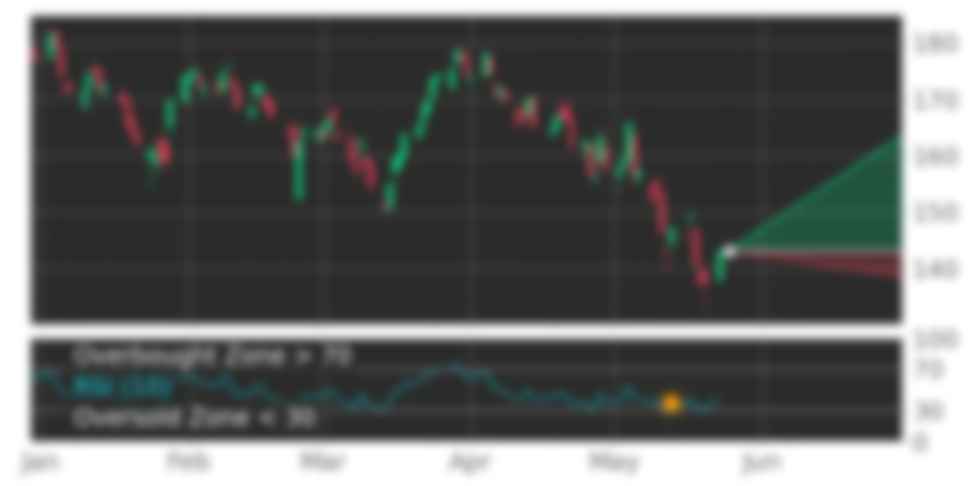
This is a signal that NRIX's price could be shifting from a downtrend to an uptrend. Traders may consider buying the stock or exploring call options. A.I.dvisor looked back and found 39 similar cases where NRIX's RSI Indicator left the oversold zone, and in of them led to a successful outcome. Odds of Success:
The price of this ticker is presumed to bounce back soon, since the longer the ticker stays in the oversold zone, the more promptly an uptrend is expected.
The RSI Oscillator points to a transition from a downward trend to an upward trend -- in cases where NRIX's RSI Indicator exited the oversold zone, 31 of 39 resulted in an increase in price. Tickeron's analysis proposes that the odds of a continued upward trend are 79%.
Following a +14.36% 3-day Advance, the price is estimated to grow further. Considering data from situations where NRIX advanced for three days, in 207 of 251 cases, the price rose further within the following month. The odds of a continued upward trend are 82%.
NRIX may jump back above the lower band and head toward the middle band. Traders may consider buying the stock or exploring call options.
The Momentum Indicator moved below the 0 level on November 03, 2026. You may want to consider selling the stock, shorting the stock, or exploring put options on NRIX as a result. In 71 of 85 cases where the Momentum Indicator fell below 0, the stock fell further within the subsequent month. The odds of a continued downward trend are 84%.
The Moving Average Convergence Divergence Histogram (MACD) for NRIX turned negative on November 04, 2026. This could be a sign that the stock is set to turn lower in the coming weeks. Traders may want to sell the stock or buy put options. Tickeron's A.I.dvisor looked at 39 similar instances when the indicator turned negative. In 31 of the 39 cases the stock turned lower in the days that followed. This puts the odds of success at 79%.
NRIX moved below its 50-day moving average on November 04, 2026 date and that indicates a change from an upward trend to a downward trend.
The 10-day moving average for NRIX crossed bearishly below the 50-day moving average on November 05, 2026. This indicates that the trend has shifted lower and could be considered a sell signal. In 12 of 14 past instances when the 10-day crossed below the 50-day, the stock continued to move higher over the following month. The odds of a continued downward trend are 86%.
Following a 3-day decline, the stock is projected to fall further. Considering past instances where NRIX declined for three days, the price rose further in 50 of 62 cases within the following month. The odds of a continued downward trend are 88%.
The Aroon Indicator for NRIX entered a downward trend on October 20, 2026. This could indicate a strong downward move is ahead for the stock. Traders may want to consider selling the stock or buying put options.
The Tickeron PE Growth Rating for this company is 15 (best 1 - 100 worst), pointing to outstanding earnings growth. The PE Growth rating is based on a comparative analysis of stock PE ratio increase over the last 12 months compared against S&P 500 index constituents.
The Tickeron Seasonality Score of 50 (best 1 - 100 worst) indicates that the company is fair valued in the industry. The Tickeron Seasonality score describes the variance of predictable price changes around the same period every calendar year. These changes can be tied to a specific month, quarter, holiday or vacation period, as well as a meteorological or growing season.
The Tickeron Valuation Rating of 54 (best 1 - 100 worst) indicates that the company is fair valued in the industry. This rating compares market capitalization estimated by our proprietary formula with the current market capitalization. This rating is based on the following metrics, as compared to industry averages: P/B Ratio (3.944) is normal, around the industry mean (3.600). P/E Ratio (-4.422) is within average values for comparable stocks, (-1.191). Projected Growth (PEG Ratio) (0.000) is also within normal values, averaging (9.158). Dividend Yield (0.000) settles around the average of (131.958) among similar stocks. P/S Ratio (68.493) is also within normal values, averaging (444.194).
The Tickeron Price Growth Rating for this company is 85 (best 1 - 100 worst), indicating slightly worse than average price growth. NRIX’s price grows at a lower rate over the last 12 months as compared to S&P 500 index constituents.
The Tickeron SMR rating for this company is 98 (best 1 - 100 worst), indicating weak sales and an unprofitable business model. SMR (Sales, Margin, Return on Equity) rating is based on comparative analysis of weighted Sales, Income Margin and Return on Equity values compared against S&P 500 index constituents. The weighted SMR value is a proprietary formula developed by Tickeron and represents an overall profitability measure for a stock.
The Tickeron Profit vs. Risk Rating rating for this company is 100 (best 1 - 100 worst), indicating that the returns do not compensate for the risks. NRIX’s unstable profits reported over time resulted in significant Drawdowns within these last five years. A stable profit reduces stock drawdown and volatility. The average Profit vs. Risk Rating rating for the industry is 93, placing this stock worse than average.
Nurix Therapeutics is a clinical-stage biopharmaceutical company focused on targeted protein degradation (TPD), an emerging drug-discovery approach that uses small molecules to harness the body's E3 ligase machinery to eliminate disease-causing proteins. The company applies this platform to oncology and autoimmune and inflammatory diseases, where removing a disease-driving protein can offer a differentiated therapeutic mechanism versus traditional inhibitors.
Its lead program is bexobrutideg (NX-5948), an oral, brain-penetrant degrader of Bruton's tyrosine kinase (BTK). In mid-2026, Nurix entered a global collaboration with Roche (RHHBY) to co-develop and co-commercialize bexobrutideg, a deal with a reported total value of approximately $2.3 billion and a $700 million upfront payment. The pipeline also includes NX-1607, an oral CBL-B inhibitor in immuno-oncology, and an IRAK4 degrader developed with Gilead (GILD). Investors follow the stock for its leadership in protein degradation, its partnered economics with major pharmaceutical companies, and the clinical progress of its wholly owned and partnered assets.
Over the trailing 30 days, NRIX declined approximately 35%, falling from a closing level near $23.67 to about $15.39. The move was not gradual: the bulk of the decline occurred in a single session in early November, when the shares gapped down after the Sanofi announcement and shed roughly 38% in after-hours trading before stabilizing in the low-to-mid teens.
The quarterly picture tells a similar but more nuanced story. Roughly three months earlier, shares traded near $27, meaning the stock is down about 43% over that span. However, most of that quarterly decline is concentrated in the November event. For much of the third quarter, the shares actually trended higher, reaching the high-$20s on momentum from the Roche collaboration and the initiation of a registrational Phase 3 trial, before a late-September pullback and an October recovery gave way to the sharp November selloff.
The dominant catalyst was the November 3, 2026, disclosure that Sanofi (SNY) had notified Nurix of its decision to discontinue the Phase 1 first-in-human trial of SAR448272, an oral STAT6 degrader, and to terminate the program entirely. Because the candidate was being developed under the companies' collaboration agreement, the decision eliminated future development, regulatory, and commercial milestone payments and royalties tied specifically to that asset—a program for which Nurix had been eligible for hundreds of millions of dollars in potential milestone payments.
The market reaction reflected more than the loss of a single early-stage asset. As a clinical-stage company without product revenue, Nurix relies heavily on collaboration payments, and the termination reduced visibility into a meaningful source of future non-dilutive funding. Still, management emphasized that the broader Sanofi collaboration remains in place, that the company stays eligible for milestones and royalties on other licensed programs, and that the announcement does not change its cash runway guidance into the second half of 2029.
The broader multi-month trend was shaped by a mix of positive pipeline momentum and, ultimately, the Sanofi setback. Earlier in the period, shares were supported by the expansion of the Roche collaboration and by advancement of the bexobrutideg program, including the enrollment of the first patient in the registrational Phase 3 DAYBreak CLL-306 trial in relapsed or refractory chronic lymphocytic leukemia. These developments helped lift the stock to roughly $28 by late August.
Shares then entered a period of consolidation and pulled back in late September, before recovering through October as investor attention remained focused on the BTK degrader franchise. The early-November termination of the Sanofi STAT6 program reversed those gains, leaving the stock materially lower over the full quarter despite what had been a constructive setup for much of the period.
Tickeron's Trending AI Robots page showcases a curated selection of AI-powered trading bots that are currently attracting attention across the platform. Tickeron offers hundreds of AI trading bots that monitor thousands of tickers, but only the top-performing and most relevant strategies appear in this section. These bots vary in trading style, timeframe, and performance metrics, allowing users to compare approaches that range from short-term momentum models to longer-horizon strategies. For investors seeking a data-driven lens on evolving market conditions, browsing the Trending AI Robots section can provide a useful view of which automated strategies are generating the strongest results.
Looking ahead, the primary focus is expected to remain on bexobrutideg and its clinical and regulatory trajectory under the Roche collaboration, including data readouts across oncology, immunology, and neurology indications. Progress on NX-1607 and the Gilead-partnered IRAK4 degrader, along with any additional milestone payments from remaining partnerships, will also shape sentiment.
Investors should monitor quarterly financial updates and guidance on the cash runway, as well as any disclosures regarding the other programs licensed under the Sanofi agreement. Macroeconomic conditions, sector-level risk appetite for clinical-stage biotechnology, and competitive developments in targeted protein degradation may also influence the stock. As with any clinical-stage company, binary trial outcomes and partnership decisions remain key risk factors that can drive significant price moves in either direction.
The information on this webpage is provided for general informational and educational purposes only and is not intended as investment advice, a recommendation to purchase or sell any security, or an offer or solicitation related to investments. It does not consider your personal financial situation, goals, or risk profile, and all investing carries inherent risks, including the possibility of losing your entire investment. For more details, please review our full disclaimer.