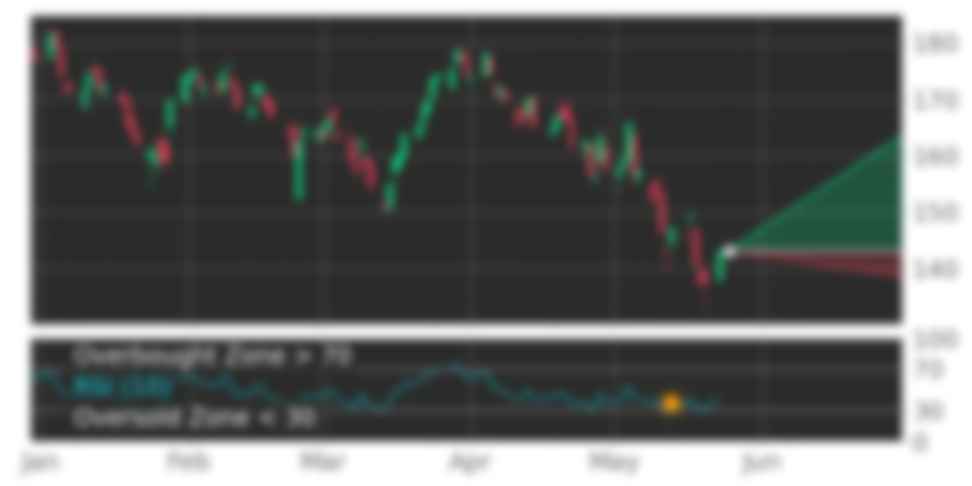
Oculis Holding AG (OCS) is a Swiss-based global biopharmaceutical company focused exclusively on ophthalmology, developing eye drop-based therapies for serious vision-threatening diseases. Its primary listing is on Nasdaq, with a secondary listing on the Iceland Stock Exchange. Shares are down approximately 34.64% in premarket trading on June 1, 2026, after closing at $22.70 on May 29, 2026, implying a premarket level around $14.84. This collapse follows the May 29 announcement that OCS-01, the company's flagship candidate for diabetic macular edema, failed the primary endpoint in both pivotal Phase 3 trials, prompting Oculis to abandon its FDA filing plans entirely.
The DIAMOND program — consisting of two double-masked, randomized, multicenter Phase 3 trials (DIAMOND-1 and DIAMOND-2) — was designed to evaluate OCS-01 eye drops over a 52-week treatment period across more than 800 patients at 119 sites globally. The primary endpoint measured mean change from baseline in best corrected visual acuity (BCVA) using the ETDRS letter score at Week 52. Neither trial demonstrated a statistically significant improvement in BCVA compared to vehicle control. The critical secondary endpoint assessing whether at least 15 ETDRS letters of vision gain were achieved was also missed in both studies.
Despite these failures on the visual acuity front, OCS-01 showed a substantial and sustained reduction in retinal thickness across both trials — an anatomical benefit that nonetheless failed to translate into meaningful functional improvement for patients. CEO Riad Sherif stated the company was "naturally disappointed that the substantial and sustained reduction in retinal thickness observed across both trials didn't translate into BCVA improvement at Week 52." Because the drug's entire commercial thesis in DME rested on this FDA registration program, the company confirmed it does not currently intend to pursue an FDA filing for OCS-01 in diabetic macular edema.
The DIAMOND readout exposed a critical vulnerability in Oculis's investment thesis: its extreme pipeline concentration. OCS-01 in DME was the company's most advanced, best-funded, and most commercially significant program, representing the clearest near-term path to a marketed product and revenue generation. With that pathway now closed, the market is repricing the entire company around what remains: the Privosegtor (OCS-05) program for acute optic neuritis and nonarteritic ischemic optic neuropathy, which carries FDA Breakthrough Therapy designation, PRIME designation from EMA, and a Special Protocol Assessment — but is significantly earlier in its commercial timeline. Investors who positioned in OCS as a late-stage de-risked biotech are now reassessing whether the residual pipeline justifies the prior valuation.
The stock had already registered a 23.42% decline during the May 29 regular session when results were first disclosed, closing at $22.70. After-hours trading continued the sell-off, with shares sinking to approximately $15.01 by the market close period, extending total losses to more than 34% from that session's close. Premarket quotes on June 1 confirmed the stock is trading around $14.84, with volume running at roughly 4.4 times the average daily pace, reflecting broad institutional liquidation. The broader biotech sector and the iShares Biotechnology ETF (IBB) did not mirror the move, confirming this is entirely company-specific event-driven action rather than sector rotation. The sharp break through multiple technical support levels, including the 200-day moving average, signals that the prior price structure built around DIAMOND expectations has been completely invalidated.
For traders navigating binary event-driven volatility — like the dramatic collapse in OCS following the DIAMOND trial results — Tickeron's Trending AI Robots page offers a curated selection of the platform's highest-performing automated trading bots under current market conditions. Tickeron operates hundreds of AI-powered bots spanning thousands of tickers, but only the strongest performers — ranked by real-time metrics including win rate, risk-adjusted returns, trading timeframe, and strategy type — are featured in this section. Bots cover a wide range of approaches, from momentum and swing strategies to mean-reversion and volatility plays. Traders looking to systematically engage with high-volatility biotech situations may find the Trending AI Robots section a practical starting point for discovery.
With the OCS-01 DME program effectively terminated, Oculis's near-term narrative will pivot entirely to Privosegtor (OCS-05). The company is building a registration strategy for Privosegtor in acute optic neuritis and nonarteritic ischemic optic neuropathy, supported by three crucial studies that management confirmed are advancing. An FDA Special Protocol Assessment has been secured, which gives the program a clearer regulatory pathway. Analyst coverage will likely be reset significantly in the coming weeks, with several buy-side and sell-side ratings under review given the sudden and material change to the company's pipeline value. Cash runway will also come into focus: Oculis had a $100 million at-the-market equity program and a $68.75 million universal shelf registration in place, and investors will watch closely for any capital raises. Key risks include further dilution, the lengthy timeline to any Privosegtor readout, and the absence of near-term revenue-generating assets.
The information on this webpage is provided for general informational and educational purposes only and is not intended as investment advice, a recommendation to purchase or sell any security, or an offer or solicitation related to investments. It does not consider your personal financial situation, goals, or risk profile, and all investing carries inherent risks, including the possibility of losing your entire investment. For more details, please review our full disclaimer.
Moving lower for three straight days is viewed as a bearish sign. Keep an eye on this stock for future declines. Considering data from situations where OCS declined for three days, in of 196 cases, the price declined further within the following month. The odds of a continued downward trend are .
The Stochastic Oscillator may be shifting from an upward trend to a downward trend. In of 67 cases where OCS's Stochastic Oscillator exited the overbought zone, the price fell further within the following month. The odds of a continued downward trend are .
The Momentum Indicator moved below the 0 level on July 14, 2026. You may want to consider selling the stock, shorting the stock, or exploring put options on OCS as a result. In of 100 cases where the Momentum Indicator fell below 0, the stock fell further within the subsequent month. The odds of a continued downward trend are .
OCS broke above its upper Bollinger Band on June 29, 2026. This could be a sign that the stock is set to drop as the stock moves back below the upper band and toward the middle band. You may want to consider selling the stock or exploring put options.
The RSI Indicator points to a transition from a downward trend to an upward trend -- in cases where OCS's RSI Indicator exited the oversold zone, of 19 resulted in an increase in price. Tickeron's analysis proposes that the odds of a continued upward trend are .
The Moving Average Convergence Divergence (MACD) for OCS just turned positive on June 22, 2026. Looking at past instances where OCS's MACD turned positive, the stock continued to rise in of 53 cases over the following month. The odds of a continued upward trend are .
Following a 3-day Advance, the price is estimated to grow further. Considering data from situations where OCS advanced for three days, in of 188 cases, the price rose further within the following month. The odds of a continued upward trend are .
The Aroon Indicator entered an Uptrend today. In of 265 cases where OCS Aroon's Indicator entered an Uptrend, the price rose further within the following month. The odds of a continued Uptrend are .
The Tickeron PE Growth Rating for this company is (best 1 - 100 worst), pointing to consistent earnings growth. The PE Growth rating is based on a comparative analysis of stock PE ratio increase over the last 12 months compared against S&P 500 index constituents.
The Tickeron Price Growth Rating for this company is (best 1 - 100 worst), indicating fairly steady price growth. OCS’s price grows at a lower rate over the last 12 months as compared to S&P 500 index constituents.
The Tickeron Valuation Rating of (best 1 - 100 worst) indicates that the company is significantly overvalued in the industry. This rating compares market capitalization estimated by our proprietary formula with the current market capitalization. This rating is based on the following metrics, as compared to industry averages: P/B Ratio (3.240) is normal, around the industry mean (21.024). P/E Ratio (63.076) is within average values for comparable stocks, (37.395). Projected Growth (PEG Ratio) (0.000) is also within normal values, averaging (2.490). OCS has a moderately low Dividend Yield (0.000) as compared to the industry average of (0.041). P/S Ratio (0.000) is also within normal values, averaging (432.700).
The Tickeron SMR rating for this company is (best 1 - 100 worst), indicating weak sales and an unprofitable business model. SMR (Sales, Margin, Return on Equity) rating is based on comparative analysis of weighted Sales, Income Margin and Return on Equity values compared against S&P 500 index constituents. The weighted SMR value is a proprietary formula developed by Tickeron and represents an overall profitability measure for a stock.
The Tickeron Profit vs. Risk Rating rating for this company is (best 1 - 100 worst), indicating that the returns do not compensate for the risks. OCS’s unstable profits reported over time resulted in significant Drawdowns within these last five years. A stable profit reduces stock drawdown and volatility. The average Profit vs. Risk Rating rating for the industry is 93, placing this stock worse than average.
The average fundamental analysis ratings, where 1 is best and 100 is worst, are as follows
Industry Biotechnology