Key Takeaways
- XLC is a passively managed, market-cap-weighted exchange-traded fund (ETF) that tracks the Communication Services Select Sector Index.
- The fund holds roughly two dozen securities with a 0.08% expense ratio, but its risk profile is dominated by a handful of mega-cap names.
- META and Alphabet's two share classes (GOOGL, GOOG) together represent more than 40% of portfolio assets.
- Exposure spans interactive media & services, entertainment, media, and telecommunications, blending growth-oriented and more defensive, dividend-paying businesses.
- Interest-rate expectations, advertising demand, and artificial intelligence (AI) infrastructure spending are the dominant swing factors for the sector's largest constituents.
- Over the trailing month the fund is roughly 2.5% lower, having pulled back through late October before rebounding in early November.
- For deeper context on this ticker's outlook, review the dedicated Price Targets and Forecast pages.
- Explore Trending AI Robots to see AI-driven trading strategies currently drawing investor attention.
Communication Services Select Sector SPDR Fund (XLC) Overview
XLC is a passively managed ETF sponsored by State Street Global Advisors that seeks to track the Communication Services Select Sector Index, a market-capitalization-weighted benchmark of communication services companies drawn from the S&P 500 under the Global Industry Classification Standard (GICS). The fund launched in June 2018, carries a 0.08% expense ratio, and manages roughly $22 billion in assets under management (AUM). It holds approximately 26 securities and is considered non-diversified, meaning its returns are tightly linked to its largest positions.
The portfolio is top-heavy. Meta Platforms accounts for roughly 22% of assets, while Alphabet's Class A and Class C shares add about 12% and 9%, respectively—placing more than 40% of the fund in just three listings. Other significant holdings include Warner Bros. Discovery, The Walt Disney Company (DIS), AT&T (T), Take-Two Interactive (TTWO), Verizon Communications (VZ), T-Mobile US (TMUS), Netflix (NFLX), AppLovin (APP), and Comcast (CMCSA). By GICS industry, exposure concentrates in interactive media & services (roughly one-third), entertainment (about a quarter), media, and diversified and wireless telecommunication services.
Industry and Thematic Landscape
The communication services sector sits at the intersection of several powerful investment themes. Digital advertising remains the principal revenue engine for Meta and Alphabet, making the sector sensitive to the broader economic cycle and corporate marketing budgets. At the same time, these companies rank among the largest investors in AI infrastructure, so capital-expenditure (capex) trends and AI monetization have become central swing factors for sector leadership.
The media and entertainment segment—including Netflix, Disney, and Warner Bros. Discovery—is shaped by streaming subscriber growth, pricing power, and content economics. By contrast, the telecommunications names such as AT&T, Verizon, and T-Mobile provide steadier, dividend-oriented cash flows and are more sensitive to interest rates and competitive dynamics in wireless and broadband.
The macroeconomic backdrop reinforces this structure. Because the sector's growth-oriented mega-caps are long-duration assets, interest-rate expectations weigh directly on their valuations, while inflation trends and monetary policy feed into sector multiples. Advertising spend, in turn, broadly tracks economic growth and consumer demand, tying the fund's largest holdings to the health of the business cycle.
Performance and Positioning Snapshot
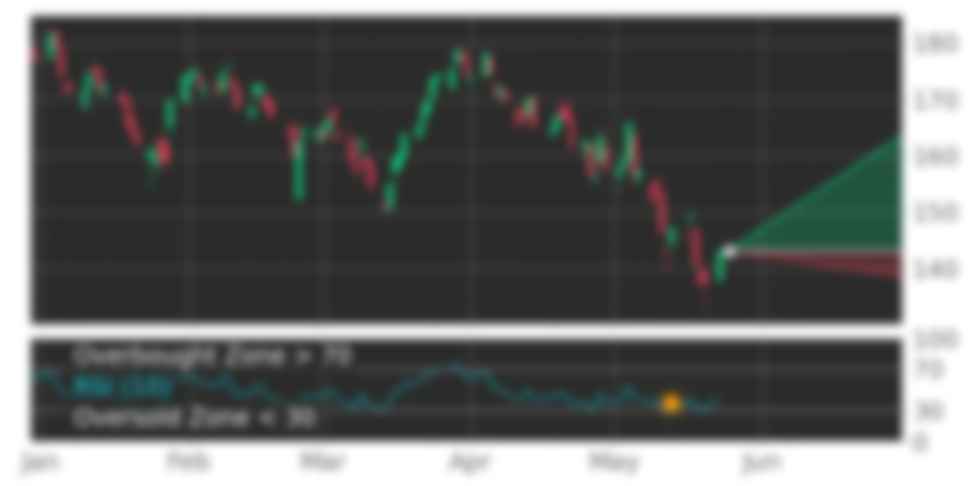
Over the trailing month, XLC has declined roughly 2.5%, but the move was far from a straight line. After trading largely within a $110–$115 range through much of September, the fund declined steadily through late October to a near-term low near $100 before rebounding in early November. Compared with roughly three months earlier, the fund is modestly lower by a low-single-digit percentage, reflecting a period of range-bound trading punctuated by a sharp late-October drawdown and a partial recovery.
This pattern closely tracked the behavior of the fund's largest constituents. With Meta and Alphabet combining for more than 40% of net asset value (NAV), their share-price moves dominate the fund's daily returns. The more defensive telecommunications sleeve typically provides a cushion during risk-off phases, while media and entertainment names add cyclical sensitivity. The result is an ETF whose performance oscillates between growth-led rallies and valuation-driven pullbacks depending on shifts in rates, advertising expectations, and AI-related sentiment.
AI Screener
Tickeron's AI Screener is an AI-powered stock and ETF discovery platform that helps investors scan thousands of securities using technical indicators, fundamentals, volatility measures, AI-generated signals, market trends, price patterns, and customizable filters. It is designed to surface trending securities, breakout candidates, and emerging opportunities more efficiently than manual screening, allowing users to filter by industry, performance characteristics, and signal strength. For investors seeking to monitor sector rotations or identify new ideas within communication services and beyond, the AI Screener offers a structured, data-driven starting point.
2026 Outlook and Key Factors to Monitor
Several structural factors are likely to shape XLC through 2026. Interest-rate policy and inflation trends will remain pivotal, given the long-duration nature of the fund's mega-cap growth exposure. The pace of AI-related capex and the progress of AI monetization across search and social platforms will influence earnings expectations for the largest constituents, while the trajectory of digital advertising spend will track the broader economic cycle.
Investors should also monitor the earnings and cash-flow cycles of major holdings, competitive dynamics in streaming and wireless, and evolving regulatory scrutiny of large technology platforms. Capital flows into sector and thematic ETFs, along with the fund's pronounced concentration risk, add further considerations. These themes present both structural opportunities and risks without implying any directional forecast for the fund itself.
The information on this webpage is provided for general informational and educational purposes only and is not intended as investment advice, a recommendation to purchase or sell any security, or an offer or solicitation related to investments. It does not consider your personal financial situation, goals, or risk profile, and all investing carries inherent risks, including the possibility of losing your entire investment. For more details, please review our full disclaimer.
Disclaimers and Limitations
 GET DAILY SIGNALS