


Coinbase Stock (COIN) Rises 147.88%: A Thorough Examination of the Astonishing Q2 2025 Upswing
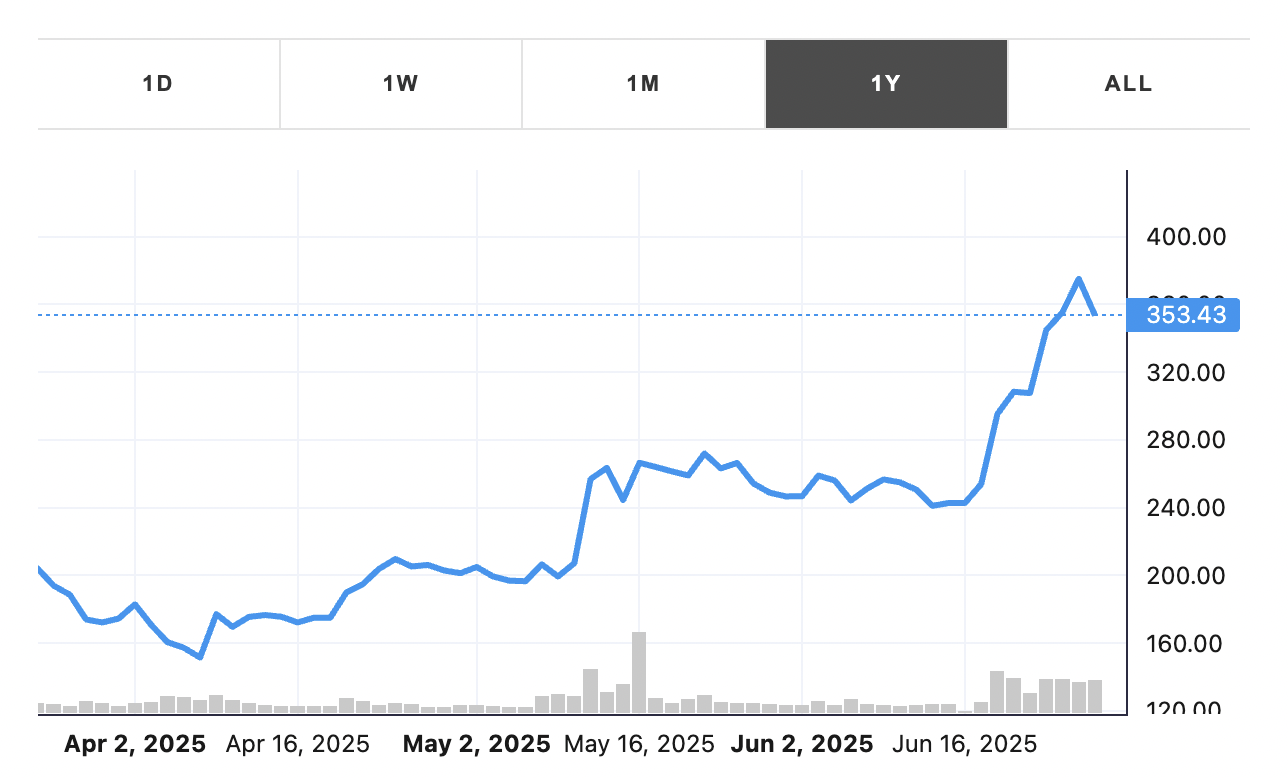
From the April 7 low of $142.58 to June 30's price of $353.43, Coinbase Global Inc. (COIN) delivered a spectacular 147.88% gain that positioned the stock near all-time highs. This remarkable performance was driven by a confluence of regulatory breakthroughs, strategic business developments, and favorable market conditions that fundamentally transformed investor sentiment toward the leading cryptocurrency exchange.
Executive Summary: The Perfect Storm for Crypto
The extraordinary rally was fueled by multiple catalytic events that occurred in rapid succession during the second quarter of 2025. President Trump's pro-crypto executive orders, the dismissal of the SEC lawsuit against Coinbase, passage of landmark stablecoin legislation, and the company's inclusion in the S&P 500 created an unprecedented wave of institutional confidence that drove the stock from its April lows to near-record highs.
Political and Regulatory Transformation
Trump Administration's Crypto Revolution
The most significant driver of Coinbase's surge was the dramatic shift in U.S. cryptocurrency policy under President Trump's second administration. On January 23, 2025, Trump signed Executive Order 14178, titled "Strengthening American Leadership in Digital Financial Technology," which marked a complete reversal from the Biden administration's restrictive approach. The order established a Presidential Working Group on Digital Asset Markets, tasked with proposing a comprehensive federal regulatory framework within 180 days.
More importantly, Trump signed an executive order in the first week of March 2025 establishing a U.S. Strategic Bitcoin Reserve, marking a historic recognition of Bitcoin as a sovereign-grade asset. This move positioned the United States as a leader in digital asset adoption and signaled a fundamental shift in how the government perceives cryptocurrencies.
The administration appointed former PayPal COO David Sacks as the "White House A.I. & Crypto Czar" to work on a legal framework providing the regulatory clarity the crypto industry had long sought. This appointment, combined with the selection of Paul Atkins as SEC Chairman, represented a complete departure from the enforcement-heavy approach of the previous administration.
SEC Leadership Change and Policy Reversal
The appointment of Paul Atkins as SEC Chairman in April 2025 marked a pivotal turning point for Coinbase and the broader crypto industry. Unlike his predecessor Gary Gensler, Atkins advocated for clear, innovation-friendly regulations and criticized the previous administration's "shoot-first-and-ask-questions-later" enforcement approach.
In May 2025, Atkins outlined the SEC's goal of developing a "rational regulatory framework" for crypto asset markets, emphasizing clear guidelines around the issuance, custody, and trading of crypto assets while maintaining investor protections. The SEC also established a Crypto Task Force in January 2025, signaling a collaborative rather than adversarial approach to regulation.
Landmark SEC Lawsuit Dismissal
Perhaps the most significant legal victory for Coinbase came on February 21, 2025, when the company announced that the SEC had agreed in principle to dismiss its high-profile enforcement action against the exchange. The lawsuit, originally filed in June 2023, had alleged that Coinbase operated as an unregistered securities exchange, broker, and clearing agency.
Coinbase Chief Legal Officer Paul Grewal called the outcome a "complete win," stating that "Coinbase is committing to do nothing. We surrendered nothing". The dismissal was formally completed on February 27, 2025, when the parties filed a joint stipulation for dismissal with prejudice. This resolution removed a major regulatory overhang that had weighed on the stock for nearly two years.
Legislative Breakthroughs
GENIUS Act Passage
On June 17, 2025, the U.S. Senate passed the "Guiding and Establishing National Innovation for U.S. Stablecoins Act" (GENIUS Act) by a bipartisan vote of 68-30. This landmark legislation established the first federal regulatory framework for U.S. dollar-pegged stablecoins, providing the regulatory clarity that had been missing from the market.
The bill's passage was particularly significant for Coinbase given its strategic partnership with Circle, the issuer of USDC stablecoin. USDC reached a new all-time high market capitalization of over $60 billion in 2025, with substantial growth in balances held on Coinbase's platform. Under Circle's collaboration agreement with Coinbase, the exchange receives a significant portion of staking rewards and distribution costs, creating a substantial recurring revenue stream.
Strategic Business Developments
S&P 500 Inclusion
A major milestone occurred in May 2025 when Coinbase became the first crypto stock added to the S&P 500, reinforcing its mainstream financial stature and attracting significant institutional investment. This inclusion marked the crypto industry's entry into the most prestigious equity index, validating the sector's maturation and Coinbase's position as a market leader.
Major Acquisitions and Partnerships
Coinbase announced several strategic acquisitions during the period that enhanced its competitive position:
Deribit Acquisition: In May 2025, Coinbase agreed to acquire crypto derivatives platform Deribit for $2.9 billion, the largest crypto industry acquisition to date. The deal established Coinbase as the world's largest crypto derivatives platform by open interest and significantly expanded its global footprint, as Deribit is the largest crypto options exchange with approximately $30 billion in open interest.
Technology Acquisitions: The company also acquired Spindl and Iron Fish to enhance Base's capabilities in privacy and usability, strengthening its Layer 2 blockchain ecosystem.
Base Layer 2 Network Success
Coinbase's Base network achieved remarkable growth during this period, setting ambitious targets for 2025 including $100 billion in on-chain assets, 25 million users, and 1 billion transactions. The network's rapid adoption and the expansion of Bitcoin-backed lending products on Base created new revenue streams and demonstrated Coinbase's innovation capabilities.
Financial Performance and Market Dynamics
Q1 2025 Results
Coinbase's Q1 2025 results, announced on May 8, 2025, showed resilient performance despite some earnings misses. The company reported:
- Total revenue of $2.03 billion, up 24% year-over-year
- Transaction revenue of $1.26 billion
- Subscription and services revenue of $698.1 million, driven by stablecoin growth
- Assets under custody reached $420 billion, up from $310 billion a year earlier
While earnings per share of $0.24 missed expectations of $2.09, the record-high subscription and services revenue demonstrated the company's successful diversification beyond pure trading revenue.
Stablecoin Revenue Growth
The explosive growth in USDC stablecoin adoption became a major revenue driver for Coinbase. Circle's revenue increased by 198.3 million or 55.1% in Q1 2025, with approximately $101.8 million of increased distribution costs paid to Coinbase due to higher reserve income and increased on-platform balances.
USDC balances on Coinbase surged nearly 50% to $12.3 billion, while the total USDC market cap reached new all-time highs above $60 billion. The percentage of USDC held on Coinbase's platform increased from 14% in Q1 2024 to 22% in Q1 2025, significantly boosting the exchange's stablecoin-related revenue.
Trading Volume and Market Share
Despite some quarterly volatility, Coinbase maintained strong market position with total trading volume of $393.1 billion in Q1 2025, slightly exceeding consensus estimates. The company continued to gain market share in both global spot and derivatives trading, benefiting from the overall crypto market expansion.
Institutional trading activity remained robust, with sovereign wealth funds and other large investors actively accumulating Bitcoin during April 2025 according to Coinbase Institutional. This institutional demand provided a stable foundation for the company's revenue base.
Cybersecurity Incident and Recovery
In May 2025, Coinbase disclosed a significant cybersecurity incident where threat actors claimed to possess sensitive customer information and demanded a $20 million ransom. The breach involved overseas contractors extracting internal data, compromising account balances, ID images, phone numbers, and partially hidden bank details.
While Coinbase refused to pay the ransom and fully cooperated with law enforcement, the company estimated costs of $180-400 million related to the incident. However, no passwords or crypto private keys were compromised, and the company's transparent handling of the situation actually enhanced investor confidence in its security protocols.
International Expansion
European Market Access
On June 20, 2025, Coinbase secured a Markets in Crypto-Assets (MiCA) license from Luxembourg, allowing the company to offer its full suite of products across all 27 EU member states to approximately 450 million residents. The company planned to establish its EU headquarters in Luxembourg, marking a significant expansion of its global footprint.
Derivatives Market Growth
Coinbase International Exchange achieved extraordinary growth, with the platform expanding perpetual futures listings from 15 to 106 and achieving a 6,200% increase in average daily trading volume. This international derivatives expansion provided access to a broader global market and additional revenue diversification.
Market Context and Crypto Rally
Bitcoin and Crypto Market Performance
The broader cryptocurrency market experienced significant strength during this period, with Bitcoin reaching new highs and the total crypto market capitalization expanding substantially. Bitcoin price predictions for June 2025 suggested potential targets of $110,000-$130,000, reflecting the bullish market sentiment that benefited all crypto-related stocks.
Institutional Adoption Trends
More than three-quarters of institutional investors surveyed expected to increase their digital asset allocations in 2025, with 59% planning to allocate over 5% of assets under management to digital assets. This institutional momentum provided strong fundamental support for Coinbase's business model.
The establishment of the Strategic Bitcoin Reserve and improved regulatory clarity created a "supercycle" environment that attracted unprecedented institutional interest in cryptocurrency markets.
TIME Magazine Recognition
Coinbase's transformation was recognized externally when it was named to TIME's 100 Most Influential Companies list in June 2025 as a "disruptor". This marked the first inclusion of a crypto exchange among global industry leaders, reflecting the company's mainstream acceptance and influence.
Future Outlook and Challenges
Growth Drivers
Looking ahead, several factors position Coinbase for continued growth:
- Regulatory Clarity: The passage of the GENIUS Act and continued pro-crypto policies provide a stable operating environment
- Product Innovation: Bitcoin-backed lending, tokenized equity trading, and Base network expansion offer new revenue streams
- International Expansion: EU market access and derivatives growth provide global diversification
- Institutional Adoption: Growing demand for crypto custody and trading services from institutional clients
Potential Headwinds
Despite the positive momentum, several challenges remain:
- Regulatory Uncertainty: While improved, the regulatory landscape continues to evolve with potential changes in oversight
- Market Volatility: Cryptocurrency markets remain inherently volatile, affecting trading revenue
- Competition: Increasing competition from traditional financial institutions entering crypto
- Cybersecurity Risks: The May 2025 incident highlighted ongoing security challenges
Tickeron: AI-Driven Trading Intelligence
Tickeron is a financial technology company specializing in AI-powered trading tools designed to enhance market analysis and decision-making. Founded by Ph.D. mathematicians and quantitative analysts, Tickeron has developed proprietary Financial Learning Models (FLMs) that integrate technical indicators, chart patterns, and fundamental data to generate predictive analytics for various market participants.
Key components of Tickeron's platform include:
- AI Agents: Algorithmic agents that provide trade signals based on real-time data analysis.
- Pattern Search Engine: Identifies chart patterns and evaluates their historical performance.
- Trend Prediction Engine: Forecasts potential price movements using machine learning algorithms.
These tools are tailored to support various trading strategies, including day trading, swing trading, and long-term investing. By leveraging AI, Tickeron aims to democratize access to sophisticated trading analytics, enabling users to navigate financial markets with greater precision.
Conclusion: A Paradigm Shift
Coinbase's extraordinary 147.88% rally from April 7 to June 30, 2025, represents far more than a typical stock price appreciation. It reflects a fundamental paradigm shift in how the United States and global financial markets view cryptocurrency. The combination of supportive government policy, regulatory clarity, strategic business execution, and growing institutional adoption created a perfect storm that propelled COIN to near all-time highs.
The stock's journey from the $142.58 April low to $353.43 by June 30 demonstrates how rapidly sentiment can change when regulatory uncertainty is removed and government support is established. With assets under custody of $420 billion, over $2 billion in trailing annual revenue, and fresh access to European markets, Coinbase has positioned itself as the primary beneficiary of cryptocurrency's mainstream adoption.
As the crypto industry continues its integration into traditional finance, Coinbase's first-mover advantage, regulatory compliance focus, and diversified revenue streams suggest that the Q2 2025 rally may represent just the beginning of a longer-term expansion phase. The company's inclusion in the S&P 500, dismissal of the SEC lawsuit, and recognition as one of TIME's most influential companies all point to a future where Coinbase is viewed not as a speculative crypto play, but as a mainstream financial services powerhouse in the digital asset economy.
Contributor
Financial writer and active order flow futures trader with a focus on fundamental analysis, macroeconomic factors, and equity research. I make in-depth blogs on stocks and ETFs, bridging the gap between raw market data and real-world trading decisions.
COIN in +3.51% Uptrend, growing for three consecutive days on September 22, 2026
Moving higher for three straight days is viewed as a bullish sign. Keep an eye on this stock for future growth. Considering data from situations where COIN advanced for three days, in 234 of 276 cases, the price rose further within the following month. The odds of a continued upward trend are 85%.

Technical Analysis (Indicators)
Bullish Trend Analysis
The Stochastic Oscillator demonstrated that the ticker has stayed in the oversold zone for 2 days, which means it's wise to expect a price bounce in the near future.
COIN moved above its 50-day moving average on September 17, 2026 date and that indicates a change from a downward trend to an upward trend.
The Aroon Indicator entered an Uptrend today. In 141 of 177 cases where COIN Aroon's Indicator entered an Uptrend, the price rose further within the following month. The odds of a continued Uptrend are 80%.
Bearish Trend Analysis
The Momentum Indicator moved below the 0 level on October 02, 2026. You may want to consider selling the stock, shorting the stock, or exploring put options on COIN as a result. In 77 of 94 cases where the Momentum Indicator fell below 0, the stock fell further within the subsequent month. The odds of a continued downward trend are 82%.
The Moving Average Convergence Divergence Histogram (MACD) for COIN turned negative on September 30, 2026. This could be a sign that the stock is set to turn lower in the coming weeks. Traders may want to sell the stock or buy put options. Tickeron's A.I.dvisor looked at 40 similar instances when the indicator turned negative. In 33 of the 40 cases the stock turned lower in the days that followed. This puts the odds of success at 82%.
Following a 3-day decline, the stock is projected to fall further. Considering past instances where COIN declined for three days, the price rose further in 50 of 62 cases within the following month. The odds of a continued downward trend are 85%.
COIN broke above its upper Bollinger Band on September 21, 2026. This could be a sign that the stock is set to drop as the stock moves back below the upper band and toward the middle band. You may want to consider selling the stock or exploring put options.
Fundamental Analysis (Ratings)
The Tickeron Price Growth Rating for this company is 54 (best 1 - 100 worst), indicating steady price growth. COIN’s price grows at a higher rate over the last 12 months as compared to S&P 500 index constituents.
The Tickeron PE Growth Rating for this company is 57 (best 1 - 100 worst), pointing to consistent earnings growth. The PE Growth rating is based on a comparative analysis of stock PE ratio increase over the last 12 months compared against S&P 500 index constituents.
The Tickeron Valuation Rating of 91 (best 1 - 100 worst) indicates that the company is significantly overvalued in the industry. This rating compares market capitalization estimated by our proprietary formula with the current market capitalization. This rating is based on the following metrics, as compared to industry averages: P/B Ratio (3.868) is normal, around the industry mean (-5.093). COIN's P/E Ratio (60.140) is considerably higher than the industry average of (25.252). Projected Growth (PEG Ratio) (2.293) is also within normal values, averaging (1.780). COIN has a moderately low Dividend Yield (0.000) as compared to the industry average of (0.018). P/S Ratio (7.331) is also within normal values, averaging (7.166).
The Tickeron SMR rating for this company is 93 (best 1 - 100 worst), indicating weak sales and an unprofitable business model. SMR (Sales, Margin, Return on Equity) rating is based on comparative analysis of weighted Sales, Income Margin and Return on Equity values compared against S&P 500 index constituents. The weighted SMR value is a proprietary formula developed by Tickeron and represents an overall profitability measure for a stock.
The Tickeron Profit vs. Risk Rating rating for this company is 100 (best 1 - 100 worst), indicating that the returns do not compensate for the risks. COIN’s unstable profits reported over time resulted in significant Drawdowns within these last five years. A stable profit reduces stock drawdown and volatility. The average Profit vs. Risk Rating rating for the industry is 81, placing this stock worse than average.
Notable companies
Industry description
Market Cap
High and low price notable news
Volume
Fundamental Analysis Ratings
The average fundamental analysis ratings, where 1 is best and 100 is worst, are as follows

Advertisement
General Information
Industry FinancialPublishingServices
Advertisement