MENU
Go to the list of all blogs
Alicia's Avatar
published in Blogs
Apr 16, 2026
Why Is Brand Engagement Network, Inc. (BNAI) Stock Down -28.69% Today?

Why Is Brand Engagement Network, Inc. (BNAI) Stock Down -28.69% Today?

Key Takeaways

  • Brand Engagement Network, Inc. (BNAI) is plunging 28.69% in today's session, falling from a prior close of $56.95 to approximately $40.61 on volume running at 5.5x average.

  • The primary catalyst is the release of the company's 2025 Annual Report (Form 10-K) on April 15, which confirmed meaningful improvement in financials — net loss narrowed to $8.6 million from $33.7 million — but also underscored that the business remains pre-profitability with ongoing cash burn.

  • A separate Q4 2026 earnings beat of $0.73 per share over consensus was not enough to offset broader concerns: after surging more than 1,712% over the past 12 monthsBNAI is experiencing an aggressive valuation reset.

  • With a low float, high short interest history, and a track record of violent two-way swings tied to dilutive financing events and momentum reversals, today's selloff fits a recurring pattern for this name.

  • Traders are watching whether BNAI can stabilize above the $40 level and how the company's commercialization progress in LATAM and AI licensing partnerships tracks against its still-elevated valuation.

Opening Summary

Brand Engagement Network, Inc. (BNAI), a Wilmington, Delaware-based company traded on NASDAQ, develops AI-driven customer engagement solutions, focusing on conversational AI, AI concierge deployments, and the "engagement layer" of artificial intelligence for enterprise clients across North America, Africa, and Latin America. Today, April 16, 2026, shares have plunged 28.69%, declining from yesterday's close of $56.95 to approximately $40.61 in intraday trading — a loss of roughly $96 million in market capitalization in a single session. The move confirms a sharp downward direction. Despite a Q4 earnings beat and improved annual financials, investors are rotating out of a stock that surged over 1,700% in the past year, treating the 10-K's disclosure as a "sell the news" event in a still loss-making enterprise.

Annual Report Filing and "Sell the News" Reaction

The 2025 Form 10-K filed on April 15 was the immediate trigger for today's selloff. While the report showed meaningful financial progress — net loss narrowed to $8.6 million from $33.7 million year over year, total liabilities fell to $11.8 million, and operating expenses dropped to $12.9 million — the market's reaction has been sharply negative. The company also disclosed that it raised approximately $7.05 million in equity financings during 2025 to support its LATAM expansion and strategic partnerships.

The negative price reaction to ostensibly improved numbers is a well-documented market dynamic in high-momentum small caps: investors who bought into the rally often use a scheduled disclosure event as a structured exit point, regardless of whether the numbers beat or miss. After BNAI surged from under $3.24 (its approximate pre-rally base a year ago) to a recent high well above $56, the fundamental improvements disclosed in the 10-K — while real — were not proportional to the magnitude of the price appreciation that had already occurred.

Earnings Beat Fails to Sustain the Rally

Adding to the complexity, MarketBeat confirmed on April 16 that BNAI beat quarterly earnings estimates by $0.73 per share — a significant positive surprise in absolute terms. Yet the stock continues to fall sharply. This apparent contradiction — an earnings beat accompanied by a 28%+ decline — is not unusual in highly speculative, low-float names where the primary driver of the stock price is momentum and sentiment rather than earnings-based valuation.

Analysts at Alpha Spread note that Wall Street consensus forecasts the stock to decline over the next 12 months, implying that even before today's selloff, professional coverage was skeptical of the valuation that the momentum-driven rally had produced. With an earnings history of significant per-share losses and a business that only recently began reducing its net loss run-rate, any incremental slowdown in the rally narrative — or mere absence of fresh bullish catalysts — is enough to trigger a sharp reversal.

Dilution History and Structural Vulnerability

Today's move also reflects structural fragility that has defined BNAI for months. In late January 2026, the stock crashed 43–47% in a single session after the company disclosed a $1.518 million private placement priced at $63.25 per share alongside warrant exercises — moves that signaled ongoing dilution risk despite the small dollar amounts involved. That episode followed a 2,000%+ rally and introduced the pattern investors are now re-applying: dilutive financing events and major disclosure milestones trigger sharp repricing in a stock with a low float of under 5 million shares and historically high short interest near 29–43%.

The 2025 10-K itself disclosed a 1-for-10 reverse stock split effective December 12, 2025, further illustrating that BNAI's equity structure has been actively managed — a dynamic that frequently unsettles institutional investors even when operational metrics are improving.

Market Context and Trading Activity

Volume today is running at 5.5 times average, with approximately 5.5x normal participation confirming that institutional and algorithmic sellers are driving the decline, not just retail noise. CNN data show that after yesterday's close of $56.95, BNAI had already dropped $10.05 in after-hours trading, signaling that the selling pressure began before today's regular session opened.

Technically, the stock has broken through multiple near-term support levels in the $50s and $40s, and the sheer speed of the decline suggests stop-loss triggers and algorithmic de-risking are amplifying the move. Over the past 12 months, BNAI gained 1,712%, meaning even after today's 28.69% drop the stock remains dramatically above its 52-week lows — but the risk of further reversion remains elevated given the lack of a stable earnings-based floor.

Trending AI Robots

For traders navigating extreme intraday swings in high-momentum AI names like BNAI, Tickeron's Trending AI Robots page highlights AI-driven trading bots currently outperforming under live market conditions. Tickeron runs hundreds of algorithmic strategies across thousands of tickers, but only those with the strongest recent returns and risk-adjusted metrics appear in this curated Trending section. Bots span momentum and breakout models built to ride AI-driven surges, as well as mean-reversion and volatility-focused systems designed to identify structured entry points after sharp drawdowns like BNAI's 28.69% decline. Each bot discloses historical returns, drawdowns, holding periods, and traded symbols, enabling traders to align systematic strategies with their risk tolerance. Active investors in BNAI can use these tools as a disciplined complement to their own event-driven and technical analysis.

What Comes Next for BNAI

Looking ahead, BNAI's path will depend on whether the company can translate its improved financial discipline into growing, recurring AI licensing and deployment revenues. Key watchpoints include updates on the $2.05 million Africa AI licensing partnership announced in January 2026, the commercial rollout of its AI concierge deployments in LATAM, and any new enterprise contracts that demonstrate revenue scaling beyond the current $8–12 million annual operating cost base.

On the balance sheet, any further equity financing or warrant exercises will be closely scrutinized given the dilution sensitivity that has historically triggered outsized declines. Analyst consensus remains skeptical of the current valuation, and without a clear catalyst that demonstrates a path to GAAP profitability — not just a narrowing net loss — BNAI is likely to remain one of the market's most volatile AI names, with large moves in both directions around any material company announcement or sector development.

Disclaimer

The information on this webpage is provided for general informational and educational purposes only and is not intended as investment advice, a recommendation to purchase or sell any security, or an offer or solicitation related to investments. It does not consider your personal financial situation, goals, or risk profile, and all investing carries inherent risks, including the possibility of losing your entire investment. For more details, please review our full disclaimer.

Disclaimers and Limitations

Related Ticker: BNAI

BNAI in +61.24% Uptrend, growing for three consecutive days on June 05, 2026

Moving higher for three straight days is viewed as a bullish sign. Keep an eye on this stock for future growth. Considering data from situations where BNAI advanced for three days, in of 139 cases, the price rose further within the following month. The odds of a continued upward trend are .

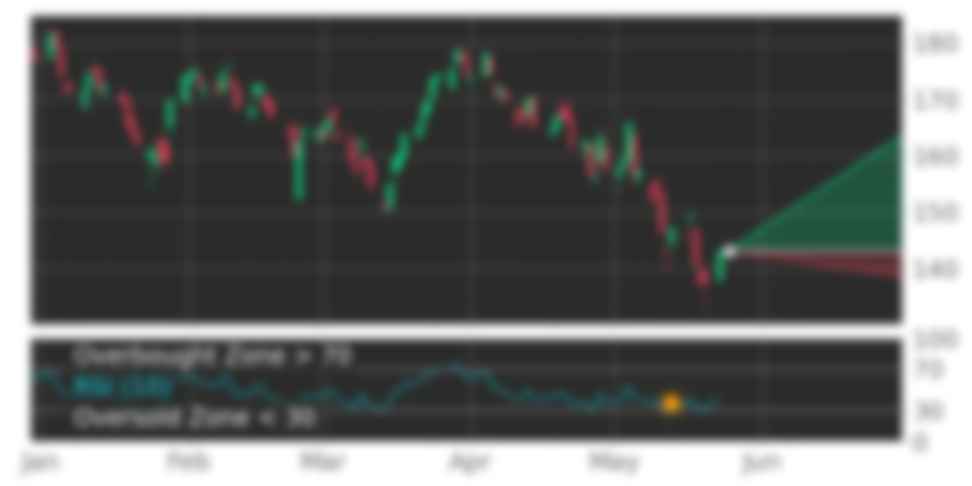
Price Prediction Chart

Technical Analysis (Indicators)

Bullish Trend Analysis

The RSI Oscillator points to a transition from a downward trend to an upward trend -- in cases where BNAI's RSI Oscillator exited the oversold zone, of 17 resulted in an increase in price. Tickeron's analysis proposes that the odds of a continued upward trend are .

The Stochastic Oscillator suggests the stock price trend may be in a reversal from a downward trend to an upward trend. of 56 cases where BNAI's Stochastic Oscillator exited the oversold zone resulted in an increase in price. Tickeron's analysis proposes that the odds of a continued upward trend are .

The Momentum Indicator moved above the 0 level on June 05, 2026. You may want to consider a long position or call options on BNAI as a result. In of 100 past instances where the momentum indicator moved above 0, the stock continued to climb. The odds of a continued upward trend are .

The Moving Average Convergence Divergence (MACD) for BNAI just turned positive on June 04, 2026. Looking at past instances where BNAI's MACD turned positive, the stock continued to rise in of 52 cases over the following month. The odds of a continued upward trend are .

BNAI may jump back above the lower band and head toward the middle band. Traders may consider buying the stock or exploring call options.

Bearish Trend Analysis

Following a 3-day decline, the stock is projected to fall further. Considering past instances where BNAI declined for three days, the price rose further in of 62 cases within the following month. The odds of a continued downward trend are .

The Aroon Indicator for BNAI entered a downward trend on June 04, 2026. This could indicate a strong downward move is ahead for the stock. Traders may want to consider selling the stock or buying put options.

Fundamental Analysis (Ratings)

The Tickeron Price Growth Rating for this company is (best 1 - 100 worst), indicating steady price growth. BNAI’s price grows at a higher rate over the last 12 months as compared to S&P 500 index constituents.

The Tickeron Valuation Rating of (best 1 - 100 worst) indicates that the company is slightly overvalued in the industry. This rating compares market capitalization estimated by our proprietary formula with the current market capitalization. This rating is based on the following metrics, as compared to industry averages: P/B Ratio (19.802) is normal, around the industry mean (16.241). P/E Ratio (0.000) is within average values for comparable stocks, (70.069). Projected Growth (PEG Ratio) (0.000) is also within normal values, averaging (1.817). BNAI has a moderately low Dividend Yield (0.000) as compared to the industry average of (0.020). P/S Ratio (294.118) is also within normal values, averaging (151.187).

The Tickeron PE Growth Rating for this company is (best 1 - 100 worst), pointing to worse than average earnings growth. The PE Growth rating is based on a comparative analysis of stock PE ratio increase over the last 12 months compared against S&P 500 index constituents.

The Tickeron SMR rating for this company is (best 1 - 100 worst), indicating weak sales and an unprofitable business model. SMR (Sales, Margin, Return on Equity) rating is based on comparative analysis of weighted Sales, Income Margin and Return on Equity values compared against S&P 500 index constituents. The weighted SMR value is a proprietary formula developed by Tickeron and represents an overall profitability measure for a stock.

The Tickeron Profit vs. Risk Rating rating for this company is (best 1 - 100 worst), indicating that the returns do not compensate for the risks. BNAI’s unstable profits reported over time resulted in significant Drawdowns within these last five years. A stable profit reduces stock drawdown and volatility. The average Profit vs. Risk Rating rating for the industry is 92, placing this stock worse than average.

Notable companies

The most notable companies in this group are Microsoft Corp (NASDAQ:MSFT), Oracle Corp (NYSE:ORCL), Palo Alto Networks Inc (NASDAQ:PANW), CrowdStrike Holdings (NASDAQ:CRWD), Block Inc (NYSE:XYZ), Twilio (NYSE:TWLO), NetApp (NASDAQ:NTAP), MongoDB (NASDAQ:MDB), Zscaler (NASDAQ:ZS), Okta (NASDAQ:OKTA).

Industry description

Computer communications industry develops technology that allows computing devices to exchange data with each other using connections/data links between nodes. Common types of computer network include Cloud (IAN), Internet, Wide (WAN, Local (LAN)/Wireless(WLAN) etc. The industry is an ever-more important part of technology, and is set to become even bigger as the Internet of Things (IoT) rapidly forays into the various aspects of our lives. Cisco Systems, Inc., Palo Alto Networks, Inc. and Arista Networks, Inc., Fortinet, Inc. are some of the major computer communications companies.

Market Cap

The average market capitalization across the Computer Communications Industry is 32.01B. The market cap for tickers in the group ranges from 48.8K to 3.1T. MSFT holds the highest valuation in this group at 3.1T. The lowest valued company is WMHI at 48.8K.

High and low price notable news

The average weekly price growth across all stocks in the Computer Communications Industry was -7%. For the same Industry, the average monthly price growth was 3%, and the average quarterly price growth was 20%. TGHL experienced the highest price growth at 72%, while CETX experienced the biggest fall at -41%.

Volume

The average weekly volume growth across all stocks in the Computer Communications Industry was -66%. For the same stocks of the Industry, the average monthly volume growth was 24% and the average quarterly volume growth was 56%

Fundamental Analysis Ratings

The average fundamental analysis ratings, where 1 is best and 100 is worst, are as follows

Valuation Rating: 46
P/E Growth Rating: 72
Price Growth Rating: 59
SMR Rating: 80
Profit Risk Rating: 91
Seasonality Score: 18 (-100 ... +100)
View a ticker or compare two or three
BNAI
Daily Signal:
Gain/Loss:
Interact to see
Advertisement
A.I.Advisor
published price charts
Last 5 trading days
A.I. Advisor
published General Information

General Information

Industry ComputerCommunications

Profile
Details
Industry
N/A
Address
300 Delaware Avenue
Phone
+1 307 757-3650
Employees
29
Web
https://www.beninc.ai