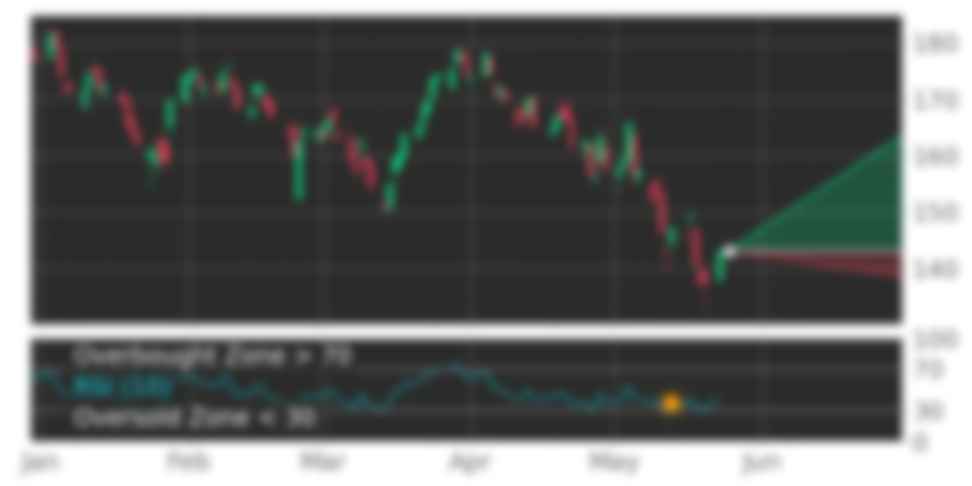
Jiayin Group shares have been under sustained selling pressure throughout the first half of 2026. After trading above $6.00 in early March, the stock declined to approximately $4.07 by mid-June, marking a multi-month downtrend that has erased significant shareholder value. The 52-week range tells a stark story: a high of $19.23 reached in June 2025 versus a low of $3.70 touched in late March 2026. Trading volumes have remained relatively thin, averaging between 30,000 and 80,000 shares daily, which can amplify intraday volatility. Broader sentiment toward Chinese ADRs and fintech platforms has been cautious, driven by ongoing regulatory scrutiny, macroeconomic headwinds in China's consumer credit market, and uncertainty around asset quality trends.
Jiayin Group Inc. operates a leading online consumer finance marketplace in China, connecting individual borrowers with institutional funding partners. Founded in 2011 and headquartered in Shanghai, the company facilitates loan products with fixed terms and repayment schedules, provides guarantee services, and offers technology development and referral services to third-party financial service providers. The company went public on the NASDAQ in May 2019 and has since grown its loan facilitation volume substantially. Jiayin competes alongside other Chinese fintech platforms such as QFIN and LX, differentiating itself through AI-driven credit assessment, risk management frameworks, and a capital-light model that emphasizes partnerships with financial institutions rather than balance-sheet lending. The company's high insider ownership — approximately 77% — aligns management interests with long-term shareholder outcomes, though it also contributes to lower public float and liquidity. I also checked this using Tickeron’s AI Screener to see how the stock compares to others in the industry.
Several developments have shaped JFIN's trajectory in recent weeks. On May 15, 2026, the company announced the appointment of Dan Qi as Chief Risk Officer, effective June 1, replacing Yifang Xu. This leadership change signals an intensified focus on risk management at a time when asset quality in China's consumer lending sector faces heightened scrutiny. In late April, Jiayin filed its annual report on Form 20-F for fiscal year 2025, providing investors with a comprehensive view of its financial position. The Q4 2025 earnings report, released March 31, revealed a sharp sequential decline: net income fell to RMB 100.6 million from RMB 275.5 million a year earlier, while Q4 loan facilitation volume contracted 12.6% year-over-year to RMB 24.2 billion. Management attributed the slowdown to deliberate risk management measures and a more conservative approach to loan origination amid regulatory tightening. For Q1 2026, the company guided loan facilitation volume of RMB 18.5 billion to RMB 19.5 billion, reflecting continued caution. On a positive note, Jiayin's overseas business reportedly doubled in scale during 2025, and the company has continued returning capital to shareholders through dividends and share repurchases. The annual dividend of $0.80 per share represents a substantial yield at current price levels.
Looking ahead, the Q1 2026 earnings release scheduled for June 23, 2026, stands as the most immediate catalyst for JFIN. Investors will scrutinize loan facilitation volumes, net revenue trends, asset quality metrics, and any updates to full-year guidance. Beyond earnings, regulatory developments in China's fintech sector remain the dominant macro risk. Chinese authorities have progressively tightened oversight of online lending platforms, focusing on interest rate caps, data privacy, and leverage ratios. Any further regulatory actions could materially impact Jiayin's operating model. On the growth front, the company's international expansion efforts and AI framework upgrades represent potential long-term tailwinds. The analyst community maintains a Buy consensus with a $12.00 price target, implying significant upside from current levels, though such targets should be viewed in the context of elevated uncertainty. Macroeconomic conditions in China — including consumer confidence, employment trends, and credit demand — will also play a decisive role in shaping Jiayin's performance through the remainder of 2026.
From what I see, navigating volatile names like JFIN benefits from data-driven perspectives. I turned to Tickeron’s Trending AI Robots page to review actively trading strategies across different timeframes and approaches. The section highlights top-performing bots with transparent metrics, which can complement fundamental analysis when evaluating stocks under sector pressure. Exploring these options has helped me identify potential ways to align automated signals with my own views on risk and opportunity.
The information on this webpage is provided for general informational and educational purposes only and is not intended as investment advice, a recommendation to purchase or sell any security, or an offer or solicitation related to investments. It does not consider your personal financial situation, goals, or risk profile, and all investing carries inherent risks, including the possibility of losing your entire investment. For more details, please review our full disclaimer.
Moving lower for three straight days is viewed as a bearish sign. Keep an eye on this stock for future declines. Considering data from situations where JFIN declined for three days, in of 311 cases, the price declined further within the following month. The odds of a continued downward trend are .
The Aroon Indicator for JFIN entered a downward trend on June 17, 2026. This could indicate a strong downward move is ahead for the stock. Traders may want to consider selling the stock or buying put options.
The RSI Indicator points to a transition from a downward trend to an upward trend -- in cases where JFIN's RSI Indicator exited the oversold zone, of 37 resulted in an increase in price. Tickeron's analysis proposes that the odds of a continued upward trend are .
The Stochastic Oscillator suggests the stock price trend may be in a reversal from a downward trend to an upward trend. of 62 cases where JFIN's Stochastic Oscillator exited the oversold zone resulted in an increase in price. Tickeron's analysis proposes that the odds of a continued upward trend are .
The Momentum Indicator moved above the 0 level on June 22, 2026. You may want to consider a long position or call options on JFIN as a result. In of 83 past instances where the momentum indicator moved above 0, the stock continued to climb. The odds of a continued upward trend are .
The Moving Average Convergence Divergence (MACD) for JFIN just turned positive on June 15, 2026. Looking at past instances where JFIN's MACD turned positive, the stock continued to rise in of 45 cases over the following month. The odds of a continued upward trend are .
Following a 3-day Advance, the price is estimated to grow further. Considering data from situations where JFIN advanced for three days, in of 256 cases, the price rose further within the following month. The odds of a continued upward trend are .
JFIN may jump back above the lower band and head toward the middle band. Traders may consider buying the stock or exploring call options.
The Tickeron Valuation Rating of (best 1 - 100 worst) indicates that the company is seriously undervalued in the industry. This rating compares market capitalization estimated by our proprietary formula with the current market capitalization. This rating is based on the following metrics, as compared to industry averages: P/B Ratio (0.318) is normal, around the industry mean (3.993). P/E Ratio (0.917) is within average values for comparable stocks, (18.910). JFIN's Projected Growth (PEG Ratio) (0.000) is slightly lower than the industry average of (1.100). JFIN's Dividend Yield (0.201) is considerably higher than the industry average of (0.063). P/S Ratio (0.226) is also within normal values, averaging (6.700).
The Tickeron SMR rating for this company is (best 1 - 100 worst), indicating very strong sales and a profitable business model. SMR (Sales, Margin, Return on Equity) rating is based on comparative analysis of weighted Sales, Income Margin and Return on Equity values compared against S&P 500 index constituents. The weighted SMR value is a proprietary formula developed by Tickeron and represents an overall profitability measure for a stock.
The Tickeron Price Growth Rating for this company is (best 1 - 100 worst), indicating slightly worse than average price growth. JFIN’s price grows at a lower rate over the last 12 months as compared to S&P 500 index constituents.
The Tickeron PE Growth Rating for this company is (best 1 - 100 worst), pointing to worse than average earnings growth. The PE Growth rating is based on a comparative analysis of stock PE ratio increase over the last 12 months compared against S&P 500 index constituents.
The Tickeron Profit vs. Risk Rating rating for this company is (best 1 - 100 worst), indicating that the returns do not compensate for the risks. JFIN’s unstable profits reported over time resulted in significant Drawdowns within these last five years. A stable profit reduces stock drawdown and volatility. The average Profit vs. Risk Rating rating for the industry is 79, placing this stock worse than average.
The average fundamental analysis ratings, where 1 is best and 100 is worst, are as follows
an online financial marketplace for connecting individual investors and individual borrowers
Industry SavingsBanks