MENU
Go to the list of all blogs
Arthur Evans's Avatar
published in Blogs
Jul 29, 2026
Why Is Lemonade (LMND) Stock Down -20.14% Today?

Why Is Lemonade (LMND) Stock Down -20.14% Today?

Key Takeaways

  • LMND shares plunged approximately 20.14% on Wednesday, falling from a prior close of $62.11 to around $49.60 in intraday trading.
  • The primary catalyst was the company's Q2 2026 earnings release, which showed strong revenue growth of 79% but failed to deliver the guidance upgrade investors were hoping for.
  • Profitability concerns overshadowed top-line momentum. The company maintained its full-year adjusted EBITDA loss guidance of $47–$51 million and guided to a sequentially wider Q3 loss.
  • Analyst caution and high expectations exacerbated the sell-off, with Morgan Stanley having downgraded the stock earlier in July and a mixed ratings landscape heading into earnings.
  • A CFO transition announcement added a layer of leadership uncertainty to an already jittery investor base.
  • Traders are now watching whether the sell-off stabilizes and whether Lemonade can still deliver its first positive adjusted EBITDA quarter in Q4 2026.

Opening Summary

LMND, the parent ticker of Lemonade, Inc. — a technology-driven insurance carrier that uses artificial intelligence to offer renters, homeowners, car, pet, and life insurance — saw its stock crater roughly 20.14% on Wednesday. Shares fell from Tuesday's close of $62.11 to approximately $49.60 during the regular session. The sell-off followed the release of the company's second-quarter 2026 financial results before the opening bell. While Lemonade reported revenue that narrowly exceeded Wall Street expectations and matched consensus earnings per share estimates, investors zeroed in on the company's unchanged full-year profitability outlook and a guidance range for the third quarter that signaled a deeper near-term adjusted EBITDA loss.

Q2 Earnings: Revenue Beat, Profitability Stalls

Lemonade delivered Q2 revenue of $294.4 million, a 79% year-over-year surge that edged past analyst estimates of roughly $290.9 million. Earnings per share registered at -$0.56, in line with the consensus forecast. In-force premium — a closely watched metric reflecting the total annualized value of active policies — climbed 32% to $1.43 billion, marking the eleventh consecutive quarter of accelerating growth. Gross profit rose 76% to $113.2 million, and the company's loss adjustment expense ratio hit a record low of 5%.

On paper, these numbers painted a picture of improving operational leverage. Yet the market reaction was decisively negative. The issue was not the quarter itself but what management signaled — or failed to signal — about the road ahead. Full-year adjusted EBITDA guidance was held steady at a loss of $47 million to $51 million, and the Q3 outlook called for an adjusted EBITDA loss of $20 million to $23 million, worse than the $18.7 million loss posted in Q2. For a stock that had rallied significantly earlier in 2026 and carried elevated valuation multiples, maintaining rather than raising the profitability forecast was treated as a disappointment.

Guidance Falls Short of Lofty Expectations

Heading into the report, LMND had already pulled back from its 52-week high of $99.90, suggesting that investor patience with the company's prolonged path to GAAP profitability was wearing thin. The second-quarter release did little to restore confidence. Management raised full-year revenue guidance modestly to $1.22 billion at the midpoint, roughly in line with analyst models, but left the critical adjusted EBITDA and in-force premium targets unchanged. With spending on growth initiatives set to rise sequentially in Q3, the message was clear: near-term profitability improvement would be slower than many had hoped. The promise of Lemonade's first-ever positive adjusted EBITDA quarter in Q4 2026 remained intact, but the market appeared unwilling to reward that distant milestone when intermediate quarters looked weaker.

Analyst Sentiment and Leadership Transition Add Pressure

The earnings-driven sell-off was amplified by pre-existing caution on Wall Street. Earlier in July, Morgan Stanley analyst Bob Huang downgraded LMND to Equal Weight from Overweight, arguing that while operating momentum was solid, additional catalysts would be needed to justify the stock's valuation. Keefe Bruyette maintained an Underperform rating with a $48 price target, and Piper Sandler stayed at Neutral. This mixed-to-cautious analyst backdrop left the stock vulnerable to any earnings miss — or, in this case, a guidance disappointment.

Compounding the unease, Lemonade separately announced that CFO Tim Bixby, who has held the role since 2017, will transition to the company's board of directors effective January 1, 2027. Nick Stead, currently SVP of Finance, will succeed him. While the transition appeared orderly and planned, leadership changes at the top financial post rarely go unnoticed during periods of heightened scrutiny over profitability metrics.

Market Context and Trading Activity

The magnitude of Wednesday's move was extraordinary, with volume surging well above the daily average. The decline began in pre-market trading, where shares dropped roughly 15% before the opening bell, and selling pressure persisted into the regular session. The move was company-specific rather than sector-driven: broader property and casualty insurance peers and major equity indices did not exhibit comparable weakness. Lemonade's sharp decline reflected an idiosyncratic repricing of risk following earnings rather than a systemic market event. From a technical perspective, the stock sliced below its 50-day moving average and approached levels not seen in several months, breaking multiple layers of support in a single session.

What Comes Next for LMND

Investors will closely monitor whether LMND can stabilize in the coming sessions or whether the sell-off extends further as the market digests the full implications of the Q2 report. The company's next major investor event is scheduled for November 17 in New York, where management is expected to provide updates on growth strategy and AI initiatives. In the nearer term, attention will focus on third-quarter execution — particularly whether the sequential increase in growth spending translates into sustained premium expansion without further eroding the path to profitability. The company's ability to deliver its promised positive adjusted EBITDA print in Q4 2026 now carries even greater weight, and any deviation from that target could invite another wave of selling.

Trending AI Robots

In volatile market environments like the one surrounding LMND, traders often look for systematic, data-driven strategies to navigate sharp price swings. Tickeron's Trending AI Robots page showcases a curated selection of hundreds of AI-powered trading bots, each designed for specific strategies, timeframes, and symbols. Only the top performers under current market conditions are featured, giving users a window into which algorithmic approaches are thriving right now. Whether you trade momentum, mean reversion, or breakout patterns, exploring these AI-driven tools may offer a fresh perspective on today's rapidly shifting markets.

Disclaimer

The information on this webpage is provided for general informational and educational purposes only and is not intended as investment advice, a recommendation to purchase or sell any security, or an offer or solicitation related to investments. It does not consider your personal financial situation, goals, or risk profile, and all investing carries inherent risks, including the possibility of losing your entire investment. For more details, please review our full disclaimer.

Disclaimers and Limitations

Related Ticker: LMND

LMND in upward trend: price may ascend as a result of having broken its lower Bollinger Band on July 29, 2026

LMND may jump back above the lower band and head toward the middle band. Traders may consider buying the stock or exploring call options. In of 34 cases where LMND's price broke its lower Bollinger Band, its price rose further in the following month. The odds of a continued upward trend are .

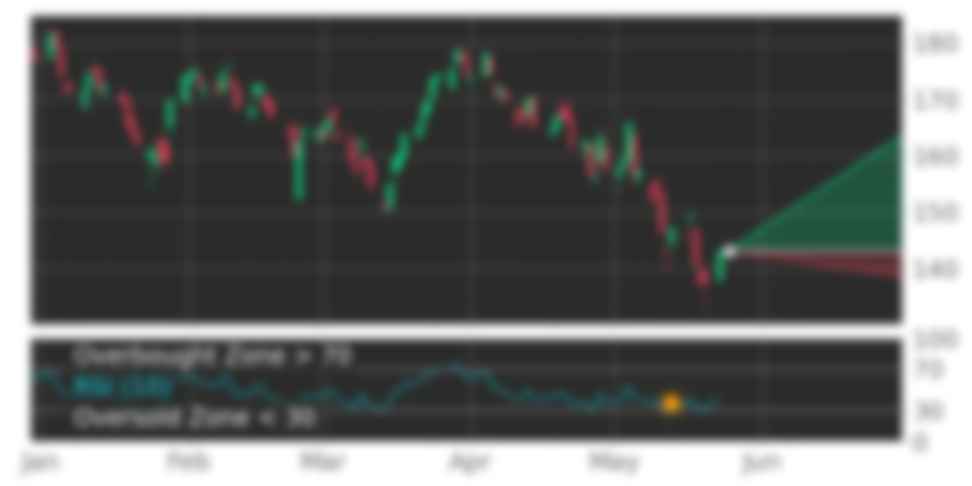
Price Prediction Chart

Technical Analysis (Indicators)

Bullish Trend Analysis

The RSI Indicator entered the oversold zone -- be on the watch for LMND's price rising or consolidating in the future. That's also the time to consider buying the stock or exploring call options.

The Stochastic Oscillator shows that the ticker has stayed in the oversold zone for 4 days. The price of this ticker is presumed to bounce back soon, since the longer the ticker stays in the oversold zone, the more promptly an upward trend is expected.

The 10-day moving average for LMND crossed bullishly above the 50-day moving average on June 26, 2026. This indicates that the trend has shifted higher and could be considered a buy signal. In of 16 past instances when the 10-day crossed above the 50-day, the stock continued to move higher over the following month. The odds of a continued upward trend are .

Following a 3-day Advance, the price is estimated to grow further. Considering data from situations where LMND advanced for three days, in of 261 cases, the price rose further within the following month. The odds of a continued upward trend are .

The Aroon Indicator entered an Uptrend today. In of 122 cases where LMND Aroon's Indicator entered an Uptrend, the price rose further within the following month. The odds of a continued Uptrend are .

Bearish Trend Analysis

The Momentum Indicator moved below the 0 level on July 16, 2026. You may want to consider selling the stock, shorting the stock, or exploring put options on LMND as a result. In of 88 cases where the Momentum Indicator fell below 0, the stock fell further within the subsequent month. The odds of a continued downward trend are .

The Moving Average Convergence Divergence Histogram (MACD) for LMND turned negative on July 15, 2026. This could be a sign that the stock is set to turn lower in the coming weeks. Traders may want to sell the stock or buy put options. Tickeron's A.I.dvisor looked at 50 similar instances when the indicator turned negative. In of the 50 cases the stock turned lower in the days that followed. This puts the odds of success at .

LMND moved below its 50-day moving average on July 29, 2026 date and that indicates a change from an upward trend to a downward trend.

Following a 3-day decline, the stock is projected to fall further. Considering past instances where LMND declined for three days, the price rose further in of 62 cases within the following month. The odds of a continued downward trend are .

Fundamental Analysis (Ratings)

The Tickeron Price Growth Rating for this company is (best 1 - 100 worst), indicating fairly steady price growth. LMND’s price grows at a lower rate over the last 12 months as compared to S&P 500 index constituents.

The Tickeron Valuation Rating of (best 1 - 100 worst) indicates that the company is significantly overvalued in the industry. This rating compares market capitalization estimated by our proprietary formula with the current market capitalization. This rating is based on the following metrics, as compared to industry averages: LMND's P/B Ratio (7.252) is very high in comparison to the industry average of (2.144). P/E Ratio (0.000) is within average values for comparable stocks, (16.708). Projected Growth (PEG Ratio) (0.000) is also within normal values, averaging (8.496). LMND has a moderately low Dividend Yield (0.000) as compared to the industry average of (0.022). LMND's P/S Ratio (4.301) is very high in comparison to the industry average of (1.600).

The Tickeron PE Growth Rating for this company is (best 1 - 100 worst), pointing to worse than average earnings growth. The PE Growth rating is based on a comparative analysis of stock PE ratio increase over the last 12 months compared against S&P 500 index constituents.

The Tickeron SMR rating for this company is (best 1 - 100 worst), indicating weak sales and an unprofitable business model. SMR (Sales, Margin, Return on Equity) rating is based on comparative analysis of weighted Sales, Income Margin and Return on Equity values compared against S&P 500 index constituents. The weighted SMR value is a proprietary formula developed by Tickeron and represents an overall profitability measure for a stock.

The Tickeron Profit vs. Risk Rating rating for this company is (best 1 - 100 worst), indicating that the returns do not compensate for the risks. LMND’s unstable profits reported over time resulted in significant Drawdowns within these last five years. A stable profit reduces stock drawdown and volatility. The average Profit vs. Risk Rating rating for the industry is 52, placing this stock worse than average.

Industry description

Property and casualty companies insure against accidents of non-physical harm, such as lawsuits, damage to personal assets, car crashes and more. Progressive Corporation, Travelers Companies, Inc. and Allstate Corporation are some of the biggest providers of such products.

Market Cap

The average market capitalization across the Property/Casualty Insurance Industry is 14.23B. The market cap for tickers in the group ranges from 93.9K to 135.09B. CB holds the highest valuation in this group at 135.09B. The lowest valued company is UNAM at 93.9K.

High and low price notable news

The average weekly price growth across all stocks in the Property/Casualty Insurance Industry was 4%. For the same Industry, the average monthly price growth was 3%, and the average quarterly price growth was 13%. SAFT experienced the highest price growth at 41%, while LMND experienced the biggest fall at -20%.

Volume

The average weekly volume growth across all stocks in the Property/Casualty Insurance Industry was 29%. For the same stocks of the Industry, the average monthly volume growth was 26% and the average quarterly volume growth was 13%

Fundamental Analysis Ratings

The average fundamental analysis ratings, where 1 is best and 100 is worst, are as follows

Valuation Rating: 52
P/E Growth Rating: 68
Price Growth Rating: 41
SMR Rating: 61
Profit Risk Rating: 51
Seasonality Score: 21 (-100 ... +100)
View a ticker or compare two or three
LMND
Daily Signal:
Gain/Loss:
Interact to see
Advertisement
A.I.Advisor
published price charts
Last 5 trading days
A.I. Advisor
published General Information

General Information

an insurance holding company, which engages in the provision of home and renters insurance services

Industry PropertyCasualtyInsurance

Profile
Details
Industry
N/A
Address
5 Crosby Street
Phone
+1 844 733-8666
Employees
1258
Web
https://www.lemonade.com