MENU
Go to the list of all blogs
Sergey Savastiouk's Avatar
published in Blogs
Sep 07, 2026
Navitas Semiconductor (NVTS): Watching for a Return to the $20 Level

Navitas Semiconductor (NVTS): Watching for a Return to the $20 Level

Key Takeaways

  • Investors are watching whether Navitas Semiconductor (NVTS) can climb back toward the $20 level, roughly 54% above its recent price near $13.
  • The strongest bullish case rests on rapidly growing demand for gallium nitride (GaN) and silicon carbide (SiC) power chips in AI data centers.
  • The biggest obstacles are persistent net losses, high cash burn, an elevated valuation, and a recent analyst price-target cut.
  • Key technical markers include support near the 52-week low of about $5.44 and overhead resistance at the 50-day moving average near $15.50 and the 200-day average near $14.40.
  • The stock remains far below its 52-week high of $34.17, meaning a return to $20 is plausible but requires renewed momentum and improved fundamentals.

Why the $20 Level Stands Out

Navitas Semiconductor Corporation designs ultra-efficient power semiconductors built on gallium nitride (GaN) and silicon carbide (SiC) technologies, positioning itself at the intersection of artificial intelligence infrastructure and power electronics. After a volatile run that carried shares to a 52-week high of $34.17 before a sharp pullback to roughly $13, the round-number $20 price target has emerged as a widely discussed milestone. It sits near the top of Wall Street's published forecasts and represents a psychologically significant recovery point for a stock that has surrendered more than half its value over the past three months. I also checked this using Tickeron’s AI Screener to see how the stock compares to others in the industry.

Current Market Position

The shares recently traded around $12.97, with a market capitalization near $3.4 billion. The stock carries a beta of roughly 3.9, underscoring exceptional volatility, and remains unprofitable on a trailing basis. Valuation is stretched by conventional measures, with a price-to-sales ratio in the neighborhood of 80 times, reflecting that investors are paying heavily for future growth rather than current earnings.

Growth Drivers in AI Data Centers

The core bull thesis centers on Navitas's pivot toward high-power AI data center applications. In its most recent quarter, management reported that revenue from the high-power market grew more than 50% sequentially, and the company expects AI infrastructure to represent more than one-third of total sales by the end of the year. As data centers adopt higher-voltage power architectures to support increasingly power-hungry AI accelerators, GaN and SiC-based solutions offer efficiency advantages that could translate into meaningful design wins and revenue acceleration. A return of sustained sequential growth in this segment is the single most important catalyst for a move back toward $20. From what I see, this segment's momentum is worth tracking closely.

Challenges That Could Hold the Stock Back

Despite the growth narrative, Navitas remains deeply unprofitable. The company continues to post significant net losses and negative free cash flow as heavy research and development spending outpaces revenue, which remains small at under $50 million annually. A valuation of roughly 80 times sales leaves little room for execution missteps. Compounding the pressure, Morgan Stanley recently lowered its price target, and the broader AI hardware complex repriced after Fabrinet (FN) raised concerns about capital spending and margins, triggering a reassessment of premium valuations across unprofitable semiconductor names. Reported insider selling during the most recent quarter has also weighed on sentiment.

Analyst Opinions and Price Targets

Wall Street's view is cautious. According to consensus estimates, the average twelve-month analyst price target sits near $14, with a high estimate of $21 and a low estimate of $8. The overall rating is a Hold or Neutral. Morgan Stanley maintains a Sell-equivalent stance with a target near $13, while Needham remains more constructive with a $21 objective. This spread highlights genuine uncertainty: reaching $20 would require the stock to trade at the very top of the current analyst range, implying that a move to that level depends on results exceeding the consensus view rather than merely meeting it.

Technical Levels Worth Monitoring

From a technical perspective, the stock is trading below both its 50-day moving average near $15.50 and its 200-day moving average near $14.40, signaling a damaged near-term trend. Reclaiming the 200-day average would be an early sign of stabilization, while a sustained push through the 50-day average and the $15-to-$16 zone would mark a meaningful shift in supply-and-demand balance. On the downside, the 52-week low of $5.44 represents the extreme support level, though more practical intermediate support exists near the recent consolidation in the low-to-mid $10s. A path to $20 would likely require first recapturing these moving averages and holding above them on increased conviction.

Using Tickeron AI Tools in Research

Traders monitoring volatile names like Navitas Semiconductor (NVTS) can benefit from systematic tools such as Tickeron's AI Daily Buy/Sell Signals. This product uses artificial intelligence to continuously scan thousands of stocks and ETFs, generating Buy, Sell, or Hold signals based on evolving market conditions, technical behavior, and AI-driven analysis. These signals can help traders identify emerging opportunities, monitor existing positions, and spot shifting market trends more efficiently than manual screening alone. I’m watching this closely as part of my regular process for names in the semiconductor space.

Final Assessment

A return to $20 for Navitas Semiconductor is ambitious but not out of reach. The strongest supporting factors are the accelerating high-power and AI data center opportunity, which could restore investor enthusiasm if revenue growth meaningfully reaccelerates. The primary risks are the company's ongoing losses, an extremely rich valuation, a cautious analyst consensus, and a downtrend that has yet to be repaired. Reaching $20 would likely require a combination of sustained sequential revenue growth, evidence of narrowing cash burn, a recovery above key moving averages, and a broader stabilization in AI-related semiconductor sentiment. Until those conditions emerge, the $20 level remains a credible longer-term objective rather than an imminent milestone.

Disclaimer

The information on this webpage is provided for general informational and educational purposes only and is not intended as investment advice, a recommendation to purchase or sell any security, or an offer or solicitation related to investments. It does not consider your personal financial situation, goals, or risk profile, and all investing carries inherent risks, including the possibility of losing your entire investment. For more details, please review our full disclaimer.

Disclaimers and Limitations

Related Ticker: NVTS

Contributor

Sergey Savastiouk, Ph.D. has a degree in Applied Mathematics from Moscow University and has extensive experience as an entrepreneur, investor, manager, and mathematician. His professional expertise is in applied mathematics, mathematical modeling, system and pattern analysis, and software and hardware system integration. He has served as the CEO of several hi-tech start-up companies and nonprofit organizations, which has given him proven capabilities in business strategy for high-tech start-up companies, market assessment, company formation, team building, product development, marketing, and sales. He has published numerous articles in journals and magazines on related fields. As a retail investor, he spent 15 years developing his proprietary trading and quantitative algorithms (now Tickeron’s A.I.), which brought him significant returns in trading the stock market. His current work and goal in founding Tickeron is to bring professional, sophisticated stock market analysis capabilities to retail investors via an easy-to-use interface.


NVTS sees its 50-day moving average cross bearishly below its 200-day moving average

The 50-day moving average for NVTS moved below the 200-day moving average on September 08, 2026. This could be a long-term bearish signal for the stock as the stock shifts to an downward trend.

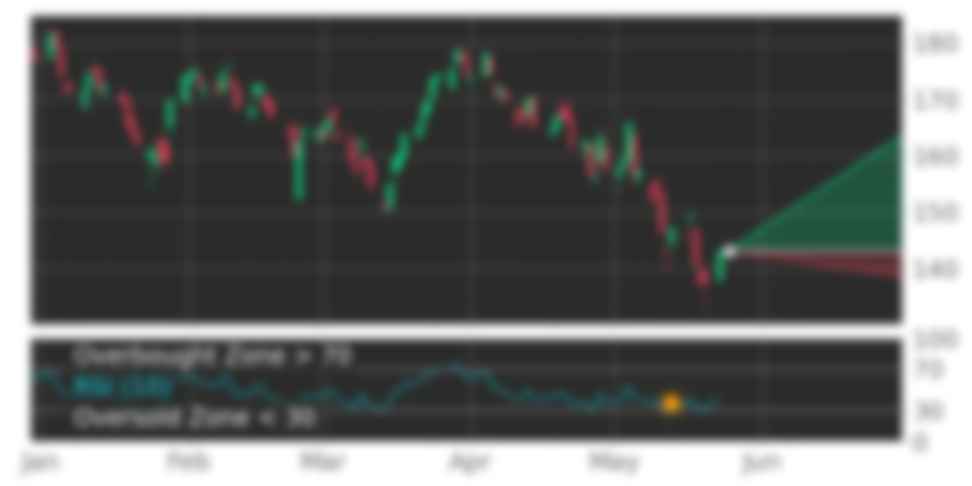
Price Prediction Chart

Technical Analysis (Indicators)

Bearish Trend Analysis

The Momentum Indicator moved below the 0 level on August 21, 2026. You may want to consider selling the stock, shorting the stock, or exploring put options on NVTS as a result. In of 75 cases where the Momentum Indicator fell below 0, the stock fell further within the subsequent month. The odds of a continued downward trend are .

The Moving Average Convergence Divergence Histogram (MACD) for NVTS turned negative on August 28, 2026. This could be a sign that the stock is set to turn lower in the coming weeks. Traders may want to sell the stock or buy put options. Tickeron's A.I.dvisor looked at 46 similar instances when the indicator turned negative. In of the 46 cases the stock turned lower in the days that followed. This puts the odds of success at .

Following a 3-day decline, the stock is projected to fall further. Considering past instances where NVTS declined for three days, the price rose further in of 62 cases within the following month. The odds of a continued downward trend are .

Bullish Trend Analysis

The Stochastic Oscillator suggests the stock price trend may be in a reversal from a downward trend to an upward trend. of 55 cases where NVTS's Stochastic Oscillator exited the oversold zone resulted in an increase in price. Tickeron's analysis proposes that the odds of a continued upward trend are .

Following a 3-day Advance, the price is estimated to grow further. Considering data from situations where NVTS advanced for three days, in of 275 cases, the price rose further within the following month. The odds of a continued upward trend are .

The Aroon Indicator entered an Uptrend today. In of 199 cases where NVTS Aroon's Indicator entered an Uptrend, the price rose further within the following month. The odds of a continued Uptrend are .

Fundamental Analysis (Ratings)

The Tickeron PE Growth Rating for this company is (best 1 - 100 worst), pointing to outstanding earnings growth. The PE Growth rating is based on a comparative analysis of stock PE ratio increase over the last 12 months compared against S&P 500 index constituents.

The Tickeron Price Growth Rating for this company is (best 1 - 100 worst), indicating steady price growth. NVTS’s price grows at a higher rate over the last 12 months as compared to S&P 500 index constituents.

The Tickeron Valuation Rating of (best 1 - 100 worst) indicates that the company is fair valued in the industry. This rating compares market capitalization estimated by our proprietary formula with the current market capitalization. This rating is based on the following metrics, as compared to industry averages: P/B Ratio (3.911) is normal, around the industry mean (7.385). P/E Ratio (0.000) is within average values for comparable stocks, (156.887). Projected Growth (PEG Ratio) (0.000) is also within normal values, averaging (1.646). NVTS has a moderately low Dividend Yield (0.000) as compared to the industry average of (0.015). P/S Ratio (74.627) is also within normal values, averaging (54.291).

The Tickeron Profit vs. Risk Rating rating for this company is (best 1 - 100 worst), indicating that the returns do not compensate for the risks. NVTS’s unstable profits reported over time resulted in significant Drawdowns within these last five years. A stable profit reduces stock drawdown and volatility. The average Profit vs. Risk Rating rating for the industry is 75, placing this stock worse than average.

The Tickeron SMR rating for this company is (best 1 - 100 worst), indicating weak sales and an unprofitable business model. SMR (Sales, Margin, Return on Equity) rating is based on comparative analysis of weighted Sales, Income Margin and Return on Equity values compared against S&P 500 index constituents. The weighted SMR value is a proprietary formula developed by Tickeron and represents an overall profitability measure for a stock.

Notable companies

The most notable companies in this group are NVIDIA Corp (NASDAQ:NVDA), Taiwan Semiconductor Manufacturing Company Ltd (NYSE:TSM), Broadcom Inc. (NASDAQ:AVGO), Micron Technology (NASDAQ:MU), Advanced Micro Devices (NASDAQ:AMD), Intel Corp (NASDAQ:INTC), Texas Instruments (NASDAQ:TXN), Marvell Technology (NASDAQ:MRVL), QUALCOMM (NASDAQ:QCOM), Analog Devices (NASDAQ:ADI).

Industry description

The semiconductor industry manufacturers all chip-related products, including research and development. These chips are used in innumerable electronic devices, including computers, cell phones, smartphones, and GPSs. Intel Corporation, NVIDIA Corp., and Broadcomm are some of the prominent players in this industry. Semiconductor companies usually tend to do well during periods of healthy economic growth, thereby inducing further research and development in the industry – which in turn augurs well for productivity and growth in the economy. In the near future, demand for semiconductor products (and possibly innovation within the segment) should only expand further, with the proliferation of 5G, autonomous vehicles, IoT, and various AI-driven electronics set to herald a new, advanced chapter in the technology-driven world as we know it. With burgeoning prospects comes great competition. In 2015, SIA estimated that U.S. semiconductor industry ranks as the second most competitive U.S. industry out of 2882 U.S. industries designated manufacturers by the U.S. Census Bureau.

Market Cap

The average market capitalization across the Semiconductors Industry is 207.21B. The market cap for tickers in the group ranges from 13.43K to 5.45T. NVDA holds the highest valuation in this group at 5.45T. The lowest valued company is CYBL at 13.43K.

High and low price notable news

The average weekly price growth across all stocks in the Semiconductors Industry was 5%. For the same Industry, the average monthly price growth was -4%, and the average quarterly price growth was 46%. SMTC experienced the highest price growth at 23%, while CRDO experienced the biggest fall at -19%.

Volume

The average weekly volume growth across all stocks in the Semiconductors Industry was 50%. For the same stocks of the Industry, the average monthly volume growth was 44% and the average quarterly volume growth was -29%

Fundamental Analysis Ratings

The average fundamental analysis ratings, where 1 is best and 100 is worst, are as follows

Valuation Rating: 60
P/E Growth Rating: 54
Price Growth Rating: 49
SMR Rating: 72
Profit Risk Rating: 75
Seasonality Score: -16 (-100 ... +100)
View a ticker or compare two or three
NVTS
Daily Signal:
Gain/Loss:
Interact to see
Advertisement
A.I.Advisor
published price charts
A.I. Advisor
published General Information

General Information

Industry Semiconductors

Profile
Details
Industry
N/A
Address
3520 Challenger Street
Phone
+1 844 654-2642
Employees
190
Web
https://www.navitassemi.com