Regencell Bioscience Holdings Limited is a Hong Kong-based, Cayman Islands-incorporated early-stage bioscience company listed on the Nasdaq under the ticker RGC. The company focuses on the research, development, and commercialization of Traditional Chinese Medicine (TCM) formulations targeting neurocognitive disorders and degeneration, specifically Attention Deficit Hyperactivity Disorder (ADHD) and Autism Spectrum Disorder (ASD). Regencell aims to establish itself as a global leader in natural and holistic treatments for neurological disorders. However, as a pre-revenue company with no approved products, it remains in the clinical development stage and relies entirely on external funding to sustain operations. Investors follow RGC for its niche TCM-based therapeutic approach, but the stock has been characterized by extreme volatility, a thinly traded float, and valuation metrics that have historically diverged sharply from biotech sector norms.
Over the last 30 days, RGC shares declined from a closing price of $5.88 on July 10, 2026, to $5.28 on August 10, 2026 — a drop of roughly 10.2%. The stock oscillated within a relatively narrow band between approximately $4.51 and $6.35 during this period, with intermittent short-covering rallies failing to reverse the prevailing downtrend. Trading volumes averaged in the low-to-mid six-figure range, indicating diminished institutional participation and predominantly retail-driven price action. I also checked this using Tickeron’s AI Screener to see how the stock compares to others in the industry.
The quarterly picture is far more severe. From a May 13, 2026, close of $27.32, RGC shares have plummeted approximately 81%, erasing the vast majority of their market capitalization. The stock's descent accelerated sharply in late June, when it breached the $10 level and has since struggled to stabilize above $6. This multi-month implosion reflects a convergence of dilution, litigation, and fundamental concerns that have overwhelmed any residual speculative interest in the name.
The 10.2% decline over the past 30 days, while modest compared to the stock's earlier collapse, reflects persistent selling pressure amid an absence of positive catalysts. Several interconnected factors weighed on RGC during this period. First, the overhang from the company's $500 million at-the-market (ATM) equity offering program, filed with the SEC on March 30, 2026, continued to suppress any meaningful recovery attempts. Although actual utilization of the ATM is at the company's discretion, the sheer scale of potential dilution — relative to a dramatically reduced market capitalization — has kept buyers on the sidelines.
Second, the securities class action lawsuit initiated by Pomerantz LLP, alleging that the company and certain officers made materially misleading statements regarding its business profile and fundamentals, remained an active concern. Class action litigation of this nature can impose significant financial and reputational costs on small-cap biotech firms, and the uncertainty surrounding its resolution has deterred risk-averse investors. Third, the registered direct offering of 985,222 ordinary shares at $20.30 per share, which closed on May 22, 2026, introduced additional selling pressure as institutional participants potentially unwound positions acquired at a significant premium to the current stock price. Finally, with no revenue, no approved products, and net losses expanding to $5.3 million for the six months ended December 31, 2025, the fundamental case for owning RGC at any valuation remains challenging, and the past 30 days simply extended the liquidation trend already underway.
The catastrophic 81% quarterly decline in RGC shares traces back to a cascade of adverse developments beginning in May 2026. The pivotal event was the company's announcement and closing of a $20 million registered direct offering at $20.30 per share on May 19–22, 2026. While the capital infusion strengthened the balance sheet, the offering price — then at a modest discount — quickly became a ceiling as selling overwhelmed buying. This was followed by the disclosure of the company's first-half fiscal 2026 financial results on May 8, which showed deepening operating losses of $5.3 million, heavy share-based compensation of $1.63 million, and zero revenue — reinforcing concerns that Regencell remains years away from any commercial milestone.
Simultaneously, the March 2026 filing of a $500 million ATM facility and a shelf registration statement signaled that management was positioning for aggressive equity fundraising, a red flag for a company with negligible revenue prospects and a dwindling cash runway. The subsequent filing of a securities class action lawsuit compounded the negative sentiment, directly challenging the integrity of the company's public disclosures. By late June, the stock had lost over 70% of its value, breaching psychological support levels as momentum-driven selling and margin calls likely accelerated the decline. The combination of dilution risk, litigation, and zero-revenue fundamentals created a perfect storm that has redefined RGC's market valuation from a multi-billion-dollar anomaly to a micro-cap biotech trading near cash value.
Looking ahead, investors monitoring RGC should focus on several critical factors. First, any updates on the utilization of the $500 million ATM facility and the remaining cash runway will be pivotal in assessing further dilution risk. Second, developments in the Pomerantz securities class action — including motions to dismiss, settlement discussions, or trial scheduling — could materially shift sentiment. Third, the company's next financial filing will be closely scrutinized for any signs of clinical progress, changes in operating expenses, or updates on the TCM development pipeline for ADHD and ASD. Fourth, insider transaction activity following the lock-up extension announced in February 2026 may offer signals about management's confidence in the company's trajectory. Finally, broader market conditions affecting small-cap biotech and pre-revenue healthcare companies — including interest rate expectations, sector rotation, and risk appetite — will influence whether RGC can stabilize or faces continued downward pressure. From what I see, monitoring these elements closely remains essential in such a high-risk name.
In my view, tools like Tickeron’s AI Trading Bots can offer a useful complement when evaluating volatile pre-revenue names. I’ve found the platform’s range of automated strategies helpful for spotting patterns across different market conditions without replacing core fundamental work.
The information on this webpage is provided for general informational and educational purposes only and is not intended as investment advice, a recommendation to purchase or sell any security, or an offer or solicitation related to investments. It does not consider your personal financial situation, goals, or risk profile, and all investing carries inherent risks, including the possibility of losing your entire investment. For more details, please review our full disclaimer.
Serhii Bondarenko is an AI-focused trading strategist and financial markets analyst specializing in the development and application of AI trading bots and autonomous trading agents. His work combines technical analysis, fundamental analysis, and quantitative research to identify market patterns, forecast price movements, and analyze liquidity, volatility, and correlations across global stock markets. Serhii actively publishes market insights, forecasts, and trading frameworks on platforms such as Investing.com and Finextra, with a strong focus on AI-driven decision-making and next-generation algorithmic trading. His research aims to bridge the gap between traditional trading methodologies and advanced artificial intelligence, helping traders and investors navigate complex and rapidly evolving market conditions.
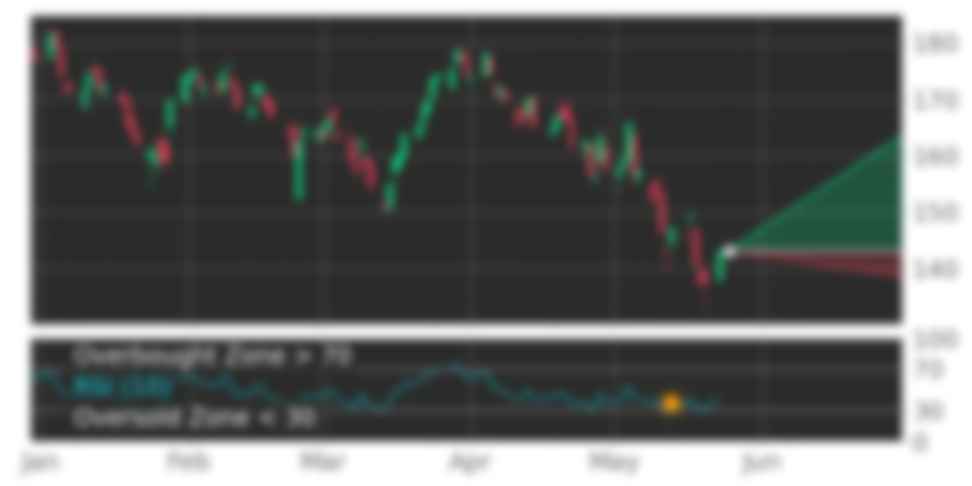
The RSI Oscillator for RGC moved out of oversold territory on July 21, 2026. This could be a sign that the stock is shifting from a downward trend to an upward trend. Traders may want to buy the stock or call options. The A.I.dvisor looked at 29 similar instances when the indicator left oversold territory. In of the 29 cases the stock moved higher. This puts the odds of a move higher at .
The Stochastic Oscillator is in the oversold zone. Keep an eye out for a move up in the foreseeable future.
The Moving Average Convergence Divergence (MACD) for RGC just turned positive on July 09, 2026. Looking at past instances where RGC's MACD turned positive, the stock continued to rise in of 38 cases over the following month. The odds of a continued upward trend are .
Following a 3-day Advance, the price is estimated to grow further. Considering data from situations where RGC advanced for three days, in of 164 cases, the price rose further within the following month. The odds of a continued upward trend are .
The Momentum Indicator moved below the 0 level on August 04, 2026. You may want to consider selling the stock, shorting the stock, or exploring put options on RGC as a result. In of 91 cases where the Momentum Indicator fell below 0, the stock fell further within the subsequent month. The odds of a continued downward trend are .
Following a 3-day decline, the stock is projected to fall further. Considering past instances where RGC declined for three days, the price rose further in of 62 cases within the following month. The odds of a continued downward trend are .
The Aroon Indicator for RGC entered a downward trend on July 28, 2026. This could indicate a strong downward move is ahead for the stock. Traders may want to consider selling the stock or buying put options.
The Tickeron Seasonality Score of (best 1 - 100 worst) indicates that the company is fair valued in the industry. The Tickeron Seasonality score describes the variance of predictable price changes around the same period every calendar year. These changes can be tied to a specific month, quarter, holiday or vacation period, as well as a meteorological or growing season.
The Tickeron Valuation Rating of (best 1 - 100 worst) indicates that the company is significantly overvalued in the industry. This rating compares market capitalization estimated by our proprietary formula with the current market capitalization. This rating is based on the following metrics, as compared to industry averages: RGC's P/B Ratio (2000.000) is very high in comparison to the industry average of (40.267). P/E Ratio (0.000) is within average values for comparable stocks, (102.305). RGC's Projected Growth (PEG Ratio) (0.000) is slightly lower than the industry average of (2.202). RGC has a moderately low Dividend Yield (0.000) as compared to the industry average of (0.033). P/S Ratio (0.000) is also within normal values, averaging (114.263).
The Tickeron Price Growth Rating for this company is (best 1 - 100 worst), indicating slightly worse than average price growth. RGC’s price grows at a lower rate over the last 12 months as compared to S&P 500 index constituents.
The Tickeron PE Growth Rating for this company is (best 1 - 100 worst), pointing to worse than average earnings growth. The PE Growth rating is based on a comparative analysis of stock PE ratio increase over the last 12 months compared against S&P 500 index constituents.
The Tickeron SMR rating for this company is (best 1 - 100 worst), indicating weak sales and an unprofitable business model. SMR (Sales, Margin, Return on Equity) rating is based on comparative analysis of weighted Sales, Income Margin and Return on Equity values compared against S&P 500 index constituents. The weighted SMR value is a proprietary formula developed by Tickeron and represents an overall profitability measure for a stock.
The Tickeron Profit vs. Risk Rating rating for this company is (best 1 - 100 worst), indicating that the returns do not compensate for the risks. RGC’s unstable profits reported over time resulted in significant Drawdowns within these last five years. A stable profit reduces stock drawdown and volatility. The average Profit vs. Risk Rating rating for the industry is 84, placing this stock worse than average.
The average fundamental analysis ratings, where 1 is best and 100 is worst, are as follows
Industry PharmaceuticalsGeneric