United Natural Foods, Inc. (UNFI) is North America's largest publicly traded grocery wholesaler, supplying a wide range of natural, organic, and conventional food products to more than 30,000 retail locations across the U.S. and Canada, including independent grocery stores, natural product superstores, conventional supermarket chains, and foodservice operators. Shares dropped approximately 16% in premarket trading on June 9, 2026, sliding from the prior session's closing price near $53.35 — a 52-week high — to around $44.81, following a pre-market earnings report for the fiscal third quarter ended May 2, 2026 that missed revenue estimates by a wide margin. While the company returned to profitability on a year-over-year basis, the revenue shortfall and lack of guidance improvement drove a sharp negative market reaction.
UNFI reported Q3 fiscal 2026 net sales of $7.72 billion, a decrease of 4.2% versus the prior-year period and a shortfall of approximately $236 million against the $7.96 billion Wall Street consensus — a miss of roughly 3%. Net income came in at $33 million, or $0.52 per diluted share on a GAAP basis, swinging sharply from a net loss of $7 million ($0.12 loss per share) in the same period last year. However, adjusted EPS of $0.77 narrowly missed the $0.79 estimate, and the magnitude of the top-line miss overshadowed the year-over-year improvement in underlying profitability. Adjusted EBITDA grew 16.6% to $183 million, a solid operational result that failed to offset investor concern about the revenue trajectory.
The steepest decline came from the conventional grocery segment, where net sales fell 13.6% to $3.14 billion from $3.63 billion in the prior-year quarter. Management attributed the shortfall partly to the completed transition out of the Allentown, Pennsylvania distribution center and the anticipated loss of short-term project-based work in the natural product segment. However, the combined impact — approximately 450 basis points of sales reduction from optimization actions — proved larger than the market had anticipated. The retail segment also declined 10.1% to $515 million. Only the natural foods segment showed growth, up 4.4% to $4.34 billion, underscoring the bifurcation within UNFI's business mix and raising questions about the pace at which conventional volume losses can be offset by natural segment expansion.
Despite the operational profitability improvements, UNFI's full-year fiscal 2026 guidance offered little comfort to investors who had bid the stock to a 52-week high going into the print. The company reiterated its full-year net sales guidance of $31.1 billion to $31.3 billion — an unchanged midpoint of $31.2 billion — while narrowing the range from the prior $31.0 billion to $31.4 billion. Full-year Adjusted EBITDA guidance of $685 million to $705 million and Adjusted EPS of $2.40 to $2.60 were similarly maintained without upward revision. For a stock that had rallied significantly into the quarter on expectations of accelerating operational recovery, the absence of a guidance raise — particularly given the revenue miss — was sufficient to trigger a meaningful repricing of UNFI shares.
Premarket volume in UNFI was sharply elevated relative to recent daily averages, reflecting broad institutional selling in response to the earnings-driven move. The selloff was stock-specific, diverging from the broader market and consumer staples sector ETFs, which were not posting comparable declines. The premarket drop erases a significant portion of the stock's recent run-up, including the prior session's advance to a fresh 52-week high, suggesting that the market had been pricing in upside surprise on both revenue and guidance. Technically, the approximately 16% premarket decline punctures key near-term support built up during the stock's multi-month recovery rally and places UNFI back below critical moving average levels that had served as key reference points for momentum-oriented traders.
Earnings-driven dislocations like today's move in UNFI highlight how quickly market dynamics can shift, underscoring the value of systematic, AI-guided trading strategies. Tickeron's platform provides hundreds of AI trading bots designed to cover thousands of tickers across every major sector and market capitalization tier. Only the strongest-performing bots under current market conditions, however, are featured in the curated Trending AI Robots section. These bots span a wide range of strategies, timeframes, performance metrics, and traded symbols — from short-term momentum approaches to longer-horizon trend-following systems — giving traders and investors diverse frameworks to explore. Those navigating earnings-season volatility may find Tickeron's curated selection a useful starting point for building a more disciplined, rules-based approach.
The immediate focus will be on management's commentary during the June 9 earnings call at 8:30 a.m. ET, particularly any color on the pace of conventional segment stabilization, the new business pipeline, and whether the Q3 revenue shortfall reflects a temporary optimization-related dip or a more sustained demand headwind. With one quarter remaining in fiscal 2026 — the fourth quarter ending August 1, 2026 — analysts will be scrutinizing whether the reiterated full-year midpoints are achievable following the Q3 miss and whether any incremental insurance recoveries could provide a bottom-line offset. Analyst rating and price target revisions following today's print will be closely watched, as consensus had been constructive heading into the quarter. Macro headwinds including consumer trade-down dynamics, tariff-driven food cost inflation, and ongoing grocery market consolidation among UNFI's largest customers remain key risk factors for the remainder of the fiscal year.
The information on this webpage is provided for general informational and educational purposes only and is not intended as investment advice, a recommendation to purchase or sell any security, or an offer or solicitation related to investments. It does not consider your personal financial situation, goals, or risk profile, and all investing carries inherent risks, including the possibility of losing your entire investment. For more details, please review our full disclaimer.
The Moving Average Convergence Divergence (MACD) for UNFI turned positive on June 05, 2026. Looking at past instances where UNFI's MACD turned positive, the stock continued to rise in of 44 cases over the following month. The odds of a continued upward trend are .
The Momentum Indicator moved above the 0 level on June 01, 2026. You may want to consider a long position or call options on UNFI as a result. In of 81 past instances where the momentum indicator moved above 0, the stock continued to climb. The odds of a continued upward trend are .
Following a 3-day Advance, the price is estimated to grow further. Considering data from situations where UNFI advanced for three days, in of 299 cases, the price rose further within the following month. The odds of a continued upward trend are .
The Aroon Indicator entered an Uptrend today. In of 269 cases where UNFI Aroon's Indicator entered an Uptrend, the price rose further within the following month. The odds of a continued Uptrend are .
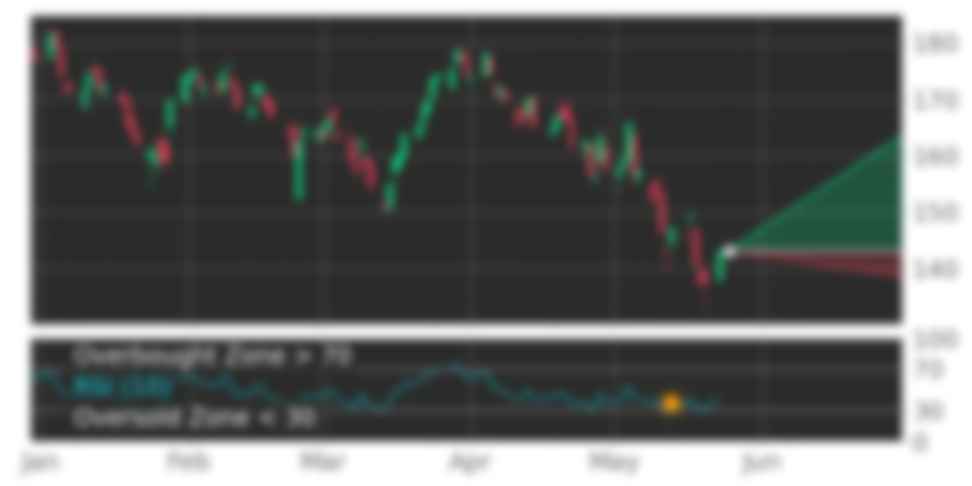
The 10-day RSI Indicator for UNFI moved out of overbought territory on June 08, 2026. This could be a bearish sign for the stock. Traders may want to consider selling the stock or buying put options. Tickeron's A.I.dvisor looked at 40 similar instances where the indicator moved out of overbought territory. In of the 40 cases, the stock moved lower in the following days. This puts the odds of a move lower at .
The Stochastic Oscillator demonstrated that the ticker has stayed in the overbought zone for 6 days. The longer the ticker stays in the overbought zone, the sooner a price pull-back is expected.
Following a 3-day decline, the stock is projected to fall further. Considering past instances where UNFI declined for three days, the price rose further in of 62 cases within the following month. The odds of a continued downward trend are .
UNFI broke above its upper Bollinger Band on June 05, 2026. This could be a sign that the stock is set to drop as the stock moves back below the upper band and toward the middle band. You may want to consider selling the stock or exploring put options.
The Tickeron PE Growth Rating for this company is (best 1 - 100 worst), pointing to outstanding earnings growth. The PE Growth rating is based on a comparative analysis of stock PE ratio increase over the last 12 months compared against S&P 500 index constituents.
The Tickeron Price Growth Rating for this company is (best 1 - 100 worst), indicating steady price growth. UNFI’s price grows at a higher rate over the last 12 months as compared to S&P 500 index constituents.
The Tickeron Valuation Rating of (best 1 - 100 worst) indicates that the company is fair valued in the industry. This rating compares market capitalization estimated by our proprietary formula with the current market capitalization. This rating is based on the following metrics, as compared to industry averages: P/B Ratio (2.023) is normal, around the industry mean (3.356). P/E Ratio (0.000) is within average values for comparable stocks, (36.873). UNFI's Projected Growth (PEG Ratio) (0.000) is slightly lower than the industry average of (2.863). UNFI's Dividend Yield (0.000) is considerably lower than the industry average of (0.022). P/S Ratio (0.101) is also within normal values, averaging (0.487).
The Tickeron Profit vs. Risk Rating rating for this company is (best 1 - 100 worst), indicating that the returns do not compensate for the risks. UNFI’s unstable profits reported over time resulted in significant Drawdowns within these last five years. A stable profit reduces stock drawdown and volatility. The average Profit vs. Risk Rating rating for the industry is 68, placing this stock worse than average.
The Tickeron SMR rating for this company is (best 1 - 100 worst), indicating weak sales and an unprofitable business model. SMR (Sales, Margin, Return on Equity) rating is based on comparative analysis of weighted Sales, Income Margin and Return on Equity values compared against S&P 500 index constituents. The weighted SMR value is a proprietary formula developed by Tickeron and represents an overall profitability measure for a stock.
The average fundamental analysis ratings, where 1 is best and 100 is worst, are as follows
a distributer of natural foods and related products
Industry FoodDistributors