 GET DAILY SIGNALS
Defiance Retail Kings ETF (RKNG) Navigates -25% Quarterly Pullback in High-Volatility Setup
Key Takeaways
- RKNG is an actively managed, non-diversified thematic ETF that targets U.S.-listed "Retail Kings" — companies with elevated retail investor participation, digital engagement, and price momentum.
- The portfolio remains concentrated with roughly 30–35 holdings and a clear tilt toward technology, which accounts for about 54% of assets.
- Top positions include Moderna (MRNA), Datadog (DDOG), CrowdStrike (CRWD), Palantir Technologies (PLTR), and Advanced Micro Devices (AMD), alongside other high-volatility growth names.
- The fund carries a 0.79% expense ratio, a beta near 2.5, and holds a modest asset base in the single-digit millions.
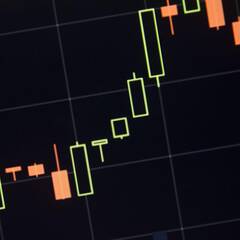
- Recent positioning has been volatile: the fund traded near $25–$26 in early October before moving toward the low-$18 area, reflecting a decline of roughly 10% over the trailing month and more than 25% over the trailing quarter.
- Key opportunities center on concentrated, leveraged exposure to fast-moving retail-favored equities, while primary risks include elevated volatility, single-stock and sector concentration, and relatively thin trading liquidity.
- For additional detail on this fund's valuation and outlook, visit the Price Targets and Forecast pages.
- To broaden your research, explore Trending AI Robots for additional market tools and ideas.
Defiance Retail Kings ETF (RKNG) at a Glance
The Defiance Retail Kings ETF aims for long-term capital appreciation by investing at least 80% of its net assets in equity securities, including ADRs, of "Retail Kings" companies. Rather than following a traditional index, the fund is actively managed and relies on proprietary digital analytics drawn from social media activity, online forum engagement, and other signals to identify U.S.-listed names where retail interest and price momentum stand materially above normal levels. I also checked this using Tickeron’s AI Screener to see how the stock compares to others in the industry.
Launched in January 2026, the fund is non-diversified and concentrated, holding roughly 30–35 securities at a time. Its sector mix is dominated by technology (approximately 54%), followed by industrials, financial services, and communication services. The largest positions include Moderna, Datadog, CrowdStrike, Palantir Technologies, Advanced Micro Devices, Twist Bioscience, Zeta Global, Oscar Health, Marvell Technology, and Snowflake, collectively representing roughly 40% of the portfolio. With a 0.79% expense ratio and a beta near 2.5, RKNG functions as a high-conviction, tactical satellite allocation rather than a diversified core holding.
Industry and Thematic Landscape
RKNG sits at the intersection of two powerful forces: the structural growth of self-directed investing and the dominance of technology-driven momentum in U.S. equities. The retail participation theme it captures has expanded alongside commission-free trading platforms, social-media-driven stock discovery, and algorithmically amplified sentiment. Because the fund weights names based on digital engagement and momentum, its holdings lean heavily toward high-beta growth, software, semiconductor, and speculative-biotech franchises that are especially sensitive to shifts in risk appetite.
The macroeconomic backdrop remains central to this strategy's behavior. Persistent questions around interest-rate policy, inflation, and the pace of economic growth directly influence how aggressively investors bid up long-duration, richly valued growth equities. When liquidity is ample and sentiment is constructive, retail-favored names can outperform sharply; when risk appetite contracts, the same concentration can amplify drawdowns on both the upside and downside. One thing that stands out is how these dynamics play out in concentrated portfolios like this one.
Performance and Positioning Snapshot
Over recent months, RKNG has reflected the two-sided nature of its mandate. The fund climbed into the mid-to-upper $20s in the middle of the year before giving back ground. In early October it still traded near $25–$26, but a pullback in several large technology and speculative holdings pushed the fund toward the low-$18 area, leaving it roughly 10% lower over the trailing 30 days and more than 25% below its mid-August levels.
The drawdown was not isolated to a single catalyst. Concentrated positions across software, semiconductors, and biotechnology moved together as risk appetite cooled, while the fund's high beta amplified broader market swings. Earnings-driven re-rating in individual holdings and periodic reversals in retail momentum also contributed, underscoring how single-stock concentration can dominate the fund's near-term path. The fund's comparatively low average daily volume adds a further consideration, since thinner liquidity can widen bid-ask spreads during volatile sessions. From what I see, monitoring these factors closely helps frame the risk-reward profile.
2026 Outlook and Key Factors to Monitor
Several structural factors are likely to shape RKNG through 2026. The trajectory of interest rates and inflation will remain pivotal, because the fund's growth-heavy portfolio is disproportionately sensitive to changes in the discount rate applied to future earnings. The earnings cycle of its largest technology holdings — particularly in software, semiconductors, and artificial-intelligence-related infrastructure — will be a primary driver, as will the pace of innovation and enterprise spending in those segments.
Retail participation trends and digital-engagement dynamics are equally important, given that the strategy rebalances as sentiment shifts. Policy and regulatory developments affecting self-directed trading, social-media investment discussion, and market structure could also influence the retail-momentum theme. Finally, investors should weigh competition from other thematic and active ETFs, the fund's small asset base, and its inherent concentration risk. These factors do not imply a directional forecast, but they represent the principal themes likely to influence RKNG's risk and return profile in the months ahead. I’m watching this closely as the environment evolves.
Exploring Tickeron’s AI Tools for ETF Analysis
In my own process, I often rely on Tickeron’s AI Screener to quickly compare high-beta names and thematic ETFs against broader sector trends. It helps surface relevant signals on momentum and volatility without requiring hours of manual work. This kind of platform fits well when evaluating concentrated strategies like RKNG, where timely comparisons across similar holdings can add useful context to the decision-making process.
Disclaimer
The information on this webpage is provided for general informational and educational purposes only and is not intended as investment advice, a recommendation to purchase or sell any security, or an offer or solicitation related to investments. It does not consider your personal financial situation, goals, or risk profile, and all investing carries inherent risks, including the possibility of losing your entire investment. For more details, please review our full disclaimer.
Notable companies
Market Cap
High and low price notable news
Volume
Fundamental Analysis Ratings
The average fundamental analysis ratings, where 1 is best and 100 is worst, are as follows

Advertisement
Advertisement