BGMS Stock Bio Green Med Solution (BGMS, $0.6) Aroon Indicator entered a Downtrend on November 23, 2026.
 GET DAILY SIGNALS
at Tickeron.com


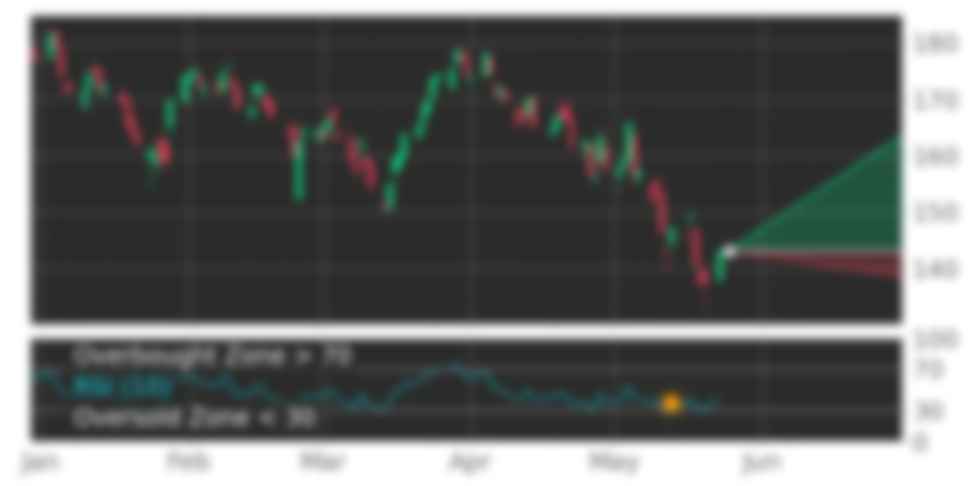
For the last three days, A.I.dvisor has detected that BGMS's AroonDown red line is above 70 while the AroonUp green line is below 30 for three straight days. This move could indicate a strong downtrend ahead for BGMS, and traders may view it as a Sell signal for the next month. Traders may consider selling the stock or exploring put options. A.I.dvisor backtested this indicator and found 271 similar cases, of which were successful. Based on this data, the odds of success are
Momentum Indicator for BGMS turns negative, indicating new downward trend
BGMS saw its Momentum Indicator move below the 0 level on October 29, 2026. This is an indication that the stock could be shifting in to a new downward move. Traders may want to consider selling the stock or exploring put options. Tickeron's A.I.dvisor looked at 81 similar instances where the indicator turned negative. In 80 of the 81 cases, the stock moved further down in the following days. The odds of a decline are at 90%.

Technical Analysis (Indicators)
Bearish Trend Analysis
The Moving Average Convergence Divergence Histogram (MACD) for BGMS turned negative on October 29, 2026. This could be a sign that the stock is set to turn lower in the coming weeks. Traders may want to sell the stock or buy put options. Tickeron's A.I.dvisor looked at 42 similar instances when the indicator turned negative. In 41 of the 42 cases the stock turned lower in the days that followed. This puts the odds of success at 90%.
BGMS moved below its 50-day moving average on October 29, 2026 date and that indicates a change from an upward trend to a downward trend.
The 10-day moving average for BGMS crossed bearishly below the 50-day moving average on November 05, 2026. This indicates that the trend has shifted lower and could be considered a sell signal. In 15 of 16 past instances when the 10-day crossed below the 50-day, the stock continued to move higher over the following month. The odds of a continued downward trend are 90%.
Following a 3-day decline, the stock is projected to fall further. Considering past instances where BGMS declined for three days, the price rose further in 50 of 62 cases within the following month. The odds of a continued downward trend are 90%.
The Aroon Indicator for BGMS entered a downward trend on November 23, 2026. This could indicate a strong downward move is ahead for the stock. Traders may want to consider selling the stock or buying put options.
Bullish Trend Analysis
The RSI Oscillator points to a transition from a downward trend to an upward trend -- in cases where BGMS's RSI Oscillator exited the oversold zone, 34 of 43 resulted in an increase in price. Tickeron's analysis proposes that the odds of a continued upward trend are 79%.
The Stochastic Oscillator shows that the ticker has stayed in the oversold zone for 5 days. The price of this ticker is presumed to bounce back soon, since the longer the ticker stays in the oversold zone, the more promptly an upward trend is expected.
Following a +0.91% 3-day Advance, the price is estimated to grow further. Considering data from situations where BGMS advanced for three days, in 182 of 208 cases, the price rose further within the following month. The odds of a continued upward trend are 88%.
BGMS may jump back above the lower band and head toward the middle band. Traders may consider buying the stock or exploring call options.
Fundamental Analysis (Ratings)
The Tickeron Valuation Rating of 24 (best 1 - 100 worst) indicates that the company is slightly undervalued in the industry. This rating compares market capitalization estimated by our proprietary formula with the current market capitalization. This rating is based on the following metrics, as compared to industry averages: P/B Ratio (0.779) is normal, around the industry mean (2.853). P/E Ratio (-0.088) is within average values for comparable stocks, (24.804). Projected Growth (PEG Ratio) (0.000) is also within normal values, averaging (1.215). Dividend Yield (0.000) settles around the average of (0.060) among similar stocks. P/S Ratio (2.410) is also within normal values, averaging (1.867).
The Tickeron Seasonality Score of 50 (best 1 - 100 worst) indicates that the company is fair valued in the industry. The Tickeron Seasonality score describes the variance of predictable price changes around the same period every calendar year. These changes can be tied to a specific month, quarter, holiday or vacation period, as well as a meteorological or growing season.
The Tickeron Price Growth Rating for this company is 87 (best 1 - 100 worst), indicating slightly worse than average price growth. BGMS’s price grows at a lower rate over the last 12 months as compared to S&P 500 index constituents.
The Tickeron PE Growth Rating for this company is 98 (best 1 - 100 worst), pointing to worse than average earnings growth. The PE Growth rating is based on a comparative analysis of stock PE ratio increase over the last 12 months compared against S&P 500 index constituents.
The Tickeron SMR rating for this company is 100 (best 1 - 100 worst), indicating weak sales and an unprofitable business model. SMR (Sales, Margin, Return on Equity) rating is based on comparative analysis of weighted Sales, Income Margin and Return on Equity values compared against S&P 500 index constituents. The weighted SMR value is a proprietary formula developed by Tickeron and represents an overall profitability measure for a stock.
The Tickeron Profit vs. Risk Rating rating for this company is 100 (best 1 - 100 worst), indicating that the returns do not compensate for the risks. BGMS’s unstable profits reported over time resulted in significant Drawdowns within these last five years. A stable profit reduces stock drawdown and volatility. The average Profit vs. Risk Rating rating for the industry is 77, placing this stock worse than average.