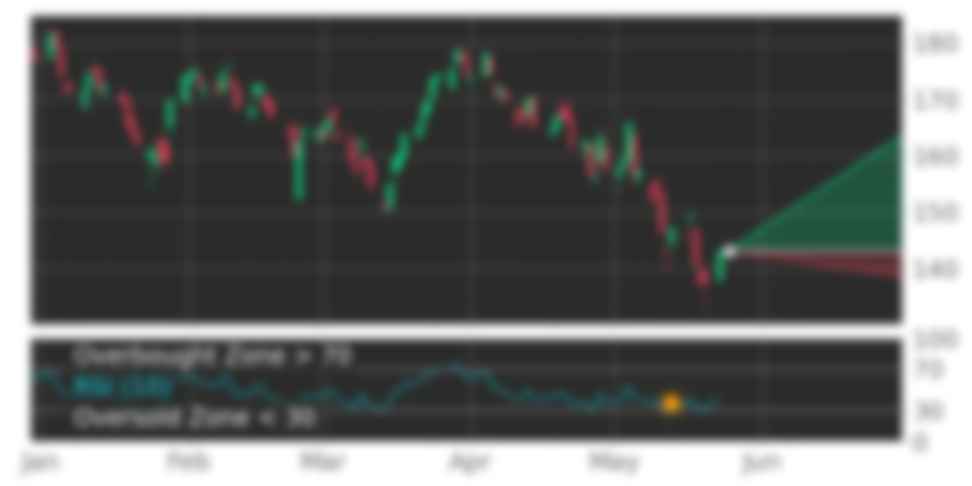
The United States Brent Oil Fund, LP (BNO), launched in June 2010 and managed by US Commodity Funds (USCF), is an exchange-traded commodity pool designed to track the daily percentage changes of front-month Brent crude oil futures contracts traded on the ICE Futures Europe exchange. When the near-month contract approaches expiration, the fund systematically rolls exposure into the next-month contract over a four-day period, maintaining continuous Brent crude price exposure.
BNO's portfolio is straightforward: approximately 50% of assets are allocated to the front-month Brent crude futures contract, with the remaining 50% held in cash, U.S. Treasury securities, and high-quality money market instruments that serve as collateral. The fund typically carries a net expense ratio of approximately 0.94% to 1.00%, which is higher than most equity ETFs but comparable to other commodity-focused products. As a limited partnership, BNO issues Schedule K-1 tax forms rather than the 1099 forms associated with conventional ETFs, an important structural distinction for taxable accounts. The fund does not pay dividends, and its AUM has fluctuated significantly, reflecting both price volatility and capital flows tied to oil market sentiment. To get a sense of how BNO compares to peers in the energy space, I also checked this using Tickeron’s AI Screener.
The global crude oil market in 2026 has been shaped by an extraordinary convergence of geopolitical crises. The U.S.-Iran conflict and the effective closure of the Strait of Hormuz—through which roughly 20 million barrels per day of crude and products normally transit—have created the most significant maritime chokepoint disruption in modern oil market history. Persian Gulf exports have oscillated between roughly 36% and 80% of pre-war levels depending on the status of diplomatic negotiations and military activity.
Compounding the Hormuz situation, Houthi attacks on Saudi tankers in the Red Sea have threatened the Bab el-Mandeb Strait, while disruptions to Russian crude exports from Black Sea terminals have added a third supply constraint. On the demand side, the IEA has reduced its 2026 global oil demand growth forecast to 1.1 million barrels per day, reflecting significant demand destruction concentrated in Asian petrochemical markets, where high prices curbed consumption. Chinese crude imports fell approximately 41% year-over-year in June as the country drew down stockpiles and cut refinery runs. OPEC+ production has partially recovered, with Saudi Arabia back above 70% of pre-war levels, but the outlook remains tightly linked to the trajectory of U.S.-Iran diplomacy.
BNO has experienced extreme volatility throughout 2026. After starting the year near $28 per share, the fund surged alongside Brent crude to reflect prices above $50 by May as the Strait of Hormuz crisis escalated. Brent briefly touched $138 per barrel in early April. In recent weeks, BNO has oscillated between the high $30s and mid-$50s, mirroring rapid shifts between geopolitical escalation and diplomatic breakthroughs. The late-June temporary reopening of the Strait of Hormuz triggered a sharp selloff, while the subsequent collapse of the ceasefire and renewed hostilities in July propelled Brent back above $100. Most recently, reports of an Iran-Oman agreement on shipping arrangements and signals of progress in U.S.-Iran talks have once again eased the risk premium, sending Brent below $80 and BNO into the mid-$40s.
This price action underscores BNO's defining characteristic: it is an instrument for expressing short-term, tactical views on Brent crude rather than a long-term buy-and-hold vehicle. The fund's daily dollar volumes frequently exceed 20% of total AUM, indicating heavy turnover by active traders and institutional hedgers. The futures curve is currently oscillating between contango and backwardation, making the monthly roll a meaningful variable for multi-week holding periods. In backwardation—when near-month contracts trade above deferred contracts—the roll adds positive yield; in contango, the roll creates a structural drag that can erode returns even if spot prices remain stable. One thing that stands out here is how quickly sentiment can shift these contracts.
The most consequential variable for BNO over the remainder of 2026 is the trajectory of U.S.-Iran negotiations and the status of the Strait of Hormuz. A durable diplomatic resolution that restores Persian Gulf crude flows toward pre-war levels would likely remove a substantial risk premium, potentially pushing Brent toward the $70-per-barrel range that several major banks forecast for the fourth quarter. Conversely, a breakdown of talks followed by military escalation could quickly tighten physical markets, with Goldman Sachs' worst-case scenario projecting Brent at $120 per barrel in Q4.
Beyond geopolitics, several structural factors merit attention. OECD commercial inventories are projected to approach 20-year lows by late 2026, reducing the buffer available to absorb further supply disruptions. Chinese crude demand recovery—or lack thereof—represents the single largest demand-side variable, as the country's refiners have yet to meaningfully rebuild stockpiles after running them down during the conflict. OPEC+ production strategy will also influence the supply-demand balance, particularly as Middle Eastern producers restore output. Finally, investors should monitor the shape of the Brent futures curve: a shift from backwardation to contango would transform the monthly roll from a tailwind into a headwind for BNO's returns, a structural dynamic that has historically penalized long-term holders of futures-based commodity funds. I’m watching this closely as the curve dynamics could influence holding periods.
In my analysis of volatile commodity themes like energy this year, I often turn to Tickeron’s AI Screener to quickly filter opportunities across oil-exposed equities, sector ETFs, and broader commodity plays. The platform helps scan technical indicators, fundamentals, volatility, and AI signals in one place, which complements traditional research when headlines move markets rapidly. It has become a practical part of my workflow for spotting patterns without manual screening of thousands of names.
The information on this webpage is provided for general informational and educational purposes only and is not intended as investment advice, a recommendation to purchase or sell any security, or an offer or solicitation related to investments. It does not consider your personal financial situation, goals, or risk profile, and all investing carries inherent risks, including the possibility of losing your entire investment. For more details, please review our full disclaimer.
My name is Jimmy, and I’m a financial analyst. I’m passionate about identifying the most promising ETFs for trading. Every day, I review hundreds of ETFs in search of trading and investment signals based on a variety of factors. I actively use technical analysis to identify short-term opportunities, including channels, indicators, support and resistance levels, and more. I also spend a great deal of time researching ETFs from a long-term investment perspective. My goal is to build a balanced ETF portfolio that combines investment-oriented and speculative ETFs and performs effectively during both market rallies and corrections.
The 10-day moving average for BNO crossed bullishly above the 50-day moving average on July 24, 2026. This indicates that the trend has shifted higher and could be considered a buy signal. In of 17 past instances when the 10-day crossed above the 50-day, the stock continued to move higher over the following month. The odds of a continued upward trend are .
The Momentum Indicator moved above the 0 level on August 10, 2026. You may want to consider a long position or call options on BNO as a result. In of 93 past instances where the momentum indicator moved above 0, the stock continued to climb. The odds of a continued upward trend are .
The Moving Average Convergence Divergence (MACD) for BNO just turned positive on August 11, 2026. Looking at past instances where BNO's MACD turned positive, the stock continued to rise in of 53 cases over the following month. The odds of a continued upward trend are .
BNO moved above its 50-day moving average on August 06, 2026 date and that indicates a change from a downward trend to an upward trend.
Following a 3-day Advance, the price is estimated to grow further. Considering data from situations where BNO advanced for three days, in of 327 cases, the price rose further within the following month. The odds of a continued upward trend are .
The Aroon Indicator entered an Uptrend today. In of 266 cases where BNO Aroon's Indicator entered an Uptrend, the price rose further within the following month. The odds of a continued Uptrend are .
The 10-day RSI Indicator for BNO moved out of overbought territory on July 27, 2026. This could be a bearish sign for the stock. Traders may want to consider selling the stock or buying put options. Tickeron's A.I.dvisor looked at 40 similar instances where the indicator moved out of overbought territory. In of the 40 cases, the stock moved lower in the following days. This puts the odds of a move lower at .
The Stochastic Oscillator entered the overbought zone. Expect a price pull-back in the foreseeable future.
Following a 3-day decline, the stock is projected to fall further. Considering past instances where BNO declined for three days, the price rose further in of 62 cases within the following month. The odds of a continued downward trend are .
BNO broke above its upper Bollinger Band on July 13, 2026. This could be a sign that the stock is set to drop as the stock moves back below the upper band and toward the middle band. You may want to consider selling the stock or exploring put options.
Category CommoditiesBroadBasket