Key Takeaways
- QQQJ tracks the NASDAQ Next Generation 100 Index, which holds roughly 100 non-financial Nasdaq-listed companies that are next in line for potential inclusion in the NASDAQ-100.
- The fund closed near $43.94 on October 30, 2026, down about 1.1% from the roughly $44.45 level recorded a month earlier, a modest move well below the 10% threshold.
- QQQJ holds approximately $1.2 billion in assets, charges a 0.15% expense ratio, and is heavily weighted toward technology (around 35%) and healthcare (around 25%).
- The fund is up roughly 19% to 20% year to date, with a 52-week range of about $34.39 to $46.94, reflecting a broader mid-cap growth recovery.
- Because QQQJ spans more than 100 positions, no single stock dominates returns; sector rotation, rate expectations, and semiconductor and biotech sentiment are the primary drivers.
- For deeper detail, explore Price Targets, Earnings, and Forecast pages dedicated to QQQJ.
- To see how automated strategies are positioning across the market, visit Trending AI Robots.
Current Market Snapshot
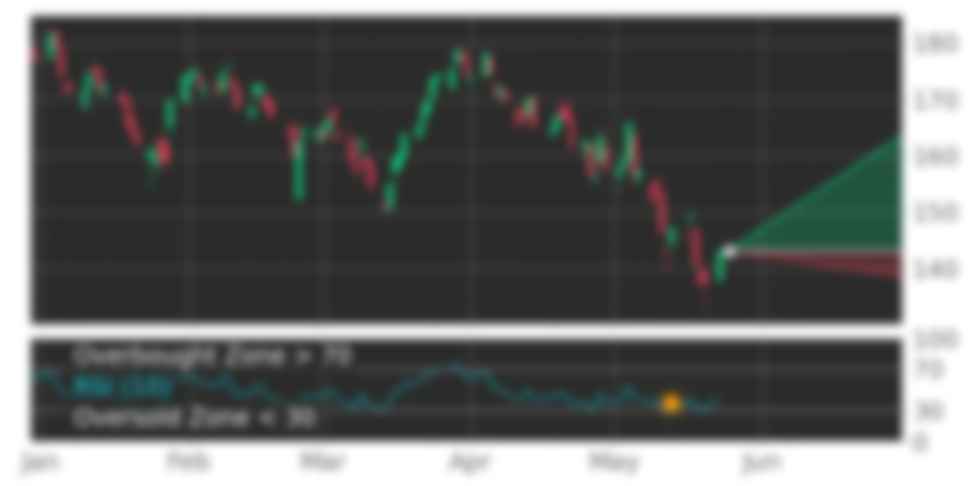
QQQJ has traded in a relatively narrow band in recent weeks, holding near the middle of its longer-term range. After reaching a 52-week high around $46.94, the fund pulled back modestly alongside a risk-off tone in technology and semiconductor names. The latest session close of roughly $43.94 leaves the ETF about 6% below its peak while still comfortably above its 52-week low near $34.39.
Sentiment across QQQJ's underlying basket has been mixed. Strength in select software, enterprise technology, and biotech names has been partly offset by weakness in semiconductor and hardware positions, keeping the fund's overall price action contained. With a beta near 1.1, QQQJ tends to move slightly more than the broader market, making it sensitive to shifts in growth-stock appetite and interest-rate expectations.
Invesco NASDAQ Next Gen 100 ETF (QQQJ) Business Overview and Competitive Position
The Invesco NASDAQ Next Gen 100 ETF is an exchange-traded fund that provides diversified exposure to the "next 100" largest non-financial companies listed on the Nasdaq exchange. The fund seeks to capture companies that have grown beyond the small-cap stage but have not yet reached the size required for inclusion in the NASDAQ-100 Index. Launched in October 2020, QQQJ offers investors a cost-efficient way to access a broad swath of mid-to-large-cap growth businesses.
The fund's sector mix is its defining characteristic. Technology accounts for roughly a third of assets, followed by healthcare at about a quarter, with consumer cyclical and industrials rounding out the largest allocations. Top holdings have recently included Natera (NTRA), eBay (EBAY), NetApp (NTAP), and Illumina (ILMN), among others. This diversification limits single-stock concentration while still giving the fund a growth-oriented tilt that investors follow closely as a complement to large-cap technology benchmarks.
Recent Developments Driving QQQJ
QQQJ's recent performance has been shaped more by broad market forces than by any single corporate event. During the week ending October 23, 2026, the fund advanced roughly 1.5%, lifted by notable gains in software and healthcare names such as Okta (OKTA), Atlassian (TEAM), and Biogen (BIIB), while a decline in Flex (FLEX) partially offset those moves.
On the macro front, hotter-than-expected inflation data and elevated Treasury yields pressured rate-sensitive growth and semiconductor holdings at points during the month. Concerns around artificial intelligence and chip-sector valuations contributed to intermittent selling, while resilience in select biotech and enterprise-software positions helped cushion the fund. Because QQQJ spreads exposure across more than 100 companies, these cross-currents have produced a roughly flat to slightly lower trailing-month result rather than a sharp directional move.
Trending AI Robots
Tickeron's Trending AI Robots page showcases a curated selection of automated trading bots drawn from a much larger universe of strategies. While Tickeron offers hundreds of AI-driven bots that collectively trade thousands of tickers, only the top-performing and most relevant strategies appear in this featured section. The bots vary widely in approach, holding timeframe, and performance metrics, allowing users to compare systems that suit different risk tolerances and trading styles. For investors seeking a data-driven perspective on how algorithmic strategies are approaching the market, the page serves as a useful starting point for further research.
2026 Outlook and What Investors Should Watch
Looking ahead, several factors are likely to shape QQQJ's performance through the remainder of 2026. Interest-rate policy remains a central theme, as growth-oriented and semiconductor holdings are particularly sensitive to shifts in rate expectations. Inflation readings and Federal Reserve communications will continue to influence sentiment across the fund's technology and healthcare exposure.
Within the portfolio, investors should monitor earnings cycles among key constituents, particularly in semiconductors, enterprise software, and biotechnology, where single-quarter results can move the basket. Developments in artificial intelligence infrastructure and chip demand also carry outsized influence given the fund's technology weighting. Finally, any changes to the underlying index's composition as companies graduate into or fall out of the next-100 universe could subtly reshape QQQJ's sector and style profile over time.
Disclaimer
The information on this webpage is provided for general informational and educational purposes only and is not intended as investment advice, a recommendation to purchase or sell any security, or an offer or solicitation related to investments. It does not consider your personal financial situation, goals, or risk profile, and all investing carries inherent risks, including the possibility of losing your entire investment. For more details, please review our full disclaimer.
Disclaimers and Limitations
 GET DAILY SIGNALS