a holding company, which through its subsidiary provides wireless messaging, mobile voice and data and unified communications solutions
Industry ServicestotheHealthIndustry
This is a Bullish indicator signaling SPOK's price could rise from here. Traders may explore going long the stock or buying call options. A.I. dvisor identified 47 similar cases where SPOK's MACD histogram became positive, and of them led to successful outcomes. Odds of Success:
The 10-day moving average for SPOK crossed bullishly above the 50-day moving average on October 30, 2026. This indicates that the trend has shifted higher and could be considered a buy signal. In 12 of 16 past instances when the 10-day crossed above the 50-day, the stock continued to move higher over the following month. The odds of a continued upward trend are 75%.
The Stochastic Oscillator suggests the stock price trend may be in a reversal from a downward trend to an upward trend. 39 of 57 cases where SPOK's Stochastic Oscillator exited the oversold zone resulted in an increase in price. Tickeron's analysis proposes that the odds of a continued upward trend are 68%.
The 50-day moving average for SPOK moved above the 200-day moving average on November 09, 2026. This could be a long-term bullish signal for the stock as the stock shifts to an upward trend.
Following a +2.23% 3-day Advance, the price is estimated to grow further. Considering data from situations where SPOK advanced for three days, in 188 of 290 cases, the price rose further within the following month. The odds of a continued upward trend are 65%.
SPOK may jump back above the lower band and head toward the middle band. Traders may consider buying the stock or exploring call options.
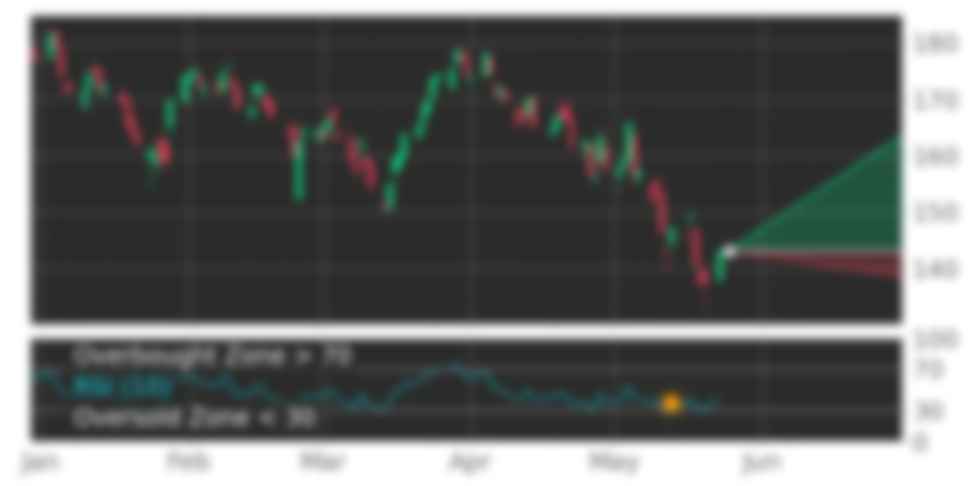
The 10-day RSI Indicator for SPOK moved out of overbought territory on November 05, 2026. This could be a bearish sign for the stock. Traders may want to consider selling the stock or buying put options. Tickeron's A.I.dvisor looked at 29 similar instances where the indicator moved out of overbought territory. In 16 of the 29 cases, the stock moved lower in the following days. This puts the odds of a move lower at 55%.
The Momentum Indicator moved below the 0 level on November 12, 2026. You may want to consider selling the stock, shorting the stock, or exploring put options on SPOK as a result. In 48 of 103 cases where the Momentum Indicator fell below 0, the stock fell further within the subsequent month. The odds of a continued downward trend are 47%.
The Moving Average Convergence Divergence Histogram (MACD) for SPOK turned negative on November 17, 2026. This could be a sign that the stock is set to turn lower in the coming weeks. Traders may want to sell the stock or buy put options. Tickeron's A.I.dvisor looked at 48 similar instances when the indicator turned negative. In 21 of the 48 cases the stock turned lower in the days that followed. This puts the odds of success at 44%.
SPOK moved below its 50-day moving average on November 25, 2026 date and that indicates a change from an upward trend to a downward trend.
Following a 3-day decline, the stock is projected to fall further. Considering past instances where SPOK declined for three days, the price rose further in 50 of 62 cases within the following month. The odds of a continued downward trend are 51%.
The Tickeron Valuation Rating of 8 (best 1 - 100 worst) indicates that the company is seriously undervalued in the industry. This rating compares market capitalization estimated by our proprietary formula with the current market capitalization. This rating is based on the following metrics, as compared to industry averages: P/B Ratio (1.585) is normal, around the industry mean (3.904). P/E Ratio (18.276) is within average values for comparable stocks, (12.877). Projected Growth (PEG Ratio) (0.360) is also within normal values, averaging (1.536). SPOK's Dividend Yield (0.118) is considerably higher than the industry average of (0.014). P/S Ratio (1.671) is also within normal values, averaging (6.105).
The Tickeron PE Growth Rating for this company is 30 (best 1 - 100 worst), pointing to outstanding earnings growth. The PE Growth rating is based on a comparative analysis of stock PE ratio increase over the last 12 months compared against S&P 500 index constituents.
The Tickeron Price Growth Rating for this company is 42 (best 1 - 100 worst), indicating steady price growth. SPOK’s price grows at a higher rate over the last 12 months as compared to S&P 500 index constituents.
The Tickeron Profit vs. Risk Rating rating for this company is 53 (best 1 - 100 worst), indicating well-balanced risk and returns. The average Profit vs. Risk Rating rating for the industry is 97, placing this stock slightly better than average.
The Tickeron SMR rating for this company is 76 (best 1 - 100 worst), indicating slightly better than average sales and a considerably profitable business model. SMR (Sales, Margin, Return on Equity) rating is based on comparative analysis of weighted Sales, Income Margin and Return on Equity values compared against S&P 500 index constituents. The weighted SMR value is a proprietary formula developed by Tickeron and represents an overall profitability measure for a stock.
Spok Holdings trades on the NASDAQ Global Select Market with a market capitalization in the low-to-mid $200 million range. The stock has been relatively range-bound in recent months, with periodic spikes tied to earnings and corporate announcements. Over the trailing 30 days, the share price advanced approximately 3.5%, a comparatively muted move that reflects the stock's profile as a stable, high-yield small-cap rather than a high-beta momentum name.
Investor sentiment is shaped by two competing narratives. On one side, the company's robust free-cash-flow generation, debt-free balance sheet, and outsized dividend yield attract income-oriented investors. On the other, the structural erosion of its legacy wireless paging business and lumpy software bookings create uncertainty around long-term revenue growth. That tension has kept the stock in a comparatively tight trading band despite meaningful underlying business developments.
Spok Holdings, through its subsidiary Spok, Inc., is a provider of healthcare communication solutions operating primarily in the United States, with additional reach in Europe, Canada, Australia, Asia, and the Middle East. Formerly known as USA Mobility, the company adopted the Spok name in 2014 following its integration with Amcom Software. Its Spok Care Connect platform supports contact centers, clinical alerting and notification, secure mobile messaging, and public safety communications.
The business is organized around two revenue streams. Wireless revenue derives from paging services and related equipment, including the GenA one-way alphanumeric pager, where Spok operates the largest paging network in the U.S. Software revenue comes from license sales, subscriptions, maintenance, and a fast-growing managed professional services segment. The company's customer base includes many of the top-ranked U.S. hospitals, with long-tenured relationships spanning more than two decades.
Spok's competitive strengths include its entrenched position in mission-critical clinical messaging, high customer retention, recurring revenue, and a debt-free balance sheet. Its primary challenge is the long-term decline of paging as hospitals migrate toward broadband and mobile technologies, which management is attempting to offset through pricing actions, cost rationalization, and software growth.
The most significant event of the trailing 30 days was the release of third-quarter 2026 results in late October, which drove a sharp single-day rally on unusually heavy volume. The company reported GAAP net income of $9.7 million, or $0.46 per diluted share, and adjusted EBITDA of $8.6 million, up nearly 30% year over year. Results were boosted by a one-time gain on the sale of narrowband spectrum licenses and by expense reductions from an April 2026 strategic realignment that included a workforce reduction of roughly 10%.
Software revenue was essentially flat year over year at approximately $16 million, though license revenue rose nearly 30% and managed professional services revenue increased more than 30%. Wireless trends improved on a sequential basis, with average revenue per unit continuing to rise. Management reiterated full-year guidance and emphasized that software bookings remain lumpy, with longer decision cycles and a preference for shorter-term agreements among hospital customers.
The company also posted an updated investor presentation highlighting its strategy of running the business profitably, maximizing free cash flow, and returning capital to shareholders. The most recent published analyst view is a Hold rating with a $14.00 price target, according to available data.
For investors seeking a systematic, data-driven approach to the market, Tickeron's Trending AI Robots page offers a curated view of algorithmic trading strategies. Tickeron hosts hundreds of AI trading bots that monitor thousands of tickers, yet only the top-performing and most relevant bots are surfaced in this section. Each bot differs in its underlying strategy, holding timeframe, and performance metrics, allowing users to filter by the approach that best fits their objectives. The page provides a convenient starting point for those interested in supplementing traditional analysis with automated, rules-based signals. Exploring the available bots can help traders evaluate how AI-driven tools approach the same markets they already follow.
Looking ahead, the key variables for Spok are the pace of wireless attrition, the trajectory of software bookings, and the sustainability of its dividend. Management expects wireless units and revenue to continue declining, offset in part by ARPU growth and further network rationalization. Software growth hinges on converting a growing sales pipeline and multi-year managed-service agreements into recognized revenue, a process complicated by elongated hospital decision cycles.
Investors should also monitor capital allocation, given the company's commitment to a $0.3125 quarterly dividend and its stated goal of returning cash to stockholders. The balance sheet's debt-free position and cash generation provide flexibility, but the dividend payout relative to net income remains elevated. Regulatory developments affecting spectrum use, hospital IT budgets, and competitive pressures from larger software vendors are additional factors worth tracking. None of these observations constitute a forecast of share-price performance.
The information on this webpage is provided for general informational and educational purposes only and is not intended as investment advice, a recommendation to purchase or sell any security, or an offer or solicitation related to investments. It does not consider your personal financial situation, goals, or risk profile, and all investing carries inherent risks, including the possibility of losing your entire investment. For more details, please review our full disclaimer.