a savings bank
Industry RegionalBanks
This is a signal that TSBK's price could be shifting from an uptrend to a downtrend. Traders may consider selling the stock or exploring put options. A.I.dvisor looked back and found 40 similar cases where TSBK's RSI Indicator left the overbought zone, and in of them led to a successful outcome. Odds of Success:
Moving lower for three straight days is viewed as a bearish sign. Keep an eye on this stock for future declines. Considering data from situations where TSBK declined for three days, in 142 of 266 cases, the price declined further within the following month. The odds of a continued downward trend are 53%.
The Momentum Indicator moved below the 0 level on November 17, 2026. You may want to consider selling the stock, shorting the stock, or exploring put options on TSBK as a result. In 36 of 82 cases where the Momentum Indicator fell below 0, the stock fell further within the subsequent month. The odds of a continued downward trend are 44%.
The Moving Average Convergence Divergence Histogram (MACD) for TSBK turned negative on November 17, 2026. This could be a sign that the stock is set to turn lower in the coming weeks. Traders may want to sell the stock or buy put options. Tickeron's A.I.dvisor looked at 44 similar instances when the indicator turned negative. In 19 of the 44 cases the stock turned lower in the days that followed. This puts the odds of success at 43%.
TSBK moved below its 50-day moving average on November 19, 2026 date and that indicates a change from an upward trend to a downward trend.
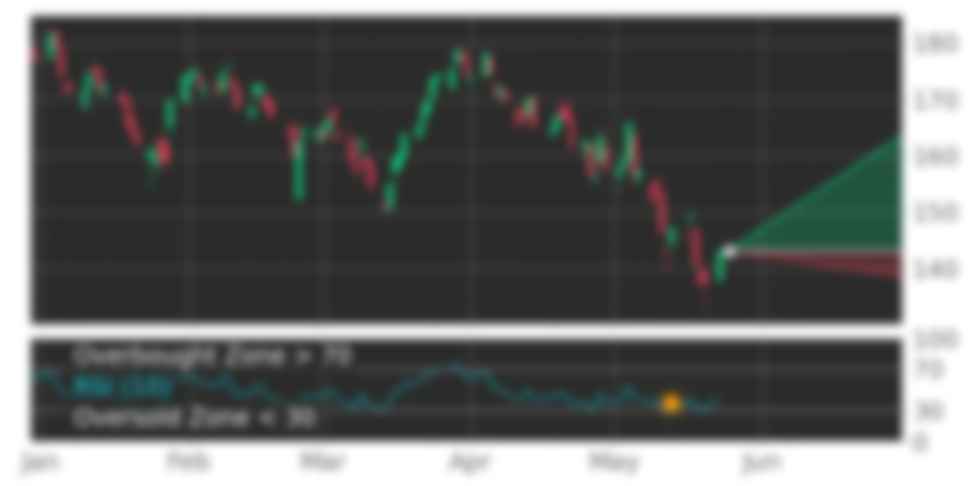
The RSI Indicator entered the oversold zone -- be on the watch for TSBK's price rising or consolidating in the future. That's also the time to consider buying the stock or exploring call options.
The Stochastic Oscillator demonstrated that the ticker has stayed in the oversold zone for 1 day, which means it's wise to expect a price bounce in the near future.
The 10-day moving average for TSBK crossed bullishly above the 50-day moving average on October 26, 2026. This indicates that the trend has shifted higher and could be considered a buy signal. In 9 of 15 past instances when the 10-day crossed above the 50-day, the stock continued to move higher over the following month. The odds of a continued upward trend are 60%.
Following a +0.85% 3-day Advance, the price is estimated to grow further. Considering data from situations where TSBK advanced for three days, in 184 of 311 cases, the price rose further within the following month. The odds of a continued upward trend are 59%.
TSBK may jump back above the lower band and head toward the middle band. Traders may consider buying the stock or exploring call options.
The Aroon Indicator entered an Uptrend today. In 187 of 302 cases where TSBK Aroon's Indicator entered an Uptrend, the price rose further within the following month. The odds of a continued Uptrend are 62%.
The Tickeron PE Growth Rating for this company is 15 (best 1 - 100 worst), pointing to outstanding earnings growth. The PE Growth rating is based on a comparative analysis of stock PE ratio increase over the last 12 months compared against S&P 500 index constituents.
The Tickeron Profit vs. Risk Rating rating for this company is 17 (best 1 - 100 worst), indicating low risk on high returns. The average Profit vs. Risk Rating rating for the industry is 59, placing this stock better than average.
The Tickeron Price Growth Rating for this company is 42 (best 1 - 100 worst), indicating steady price growth. TSBK’s price grows at a higher rate over the last 12 months as compared to S&P 500 index constituents.
The Tickeron SMR rating for this company is 46 (best 1 - 100 worst), indicating slightly weaker than average sales and a marginally profitable business model. SMR (Sales, Margin, Return on Equity) rating is based on comparative analysis of weighted Sales, Income Margin and Return on Equity values compared against S&P 500 index constituents. The weighted SMR value is a proprietary formula developed by Tickeron and represents an overall profitability measure for a stock.
The Tickeron Valuation Rating of 73 (best 1 - 100 worst) indicates that the company is slightly overvalued in the industry. This rating compares market capitalization estimated by our proprietary formula with the current market capitalization. This rating is based on the following metrics, as compared to industry averages: P/B Ratio (1.365) is normal, around the industry mean (1.265). P/E Ratio (11.960) is within average values for comparable stocks, (13.523). Projected Growth (PEG Ratio) (0.560) is also within normal values, averaging (1.194). Dividend Yield (0.026) settles around the average of (0.036) among similar stocks. P/S Ratio (4.405) is also within normal values, averaging (3.751).
Timberland Bancorp, Inc. (NASDAQ: TSBK) has been consolidating after a sustained run earlier in the cycle. The stock changed hands near $45.74 in recent intraday trading, marking little net change over the trailing 30 days when compared with a close near $45.91 in mid-September. That modest pullback of less than 1% reflects a period of sideways digestion rather than any meaningful shift in the company's underlying outlook. Looking back about three months, the shares have advanced from the low-$40s, a gain of roughly 4–5%, even as intraday activity briefly pushed above $47 in September before settling back.
Within the regional and community-banking segment, TSBK continues to trade at a valuation that is in line with or modestly above tangible book value, with a market capitalization in the neighborhood of $350 million. The stock's beta of roughly 0.44 underscores its relatively low volatility compared with the broader market, a characteristic consistent with its community-bank profile and stable deposit base.
Timberland Bancorp is the holding company for Timberland Bank, a community-oriented financial institution founded in 1915 and headquartered in Hoquiam, Washington. The bank serves consumers and businesses across six western Washington counties—Grays Harbor, Thurston, Pierce, King, Kitsap, and Lewis—through roughly two dozen branches. Its lending activity is concentrated in real estate-secured credit, including one-to-four-family residential, multi-family, commercial real estate, and construction loans, supplemented by commercial business and consumer lending.
The franchise distinguishes itself through a relationship-based community-banking model, disciplined credit underwriting, and an emphasis on core deposits. As of its most recent reporting period, Timberland reported total assets of approximately $2.06 billion, net loans receivable of about $1.50 billion, and total deposits of roughly $1.76 billion. Its profitability is anchored in a comparatively strong net interest margin of about 3.85% and a solid capital position, with a total risk-based capital ratio above 20% and book value per share near $35.
Timberland's most recent quarterly report, covering the fiscal third quarter ended June 30, 2026, highlighted steady execution. Net income reached $7.72 million, or $0.98 per diluted share, an increase of roughly 9% from the same period a year earlier, while the net interest margin expanded to 3.85%. Management pointed to solid loan growth, a "relatively clean" earnings quarter, and improving income-related ratios, including a return on average assets of 1.51% and a return on average equity of 11.42%.
Consistent with that performance, the board raised the quarterly cash dividend by 3% to $0.30 per share, marking the 55th consecutive quarter of dividend payments. The company also continued returning capital through share repurchases, buying back 70,000 shares for approximately $2.83 million during the quarter. On the credit side, non-performing assets remained modest at 0.43% of total assets, and liquidity stayed robust, with limited borrowings and substantial secured borrowing capacity.
Analyst and market activity has been measured. Zacks Investment Research initiated coverage with a Neutral recommendation, citing Timberland's earnings consistency and strong capital while flagging rising credit costs and funding pressures. Recent insider activity has leaned toward selling rather than buying, and institutional holdings have shifted without indicating a decisive directional consensus—consistent with a stock that has largely traded sideways in recent weeks.
For traders seeking a systematic approach to stock selection, Tickeron's Trending AI Robots page offers a curated view of the platform's most relevant automated trading strategies. Tickeron hosts hundreds of AI-powered trading bots that collectively monitor thousands of tickers, but only the top-performing and most relevant bots are surfaced in this section. These bots vary widely in strategy, holding timeframe, and performance metrics, allowing users to evaluate approaches ranging from short-term momentum to longer-horizon positioning. Exploring the curated list can help investors discover automated strategies aligned with their own objectives.
Heading into the remainder of fiscal 2026, the key variables for Timberland revolve around the interest-rate environment and net interest margin stability. Management has emphasized disciplined deposit pricing and funding mix as priorities for defending the margin against a shifting rate backdrop. Loan demand across commercial real estate and construction categories has remained healthy, and continued growth in those higher-yielding segments would support revenue, while any slowdown could weigh on results.
Credit quality is another area to monitor. Although non-performing assets remain low in absolute terms, they have risen from prior-year levels, and any further deterioration—particularly within commercial real estate—could pressure provision expense and earnings. Investors should also track deposit-cost trends, given the industry-wide migration toward higher-cost interest-bearing products. Finally, capital deployment will remain a watch item, as Timberland's combination of a rising dividend, ongoing share repurchases, and strong capital ratios gives management flexibility to continue rewarding shareholders or to pursue expansion within its Washington footprint.
The information on this webpage is provided for general informational and educational purposes only and is not intended as investment advice, a recommendation to purchase or sell any security, or an offer or solicitation related to investments. It does not consider your personal financial situation, goals, or risk profile, and all investing carries inherent risks, including the possibility of losing your entire investment. For more details, please review our full disclaimer.