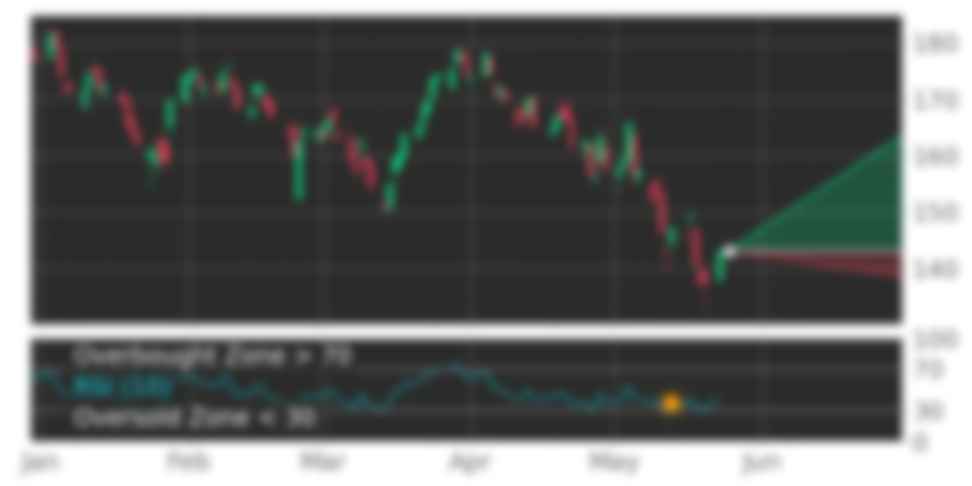
The First Trust Cloud Computing ETF (SKYY) is a passively managed thematic equity fund that seeks to track the ISE CTA Cloud Computing Index. Launched in July 2011 and managed by First Trust Advisors, the ETF invests at least 90% of its net assets in common stocks and depositary receipts that comprise the underlying index. The index is designed to capture the performance of companies actively involved in the cloud computing industry, spanning infrastructure-as-a-service (IaaS), platform-as-a-service (PaaS), and software-as-a-service (SaaS) categories.
SKYY holds approximately 64 securities with total net assets of roughly $2.8 billion and carries a net expense ratio of 0.60%. The fund employs a modified equal-weighted methodology with individual positions capped at 4.5%, which prevents any single holding from dominating portfolio returns. As of mid-2026, the portfolio's largest positions include Arista Networks (ANET) at around 4.3%, Nutanix (NTNX) at approximately 3.9%, International Business Machines (IBM) near 3.9%, Alphabet (GOOGL) at roughly 3.6%, Everpure (P) at about 3.7%, Amazon.com (AMZN) near 3.4%, MongoDB (MDB) at approximately 3.4%, and Microsoft (MSFT) around 3.2%. Sector allocation is overwhelmingly tilted toward technology at roughly 82% to 88%, with smaller exposures to communication services and consumer cyclical names. The portfolio's industry composition reflects the layered nature of cloud computing, with software representing approximately 52% of assets, IT services around 22%, and technology hardware at roughly 10%.
Cloud computing remains one of the defining investment themes of the decade, driven by enterprise digital transformation, the proliferation of artificial intelligence workloads, and explosive growth in data generation. Hyperscale cloud providers, including Amazon Web Services, Microsoft Azure, Google Cloud, and Meta, have collectively committed to annual capital expenditure exceeding $700 billion, an approximately 80% increase from prior-year levels. This spending fuels demand across the entire cloud supply chain, from networking equipment and data center infrastructure to software platforms and cybersecurity solutions.
However, the investment landscape has shifted meaningfully in 2026. A notable rotation out of semiconductor stocks and into cloud and software providers gained traction following signals that the rate of change in AI infrastructure spending may be approaching a near-term peak. The divergence between richly valued chipmakers and relatively underperforming cloud platforms has prompted institutional investors to reassess positioning. Additionally, the rapid advancement of AI agents is disrupting traditional SaaS business models built on per-seat pricing, pressuring valuations for companies that have not yet demonstrated a clear path to consumption-based revenue models. Against this backdrop, the broader macroeconomic environment is showing tentative improvement: headline CPI (Consumer Price Index) inflation eased to 3.5% year-over-year in June from 4.2% in May, while the Federal Reserve maintained its policy rate, reinforcing expectations that further tightening may be off the table.
Over the trailing 30-day period, SKYY has exhibited remarkably flat net performance despite substantial intra-period volatility. The ETF traded as high as $155.17 in early June before retreating sharply to the $126 to $129 range by mid-month, then recovering above $141 in early July, only to pull back again toward $129 by late July. This round-trip price action reflects the broader tug-of-war in technology markets between AI-driven enthusiasm and macro-driven caution.
Over the trailing quarter, SKYY posted a gain of just over 6%, advancing from approximately $122 in late April to the $130 area. The quarterly move was supported by strong earnings reports from several top holdings. Amazon reported a 17% year-over-year increase in net sales, with AWS revenue accelerating 28%. Microsoft continued to demonstrate resilient cloud growth, while Arista Networks benefited from sustained data center switching demand. However, gains were tempered by weakness in higher-multiple SaaS names, including Atlassian, HubSpot, and ServiceNow, which faced valuation compression amid the AI-driven pricing-model debate. Fund flows have been mixed, reflecting broader uncertainty about the timing and magnitude of the rotation from AI infrastructure beneficiaries to application-layer cloud companies.
Looking ahead, several structural factors will likely shape SKYY's trajectory through the remainder of 2026. The most significant is the durability of hyperscaler capital expenditure. While the sheer magnitude of spending provides a powerful tailwind for cloud infrastructure and service providers, any signal that major platforms plan to moderate their investment pace, whether through capacity optimization or strategic shifts like Meta's decision to sell excess computing power externally, could trigger sector-wide repricing.
Interest rates and inflation represent a second critical variable. Although headline inflation has moderated, core CPI remains above the Federal Reserve's 2% target, and the bond market continues to price in some probability of additional rate adjustments. Cloud and software stocks, particularly those trading at elevated earnings multiples, remain sensitive to changes in the discount rate applied to future cash flows. A sustained decline in real yields would likely provide valuation support, while any reacceleration of inflation could renew pressure on growth-oriented ETFs.
Third, the structural disruption of traditional SaaS business models by AI agents warrants close attention. Companies that successfully transition from seat-based licensing to consumption-based or outcome-based pricing may emerge as long-term winners, while those slow to adapt could face prolonged multiple compression. The ETF's diversified, equal-weighted structure may partially mitigate this risk, but exposure to names undergoing business model transitions remains a consideration.
Finally, the competitive landscape within cloud computing continues to intensify. Established hyperscalers are expanding into adjacent markets, private companies are scaling rapidly, and international competitors are investing aggressively. Regulatory developments around data sovereignty, AI governance, and antitrust enforcement could also influence the operating environment for many of SKYY's underlying holdings. Investors monitoring the ETF should track earnings cycles, capital allocation announcements from the largest cloud platforms, and macroeconomic data releases that shape rate expectations as primary indicators of potential shifts in the cloud computing investment theme.
When evaluating opportunities in dynamic areas like cloud computing, I find it helpful to cross-reference holdings and sector trends with quantitative screening tools. Tickeron's AI Screener allows me to apply a range of criteria—technical indicators, fundamentals, volatility metrics, and industry filters—to identify how SKYY stacks up against peers or to spot related names that may be gaining traction. This kind of automated insight complements traditional research and can highlight emerging patterns in fast-moving markets without replacing careful fundamental review.
The information on this webpage is provided for general informational and educational purposes only and is not intended as investment advice, a recommendation to purchase or sell any security, or an offer or solicitation related to investments. It does not consider your personal financial situation, goals, or risk profile, and all investing carries inherent risks, including the possibility of losing your entire investment. For more details, please review our full disclaimer.
The 10-day moving average for SKYY crossed bullishly above the 50-day moving average on July 09, 2026. This indicates that the trend has shifted higher and could be considered a buy signal. In of 19 past instances when the 10-day crossed above the 50-day, the stock continued to move higher over the following month. The odds of a continued upward trend are .
The Moving Average Convergence Divergence (MACD) for SKYY just turned positive on July 07, 2026. Looking at past instances where SKYY's MACD turned positive, the stock continued to rise in of 47 cases over the following month. The odds of a continued upward trend are .
SKYY moved above its 50-day moving average on July 06, 2026 date and that indicates a change from a downward trend to an upward trend.
The 10-day RSI Indicator for SKYY moved out of overbought territory on July 10, 2026. This could be a bearish sign for the stock. Traders may want to consider selling the stock or buying put options. Tickeron's A.I.dvisor looked at 45 similar instances where the indicator moved out of overbought territory. In of the 45 cases, the stock moved lower in the following days. This puts the odds of a move lower at .
The Stochastic Oscillator may be shifting from an upward trend to a downward trend. In of 61 cases where SKYY's Stochastic Oscillator exited the overbought zone, the price fell further within the following month. The odds of a continued downward trend are .
The Momentum Indicator moved below the 0 level on July 23, 2026. You may want to consider selling the stock, shorting the stock, or exploring put options on SKYY as a result. In of 85 cases where the Momentum Indicator fell below 0, the stock fell further within the subsequent month. The odds of a continued downward trend are .
Following a 3-day decline, the stock is projected to fall further. Considering past instances where SKYY declined for three days, the price rose further in of 62 cases within the following month. The odds of a continued downward trend are .
SKYY broke above its upper Bollinger Band on July 09, 2026. This could be a sign that the stock is set to drop as the stock moves back below the upper band and toward the middle band. You may want to consider selling the stock or exploring put options.
The Aroon Indicator for SKYY entered a downward trend on July 14, 2026. This could indicate a strong downward move is ahead for the stock. Traders may want to consider selling the stock or buying put options.
The average fundamental analysis ratings, where 1 is best and 100 is worst, are as follows
Category Technology