Key Takeaways
- PNQI tracks the Nasdaq CTA Internet Index, a modified market-capitalization-weighted benchmark of the largest and most liquid U.S.-listed internet-related companies.
- The fund holds roughly 78 securities, with the top 10 positions representing about 60% of assets, giving megacap leaders outsized influence over returns.
- Largest holdings include Meta Platforms, Apple, Microsoft, Amazon, and Alphabet, spanning technology, communication services, and consumer discretionary.
- Sector exposure is concentrated in information technology (~36%), communication services (~32%), and consumer discretionary (~25%).
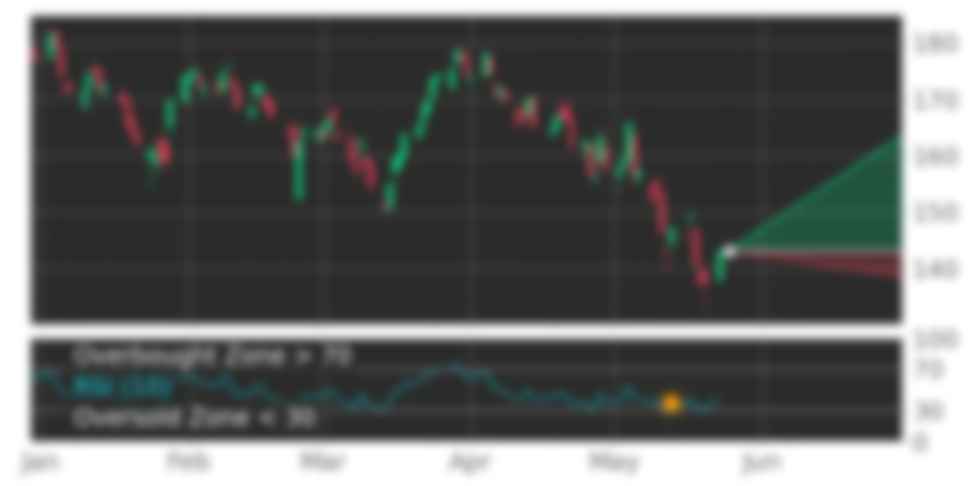
- The ETF has traded in a relatively narrow, consolidating range in recent weeks, with a modest single-digit decline over the trailing 30 days.
- The fund carries an expense ratio of 0.60% and a beta near 1.27, making it a higher-volatility, growth-oriented product.
- For deeper analysis of this ticker, explore Price Targets and Forecast pages.
- Discover AI-driven trading strategies on Trending AI Robots.
Invesco NASDAQ Internet ETF (PNQI) Overview
The Invesco NASDAQ Internet ETF (PNQI) is a passively managed exchange-traded fund (ETF) that seeks to track the investment results, before fees and expenses, of the Nasdaq CTA Internet Index. Launched in June 2008, the fund invests at least 90% of its total assets in securities that comprise the underlying index, which is designed to measure the performance of large, liquid U.S.-listed companies engaged in internet-related businesses.
PNQI holds approximately 78 securities, and its portfolio is notably top-heavy. The top 10 holdings account for roughly 60% of total assets, with Meta Platforms, Apple, Microsoft, Amazon, and Alphabet together representing approximately 40% of the portfolio. Other notable positions include Walt Disney, Shopify, Uber Technologies, Salesforce, Spotify, and Netflix.
From a sector standpoint, the fund skews heavily toward information technology (about 36%), communication services (about 32%), and consumer discretionary (about 25%), with smaller allocations to industrials and financials. This concentration in long-duration, growth-oriented companies helps explain the fund's elevated beta near 1.27 relative to the broader market.
Industry and Thematic Landscape
PNQI sits at the intersection of several durable investment themes, including digital advertising, cloud computing, e-commerce, streaming media, and artificial intelligence (AI). These businesses are structurally tied to the growth of online engagement and enterprise digital transformation, which has supported steady expansion in revenue and profitability for the fund's largest constituents.
The broader environment for growth equities remains closely linked to the interest-rate backdrop. Because internet companies derive a significant portion of their value from future earnings, their valuations tend to be more sensitive to changes in long-term yields and inflation expectations than value-oriented or cash-flow-heavy sectors. When borrowing costs ease and inflation moderates, growth multiples generally find firmer footing; when yields rise, these names often face valuation compression.
Within the sector, AI infrastructure and cloud spending have become dominant catalysts, benefiting the fund's mega-cap technology and communication services holdings. At the same time, competitive and regulatory dynamics, including scrutiny of dominant platform businesses, remain an ongoing structural consideration for the internet complex.
Performance and Positioning Snapshot
PNQI has been consolidating in recent months. Over the trailing 30-day window, the fund declined approximately 3.4%, easing from around $52.30 to roughly $50.51, reflecting a mild downward drift rather than a sharp trend. Over the past two months, the ETF has traded largely within a band between roughly $49 and $54, suggesting a range-bound phase characterized by periodic rotation among its largest holdings rather than a decisive directional move.
This consolidation reflects the tug-of-war between resilient fundamentals among megacap internet leaders and lingering sensitivity to the macroeconomic rate outlook. The fund's heaviest weights in the technology and communication services sectors have largely moved in tandem with the broader megacap growth complex, while consumer-discretionary and e-commerce exposure has added incremental variability. Given the top-heavy structure, the direction of a handful of large positions—Meta, Apple, Microsoft, Amazon, and Alphabet—has an outsized influence on the fund's overall trajectory.
AI Screener
Tickeron's AI Screener is an AI-powered stock and ETF discovery platform that helps investors search thousands of securities using technical indicators, fundamentals, volatility measures, AI-generated signals, market trends, price patterns, and customizable filters. It is designed to surface trending securities, breakout candidates, and new trading opportunities more efficiently than manual screening. For investors monitoring themes such as internet, technology, and communication services, the tool offers a structured way to filter the investable universe and identify candidates that match specific technical and fundamental criteria. Exploring the AI Screener can help complement a broader ETF analysis workflow.
2026 Outlook and Key Factors to Monitor
Several structural factors are likely to shape PNQI over the course of 2026. The trajectory of interest rates and inflation will remain central, as shifts in long-term yields directly influence the valuation multiples applied to the fund's growth-heavy portfolio. A sustained easing cycle could provide a tailwind for megacap internet names, while a more hawkish or inflationary backdrop could weigh on sentiment.
The earnings cycle of the fund's largest holdings is another key variable. Continued momentum in cloud computing, AI monetization, and digital advertising will be important, as will the resilience of consumer spending that supports e-commerce and streaming businesses. Regulatory developments affecting dominant platforms, along with evolving competition in AI and search, represent structural risks that could influence individual holdings and, by extension, the fund.
Capital flows into technology and growth-oriented ETFs, as well as sector rotation between growth and value, will also play a role in near-term performance. Investors should monitor how the fund's concentrated, top-heavy structure amplifies both upside participation and downside sensitivity relative to more diversified peers. These themes, rather than short-term price moves, are likely to define the fund's risk-and-return profile in the year ahead.
The information on this webpage is provided for general informational and educational purposes only and is not intended as investment advice, a recommendation to purchase or sell any security, or an offer or solicitation related to investments. It does not consider your personal financial situation, goals, or risk profile, and all investing carries inherent risks, including the possibility of losing your entire investment. For more details, please review our full disclaimer.
Disclaimers and Limitations
 GET DAILY SIGNALS