Key Takeaways
- XLY tracks the Consumer Discretionary Select Sector Index, providing concentrated exposure to U.S. consumer discretionary equities, with Amazon.com (AMZN) and Tesla (TSLA) together representing roughly 40% of assets.
- The fund's top-heavy, tech-driven composition makes it more volatile than a typical diversified consumer fund, with a beta near 1.2 relative to the broad market.
- Over roughly the past month, XLY has recovered about 7% from late-September and early-October lows, though the three-month picture remains essentially flat.
- Consumer spending trends, interest-rate expectations, and the performance of Amazon and Tesla are the dominant drivers of fund performance.
- Principal risks include concentration in a small number of mega-cap names, sensitivity to the consumer spending cycle, and valuation volatility.
- Explore additional pages for this ticker's Price Targets and Forecast to complement this ETF analysis.
- Explore Trending AI Robots for automated trading ideas and signal-based strategies.
Consumer Discretionary Select Sector SPDR Fund (XLY) Overview
The Consumer Discretionary Select Sector SPDR Fund is a passively managed exchange-traded fund (ETF) sponsored by State Street Global Advisors. It seeks to replicate the price and yield performance of the Consumer Discretionary Select Sector Index, which represents the consumer discretionary sector of the S&P 500 as defined by the Global Industry Classification Standard (GICS). The fund generally invests at least 95% of its assets in the securities comprising the index.
XLY holds approximately 50 stocks and carries a low net expense ratio of 0.08%, making it one of the most cost-efficient vehicles for broad U.S. consumer discretionary exposure. Assets under management total roughly $22 billion. The portfolio is effectively fully invested in the consumer discretionary sector, with the top ten holdings accounting for roughly 68–70% of total assets.
The largest positions include Amazon.com (AMZN) at roughly 23–24%, Tesla (TSLA) near 18%, Home Depot (HD) near 5.5%, McDonald's (MCD), TJX Companies (TJX), Booking Holdings (BKNG), Lowe's (LOW), and Starbucks (SBUX). This concentration helps explain why the fund behaves less like a broad retail basket and more like a large-cap growth allocation.
Industry and Thematic Landscape
Consumer discretionary is a cyclical corner of the equity market whose fortunes track household spending power, employment, wage growth, and consumer confidence. Unlike consumer staples, discretionary demand tends to soften when financing costs rise or when consumers pull back on big-ticket and leisure purchases. This makes the sector especially sensitive to the trajectory of interest rates and inflation.
XLY's sector exposure adds a distinctive twist. Because Amazon and Tesla dominate the portfolio, the fund carries a strong technology and growth tilt despite its consumer label. Amazon's e-commerce and cloud businesses, together with Tesla's electric-vehicle and energy operations, often respond to investor sentiment around innovation, earnings growth, and valuations more than to traditional retail foot traffic. As a result, XLY frequently behaves as a hybrid of consumer cyclical and mega-cap growth exposure.
Broader macroeconomic conditions, including monetary-policy expectations, remain central to the sector's outlook. Lower interest-rate expectations can support demand for discretionary goods and housing-related spending, while persistently elevated rates tend to weigh on durable-goods purchases and consumer sentiment.
Performance and Positioning Snapshot
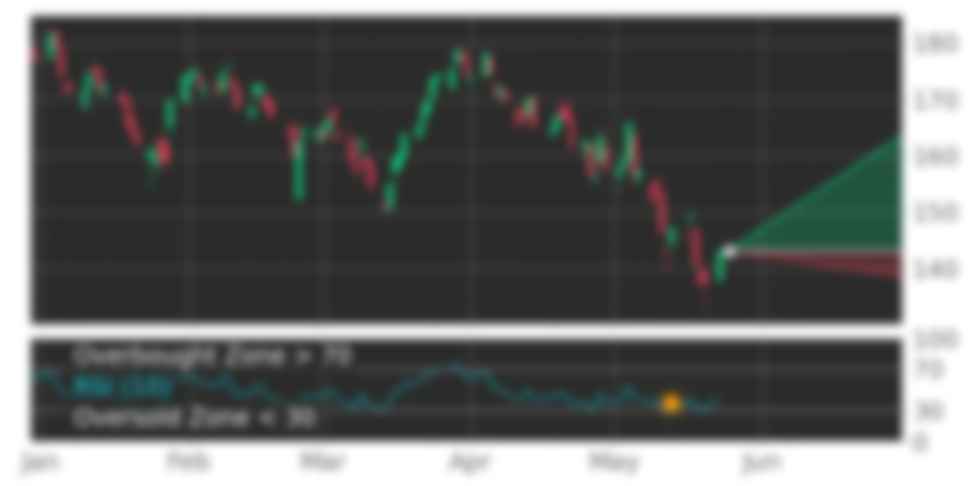
XLY has traded in a volatile but ultimately range-bound pattern over recent months. After closing near $118 in mid-August, the fund slid roughly 8% into late September and early October, reaching a trough around $108–109. It has since recovered more than 10% off those lows, finishing the most recent completed session near $120.
Over roughly the past 30 days, the fund has advanced about 7%, reflecting a rebound in its largest holdings rather than a broad-based retail rally. On the three-month view, the overall move is essentially flat, underscoring that the recent gain largely retraced a prior drawdown. Trading activity also picked up notably in early November, with elevated volume and sharp single-session swings, consistent with the fund's concentrated, higher-beta profile.
The recovery has been driven primarily by renewed strength in Amazon and Tesla, which together explain a disproportionate share of index-level movement. Rotational flows between growth and value segments of the market, as well as shifting interest-rate expectations, have amplified these moves within the consumer discretionary space.
AI Screener
Tickeron's AI Screener is an AI-powered stock and ETF discovery platform that helps investors scan thousands of securities using technical indicators, fundamentals, volatility measures, AI-generated signals, market trends, price patterns, and customizable filters. It is designed to help users identify trending securities, breakout candidates, and new trading opportunities more efficiently than manual screening. For investors tracking consumer discretionary exposure such as XLY, the screener offers a structured way to compare holdings, monitor momentum, and surface ideas aligned with a chosen industry or sector view.
2026 Outlook and Key Factors to Monitor
Several structural factors are likely to shape XLY's performance through 2026. The path of interest rates and inflation remains the most important external variable, as it directly influences consumer borrowing costs and discretionary demand. A resilient labor market and stable wage growth would support spending, while any deterioration in consumer confidence or employment could pressure the sector.
The earnings trajectory of Amazon and Tesla will remain pivotal given their combined weight. Amazon's profitability in retail and cloud, and Tesla's delivery volumes and margin trends, are key swing factors for the fund. Valuation levels across mega-cap growth names also warrant attention, as elevated multiples leave the fund exposed to sentiment shifts.
Additional themes to monitor include housing-related spending through Home Depot and Lowe's, travel and leisure demand through Booking Holdings and the lodging operators, and off-price retail strength at TJX. Policy developments, trade dynamics, and the pace of capital flows into consumer discretionary funds will further influence positioning. These factors, rather than short-term price swings, are likely to define the sector's direction over the coming year.
The information on this webpage is provided for general informational and educational purposes only and is not intended as investment advice, a recommendation to purchase or sell any security, or an offer or solicitation related to investments. It does not consider your personal financial situation, goals, or risk profile, and all investing carries inherent risks, including the possibility of losing your entire investment. For more details, please review our full disclaimer.
Disclaimers and Limitations
 GET DAILY SIGNALS